
The Plumeria Pests and Diseases Guide is an essential resource for identifying, preventing, and treating the most common threats to plumeria plants, including pests, fungi, and environmental stressors. This guide offers detailed information on how to recognize early signs of trouble, from insect infestations to fungal infections, and provides practical solutions to address these issues. It also covers strategies for managing environmental factors such as excessive humidity, temperature fluctuations, and poor soil conditions, which can weaken plumeria. With expert tips on natural and chemical treatments, as well as proactive care practices, this guide ensures your plumeria remains healthy, resilient, and free from common ailments, allowing it to thrive season after season.
Fungal Leaf Spot vs. Rust vs. Sunburn on Plumeria
What to check next
This guide helps you separate infectious disease from pests, exposure injury, nutrition symptoms, and normal aging before pruning or treating. Read the detailed explanation, then use this sequence to decide what to do.
Confirm the evidence for fungal leaf spots
- Look for
- Repeatable lesion shapes with defined margins, fruiting structures or spores, and progression associated with wet foliage.
- Compare with
- Rust, bacterial spots, sunburn, spray injury, nutrient symptoms, and physical damage require different responses.
- Safest first response
- Photograph and mark lesions, inspect both leaf surfaces, reduce leaf wetness and debris, and confirm the disease before selecting a fungicide.
Microclimate clue: Rain, long dew periods, shade, humidity, and poor airflow can increase fungal spotting and reinfection.
- 1
Stabilize and isolate
Keep questionable plants away from healthy collections and avoid splashing water or sharing tools.
- 2
Describe the tissue
Note whether damage is dry, powdery, water-soaked, sunken, soft, foul-smelling, or one-sided.
- 3
Map the progression
Photograph and mark the edge so you can tell whether the condition is spreading.
- 4
Confirm the closest match
Compare the defining sign, not only leaf color, and use laboratory testing when needed.
- 5
Intervene narrowly
Remove only unsalvageable tissue, sanitize tools, and treat only when the diagnosis supports it.
How microclimate changes this answer
Long leaf wetness, warm humidity, poor airflow, and cool wet roots increase disease pressure; intense sun and cold create look-alikes.
Compare this disease or rot pattern with healthy growth
Use these references to confirm that this article matches the visible pattern before changing care or applying a treatment.
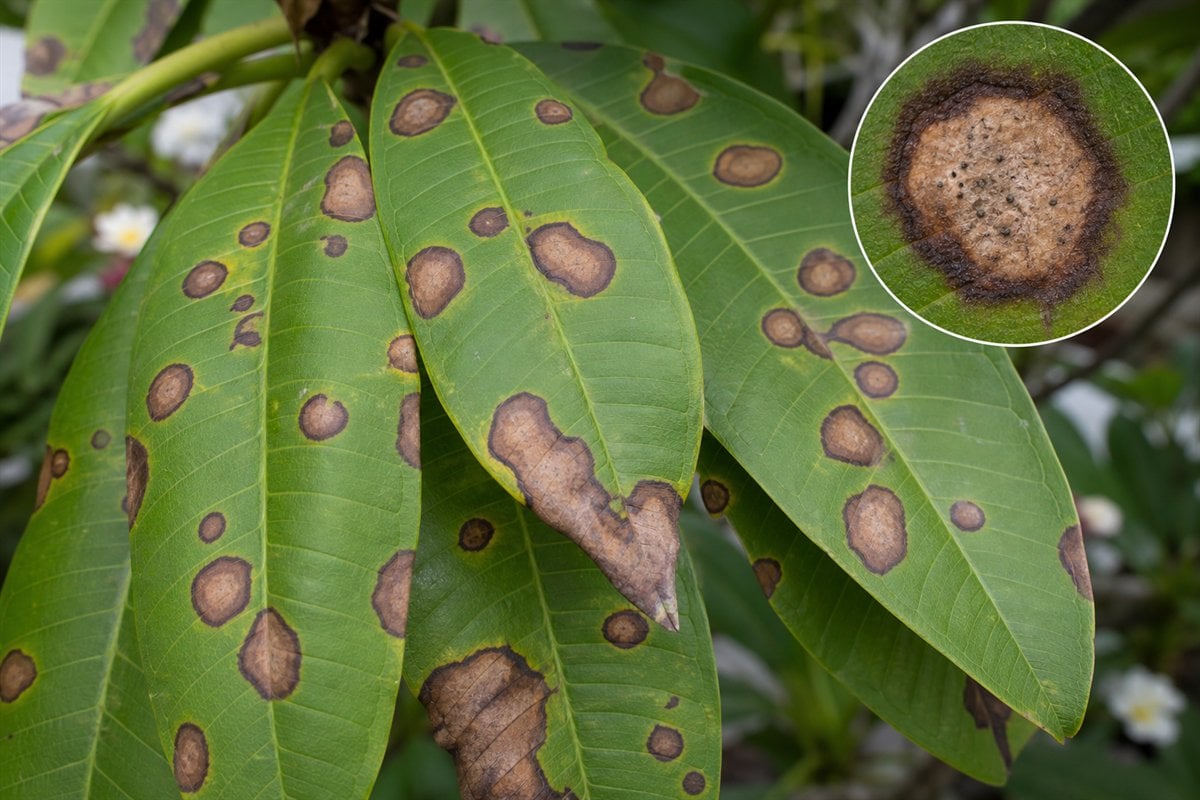 Condition reference
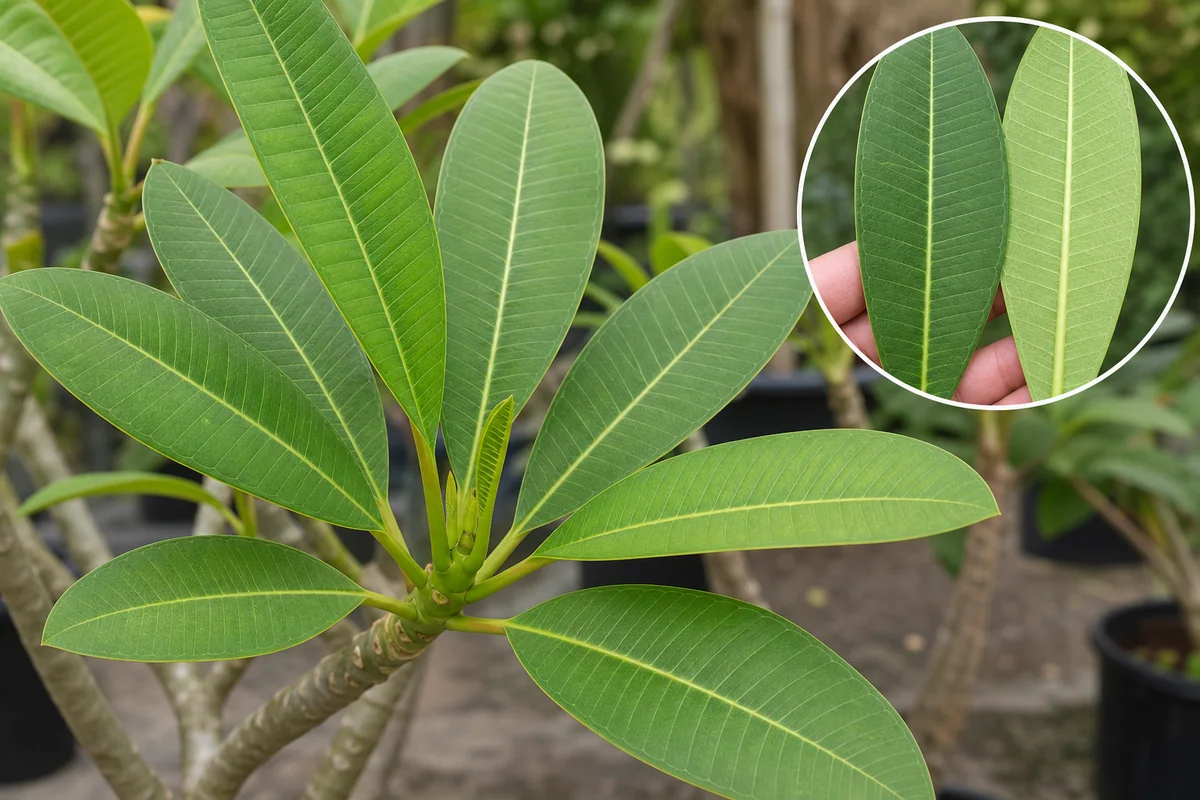 Healthy baseline
- LocationCheck which plant part, age of growth, and exposed or protected side is affected.
- TextureDecide whether the evidence is dry, powdery, sticky, raised, translucent, soft, or intact.
- ProgressionPhotograph the same area so you can tell whether the pattern is stable, improving, or spreading.
Use more than one clue. Confirm the photo with recent conditions, roots, watering history, and the rest of the plant before acting.
This comparison helps growers separate three problems that can all look like leaf spots from a distance: fungal leaf spot, plumeria rust, and sunburn. The response is different for each one, so the first job is to look closely at where the symptom appears, whether there is powder, whether the underside is involved, and whether the pattern matches recent weather or care changes.
Where This Page Fits
Leaf symptom comparison page. Use this page when the same leaf damage could be fungal leaf spot, plumeria rust, or sunburn and you need to separate look-alikes before acting.
- If orange pustules are confirmed, go to How to Identify Plumeria Rust. If the leaf looks bronzed or roughened without pustules, check Rust Mites on Plumeria. For wider disease sorting, use the Disease Symptom Checklist.
Fungal Leaf Spot Article Path
Use this group in order when possible: identify the problem, treat only when needed, then prevent repeat outbreaks or recurrence.
- Identify fungal leaf spot
How to Identify Fungal Leaf Spot in Plumeria – Spots, Halos, and Leaf Drop - Treat fungal leaf spot
How to Treat Fungal Leaf Spot in Plumeria – Sanitation, Airflow, and Recovery - Prevent fungal leaf spot
How to Prevent Fungal Leaf Spot in Plumeria – Airflow, Watering, and Hygiene - Compare leaf spot, rust, and sunburn
Fungal Leaf Spot vs. Rust vs. Sunburn on Plumeria
Safety and diagnostics: before applying products, review the Treatment Safety Checklist. If symptoms do not match this group, return to the Disease Symptom Checklist.
Fast Comparison Path
- Orange powder or pustules on the underside: start with plumeria rust.
- Irregular brown lesions, yellow halos, or expanding spots: compare with fungal leaf spot.
- Bleached, scorched, tan, or papery areas mostly on exposed surfaces: consider sunburn or environmental stress before treating for disease.
Side-by-Side Clues
Usually appears as irregular spots, brown lesions, yellow halos, or damaged areas that may expand over time. It is often linked to wet leaves, poor airflow, overcrowding, or infected leaf debris.
Usually confirms on the underside of leaves as orange, rusty, powdery pustules. Upper surfaces may yellow or spot, but the underside is the key place to check.
Usually follows sudden exposure to stronger sun, high heat, reflected heat, or leaf surfaces that were not acclimated. Damage is often dry, tan, bleached, or papery, not powdery.
How To Inspect the Leaf
- Turn the leaf over. Rust is often easiest to confirm underneath because the orange pustules form there.
- Rub lightly with a tissue. Orange or powdery residue supports rust or mildew; dry papery tissue supports sunburn or physical damage.
- Check the plant pattern. Rust and leaf spot may spread across several leaves; sunburn often appears on exposed leaves facing the strongest light or heat.
- Check recent conditions. Wet foliage and poor airflow support disease. A sudden move into stronger sun supports sunburn.
- Look for pests too. Mite stippling and bronzing can be confused with leaf disease, especially in hot, dry conditions.
Why the Diagnosis Matters
Fungal leaf spot and rust can spread through moisture, spores, infected leaves, and poor airflow. Sunburn is not infectious. If a sunburned leaf is treated like disease, the grower may spray unnecessarily and stress the plant further. If rust or leaf spot is dismissed as sunburn, infected leaves and humidity may keep the problem moving through the plant or nearby plants.
What Not To Do
- Do not diagnose rust from the top of the leaf only. Why: the underside is where the orange pustules usually confirm the problem.
- Do not spray sunburn as if it were fungus. Why: sunburn is damaged tissue, not an infection, and additional sprays can add stress.
- Do not leave heavily rusted or diseased leaves under the plant. Why: leaf debris can support reinfection or spread.
- Do not water over diseased foliage. Why: wet leaves and splash can help several leaf diseases persist.
Best Next Pages
- Disease Symptom Checklist
- How to Treat Plumeria Rust
- How to Prevent Plumeria Rust
- How to Treat Leaf Spot Disease
- How to Identify Spider Mite Damage
Choose the Best Next Guide
- Raised orange or yellow pustules under the leaf: Open the Plumeria Rust Guide.
- Discrete dark or tan lesions without raised pustules: Open the Fungal Leaf Spot Guide.
- Flat bleached, tan, or scorched tissue after a sudden change in sun or heat: Open the Environmental Damage Checker.
Do not spray simply because a leaf has a brown area. Check the underside, texture, distribution, and recent exposure changes first. A fungicide will not repair sunburn, and unnecessary treatment can add stress or obscure the symptom pattern. If a product is needed after identification, follow its label.
Related Guides
- How to Identify Fungal Leaf Spot in Plumeria – Spots, Halos, and Leaf Drop
- How to Treat Fungal Leaf Spot in Plumeria – Sanitation, Airflow, and Recovery
- How to Prevent Fungal Leaf Spot in Plumeria – Airflow, Watering, and Hygiene
- Treatment Safety Checklist
- Disease Symptom Checklist
Turn the explanation into an action plan
- Monitor
- Mark lesion borders and photograph the plant every two to three days during rapid change, or weekly when stable.
- Change one thing
- Make the smallest justified correction, record the date, and avoid stacking treatments before you can see which one helped.
- Escalate when needed
- Act quickly when soft decay moves into the trunk, foul odor appears, blackening advances daily, or several plants show the pattern.