
The Plumeria Way ecosystem
The Plumeria Ecosystem
The Plumeria Ecosystem is a connected collection of websites for care knowledge, structured learning, cultivar documentation, seedling discovery, nursery experience, photography, and the long-term story behind the work. Each site has a clear purpose, and together they help growers move from questions to understanding and confident action.
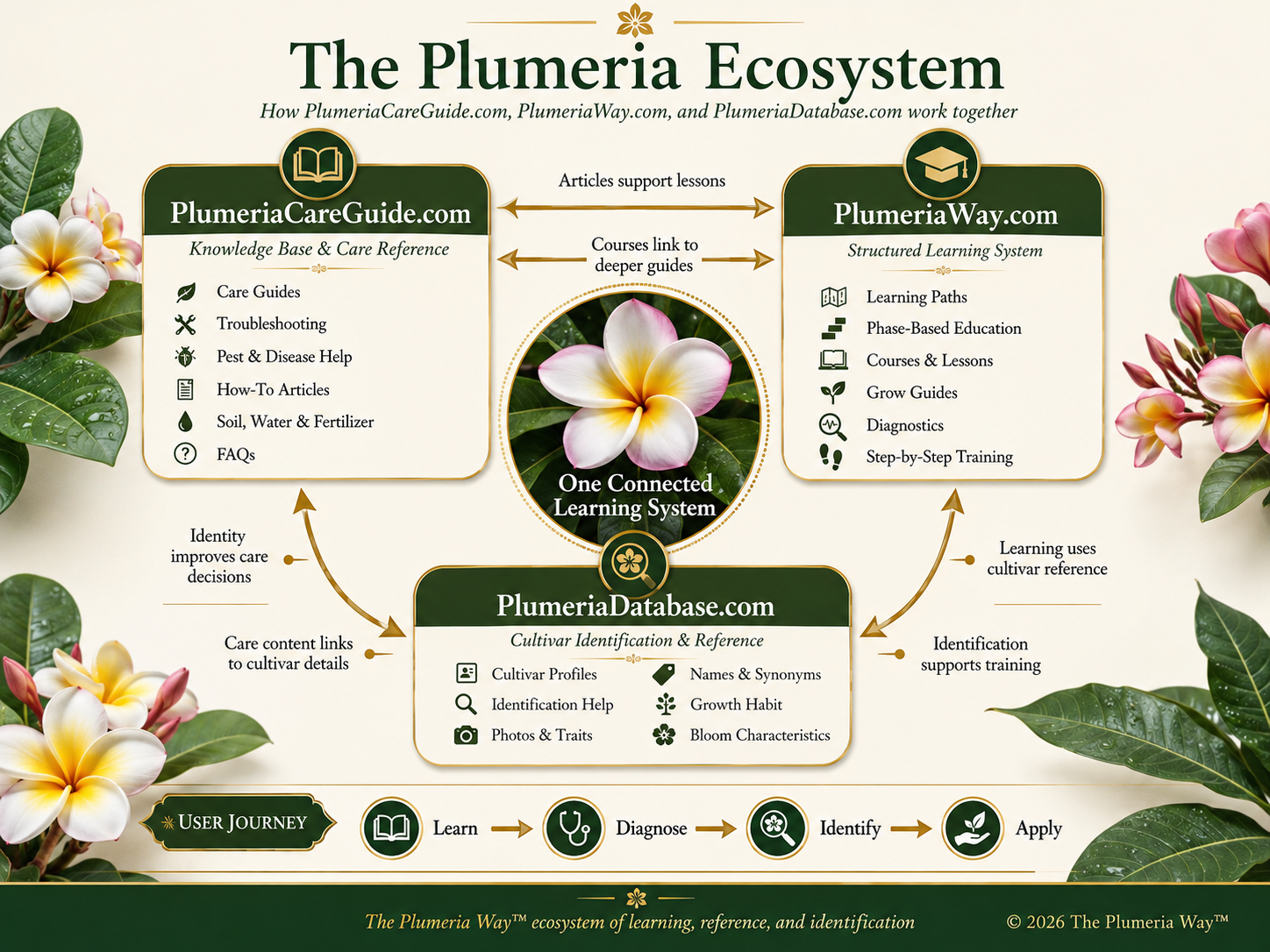
Connected learning system
A connected learning system for plumeria growers
The Plumeria Ecosystem is being developed as one unified learning and reference system to educate, guide, document, preserve, and celebrate the world of plumeria. The goal is not simply to provide scattered tips or quick answers. The purpose is to help growers understand how plumeria grows, why certain care methods work, when they should be used, and how roots, stems, leaves, branches, blooms, genetics, environment, and care work together as one living system.
Each site has a specific role. Together they support beginners, hobbyists, collectors, hybridizers, educators, and serious growers who want to move from isolated answers toward deeper understanding.
Practical care guidance for rooting cuttings, watering, fertilizing, soil, pest control, disease prevention, seasonal care, troubleshooting, and plant recovery.
The Plumeria Way™ provides step-by-step learning paths that help growers read the plant, understand growth stages, recognize problems early, and make better decisions.
Cultivar records, names, synonyms, photos, origins, growth habit, fragrance, bloom traits, visual comparison, and identification guidance.
The nursery side connects growers with plants, cuttings, and cultivars while grounding the educational work in decades of growing, testing, propagation, and observation.
A focused branch for seedpods, seed viability, germination, seedling care, bloom evaluation, cultivar discovery, documentation, and responsible naming.
A place for the personal experience, writing, photography, projects, philosophy, and long-term mission behind the ecosystem.
Photography and visual documentation
Photography is an important part of cultivar documentation. Flower photos, plant habit photos, leaf photos, seedpod photos, seedling photos, and comparison images become more valuable when they are connected directly to cultivar records, distinguishing traits, source information, and identification guidance. For that reason, the main photo archive should support PlumeriaDatabase.com, where images can be organized with the information that gives them meaning. PlumeriaPhotos.com may be retained as a future photography archive, redirect, or supporting domain, while the primary visual reference remains connected to the database.

Care knowledge
PlumeriaCareGuide.com is the free reference hub for care articles, troubleshooting, Q&A, and practical growing guidance.

Guided learning
PlumeriaWay.com turns scattered information into learning paths, courses, diagnostics, and step-by-step training.

Cultivar reference
PlumeriaDatabase.com supports identification, cultivar profiles, names, traits, photos, and comparison work.
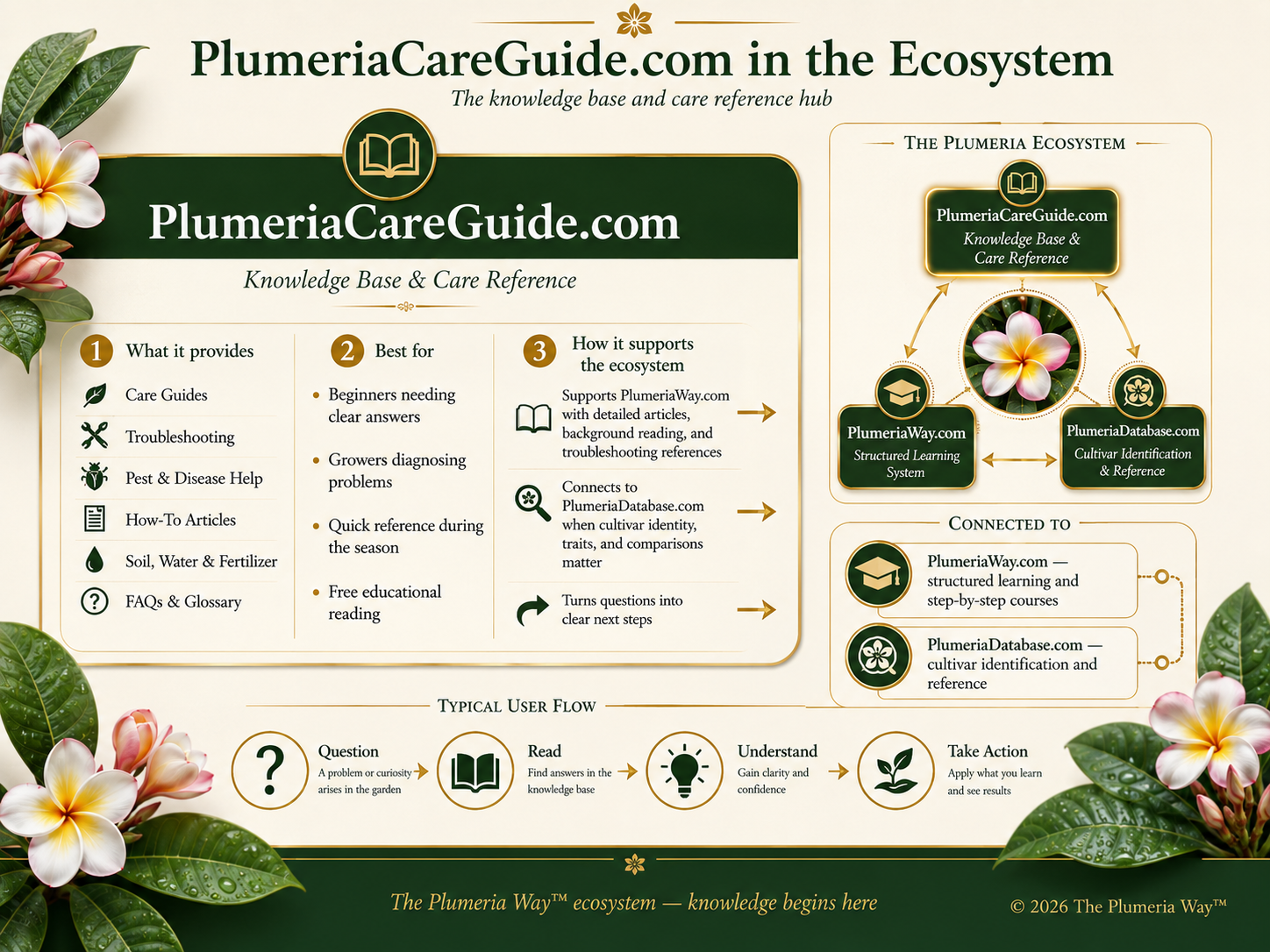
PlumeriaCareGuide.com: the knowledge base and care reference
This site is the place to start when a grower has a care question, sees a problem, wants a how-to article, or needs a free reference before making a decision.
- Best for quick answers, seasonal care, troubleshooting, and practical growing information.
- Supports PlumeriaWay.com with deeper reading and background references.
- Connects to PlumeriaDatabase.com when cultivar identity, traits, or comparison details matter.
PlumeriaWay.com: the structured learning system
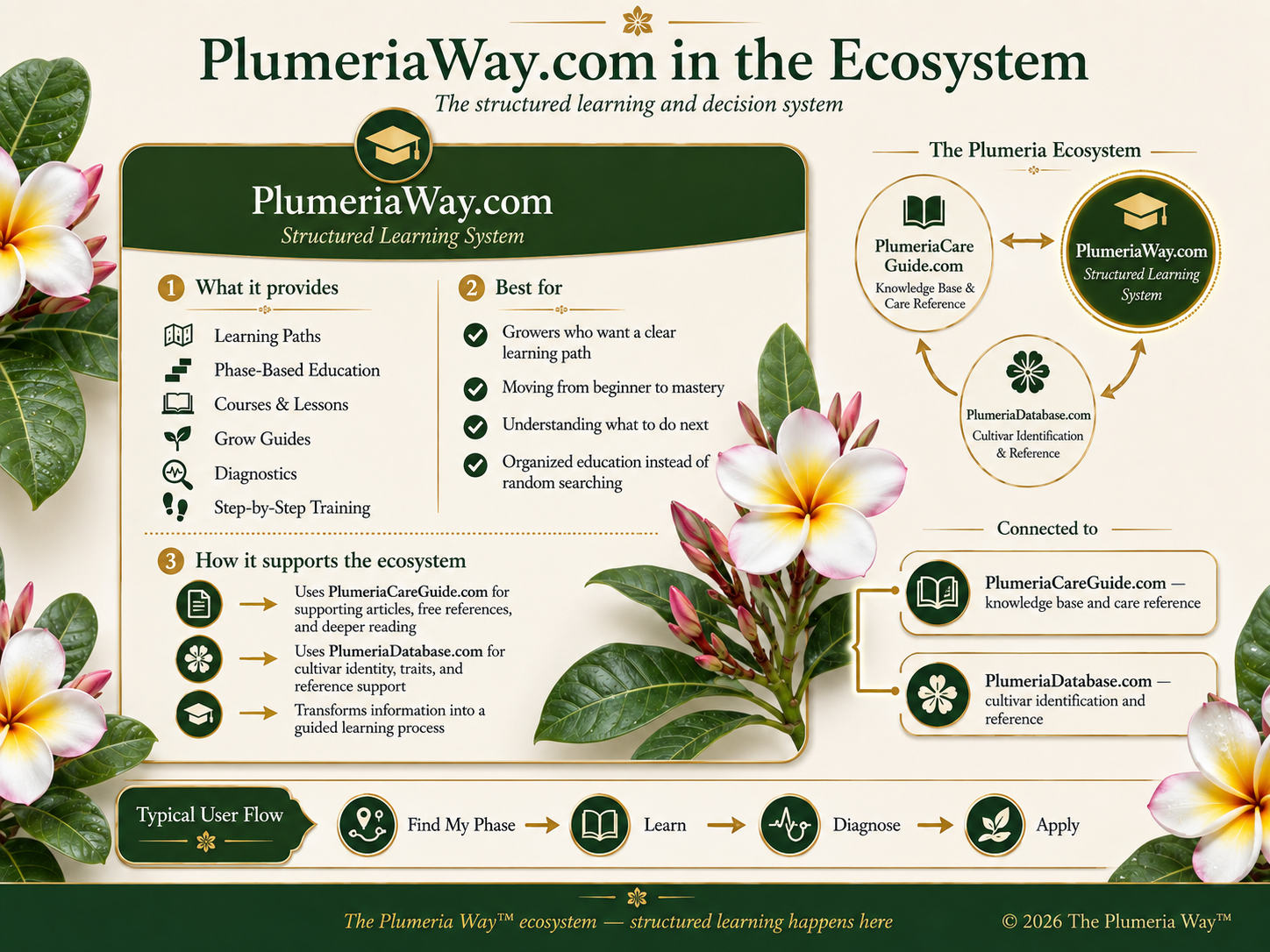
PlumeriaWay.com is for growers who want an organized path instead of random searching. It helps people understand what to do next and why each step matters.
- Best for learning paths, courses, diagnostics, grow guides, and phase-based education.
- Uses PlumeriaCareGuide.com as supporting reference material.
- Uses PlumeriaDatabase.com for cultivar identity, traits, and reference support.
PlumeriaDatabase.com: the cultivar identification and reference system
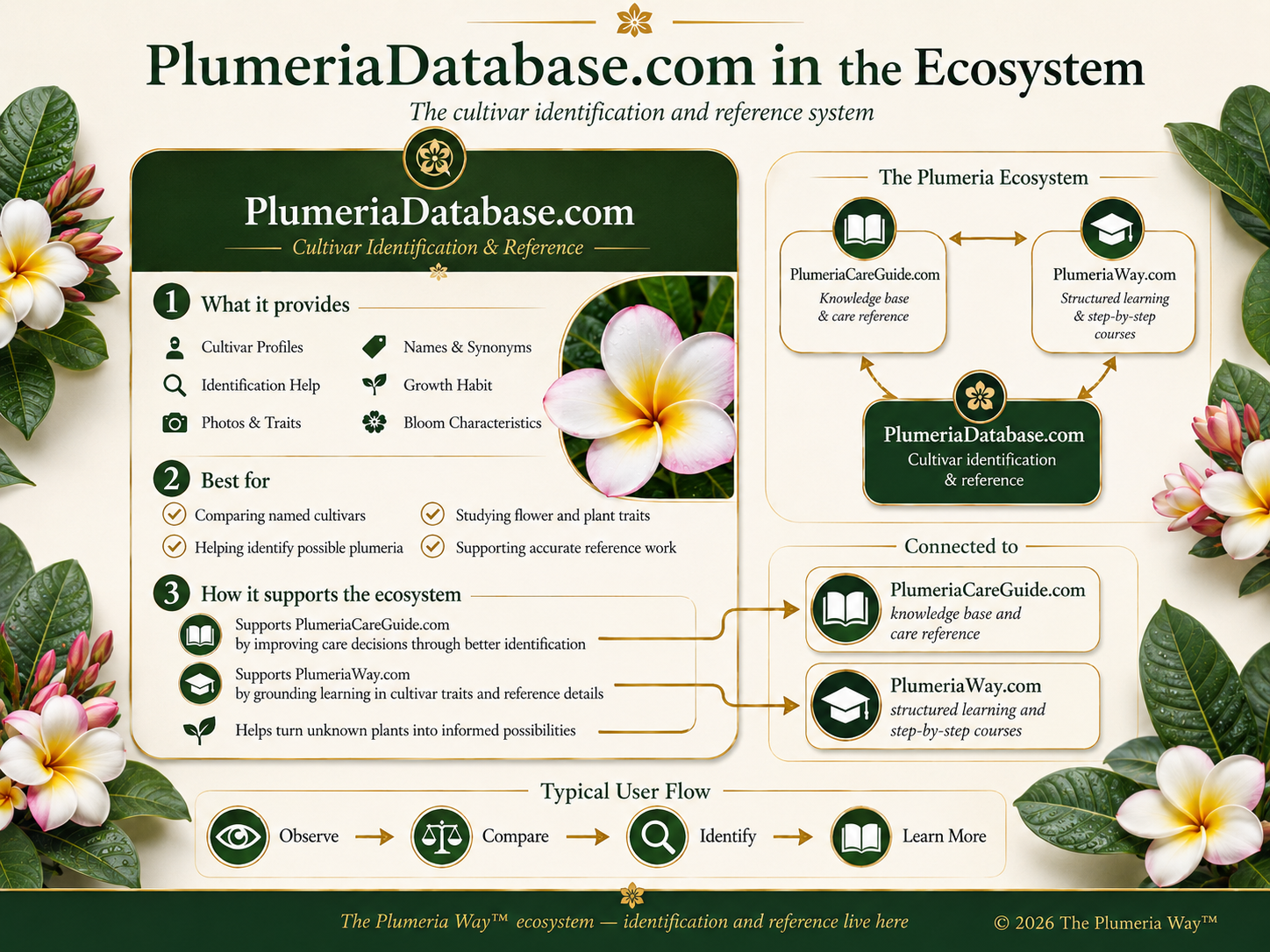
PlumeriaDatabase.com supports the ecosystem when the question is not only how to grow a plumeria, but what plumeria it may be and how its traits compare.
- Best for cultivar profiles, identification help, names, synonyms, photos, traits, and bloom characteristics.
- Improves care decisions by grounding them in better identification and reference details.
- Supports learning by connecting plant traits with real examples and cultivar records.
How to participate in the ecosystem
Participation can be simple. You can read, learn, ask better questions, compare plants more carefully, and share observations over time. The ecosystem is designed to make each step more useful than the last.
Start with care articles, Q&A, and reference pages when you need clear answers.
Use structured guidance when a plant problem needs a decision, not just a fact.
Use cultivar reference when names, traits, photos, or comparisons matter.
Put the information into practice, observe results, and keep improving your care decisions.