
The Plumeria Pests and Diseases Guide is an essential resource for identifying, preventing, and treating the most common threats to plumeria plants, including pests, fungi, and environmental stressors. This guide offers detailed information on how to recognize early signs of trouble, from insect infestations to fungal infections, and provides practical solutions to address these issues. It also covers strategies for managing environmental factors such as excessive humidity, temperature fluctuations, and poor soil conditions, which can weaken plumeria. With expert tips on natural and chemical treatments, as well as proactive care practices, this guide ensures your plumeria remains healthy, resilient, and free from common ailments, allowing it to thrive season after season.
How to Identify Plumeria Rust – Orange Pustules, Leaf Drop & Underside Infection
What to check next
This guide helps you separate infectious disease from pests, exposure injury, nutrition symptoms, and normal aging before pruning or treating. Read the detailed explanation, then use this sequence to decide what to do.
Confirm the evidence for plumeria rust
- Look for
- Orange powdery pustules concentrated on leaf undersides, corresponding yellow spots above, and progressive leaf yellowing or drop.
- Compare with
- Spider mites, fertilizer splash, other leaf spots, and natural aging do not produce the characteristic orange spores beneath leaves.
- Safest first response
- Confirm underside spores, remove heavily infected fallen material, improve airflow and leaf-drying conditions, then follow a labeled fungicide plan if justified.
Microclimate clue: Warm humidity, prolonged leaf wetness, crowded canopies, and persistent infected leaves increase rust pressure.
- 1
Stabilize and isolate
Keep questionable plants away from healthy collections and avoid splashing water or sharing tools.
- 2
Describe the tissue
Note whether damage is dry, powdery, water-soaked, sunken, soft, foul-smelling, or one-sided.
- 3
Map the progression
Photograph and mark the edge so you can tell whether the condition is spreading.
- 4
Confirm the closest match
Compare the defining sign, not only leaf color, and use laboratory testing when needed.
- 5
Intervene narrowly
Remove only unsalvageable tissue, sanitize tools, and treat only when the diagnosis supports it.
How microclimate changes this answer
Long leaf wetness, warm humidity, poor airflow, and cool wet roots increase disease pressure; intense sun and cold create look-alikes.
Compare this leaf pattern with healthy growth
Use these references to confirm that this article matches the visible pattern before changing care or applying a treatment.
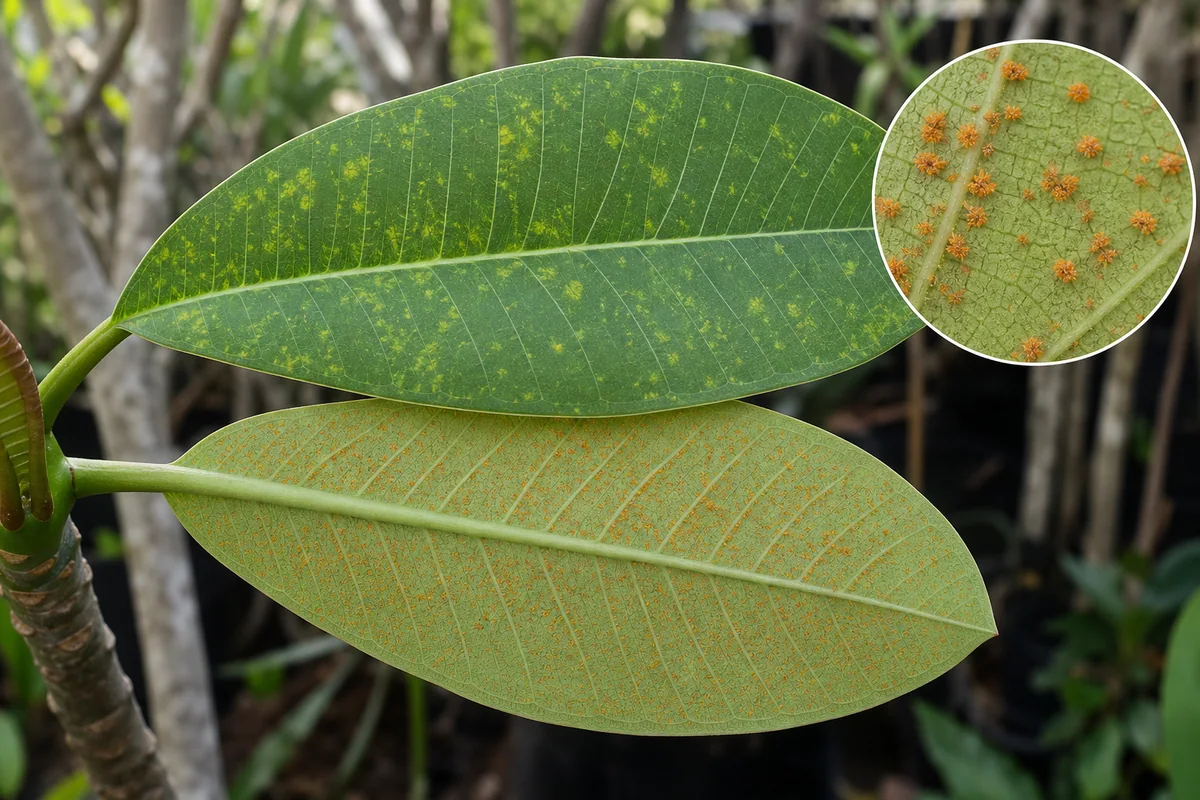 Condition reference
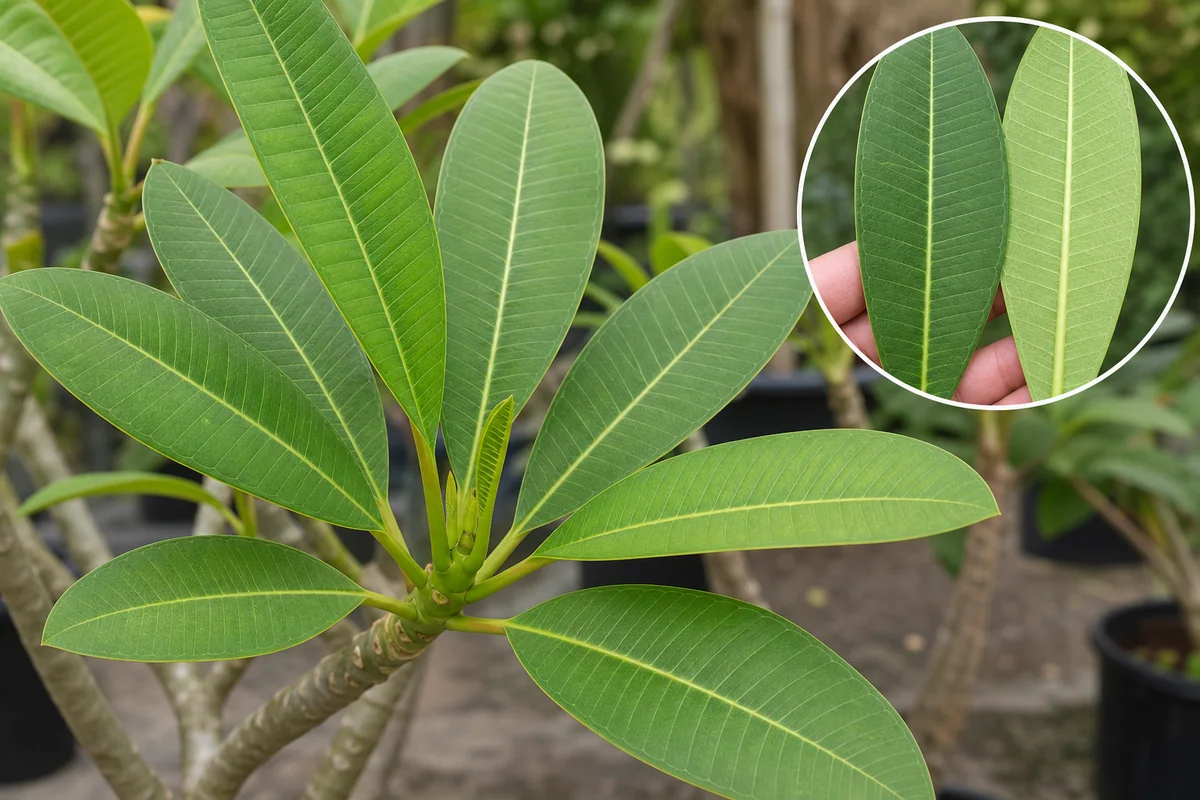 Healthy baseline
- LocationCheck which plant part, age of growth, and exposed or protected side is affected.
- TextureDecide whether the evidence is dry, powdery, sticky, raised, translucent, soft, or intact.
- ProgressionPhotograph the same area so you can tell whether the pattern is stable, improving, or spreading.
Use more than one clue. Confirm the photo with recent conditions, roots, watering history, and the rest of the plant before acting.
Plumeria rust decision path: Confirm the tissue pattern and its progression before treating.
- Confirm: Turn affected leaves over and look for raised orange to rusty powdery pustules, especially beneath yellow spots. Orange surface deposits that do not arise from leaf tissue, rust mites, and nutrient yellowing are different problems.
- Start with culture and sanitation: Remove fallen leaves and, when the plant can spare them, the most heavily infected leaves. Bag the material, improve spacing and airflow, and keep irrigation off foliage when practical.
- Escalate only when justified: Use a fungicide, bactericide, wound treatment, or other product only when its label includes the disease or use site. Follow dilution, interval, temperature, protective-equipment, and maximum-application directions. A product cannot restore tissue that is already dead.
- Use clean tools: Remove diseased tissue only when justified. Disinfect cutting tools between cuts with 70% isopropyl alcohol or another tool disinfectant used according to its label, and allow the tool to dry before the next cut.
- Monitor: Inspect leaf undersides every 5 to 7 days and after extended humid or rainy weather. Record whether new leaves remain clean.
Growing-condition check: Review recent rain, humidity, cold, heat, wind, irrigation, drainage, plant stage, pot or in-ground status, and the saved microclimate. These steps are a logical course based on observed evidence, not a laboratory-confirmed diagnosis.
Rust vs. Rust Mite Guide Path
- Identify plumeria rust when orange or yellow powdery pustules appear, especially on leaf undersides.
- Identify rust mite-like damage when leaves show bronzing, russeting, fine speckling, or distortion without orange fungal spores.
- Use the disease symptom checklist when rust, mildew, leaf spot, mites, or stress are hard to separate.
Plumeria rust is a fungal leaf disease best recognized by yellow, orange, or rusty powdery pustules, usually on the underside of leaves. The upper leaf surface may show yellow spots before leaves turn brown, curl, and drop.
Where This Page Fits
Primary plumeria rust disease guide. Use this page when you see orange pustules or rust-colored spores, especially on leaf undersides. This is fungal rust, not rust mite damage.
- If the leaf is bronzed or roughened without orange pustules, compare with Rust Mites on Plumeria. If the symptom could be rust, leaf spot, or sunburn, use Fungal Leaf Spot vs. Rust vs. Sunburn. For broader symptom sorting, use the Disease Symptom Checklist.
Plumeria Rust Article Path
Use this group in order when possible: identify the problem, treat only when needed, then prevent repeat outbreaks or recurrence.
- Identify plumeria rust
How to Identify Plumeria Rust – Orange Pustules, Leaf Drop & Underside Infection - Treat plumeria rust
How to Treat Plumeria Rust – Organic Sprays, Leaf Removal & Seasonal Control - Prevent plumeria rust
How to Prevent Plumeria Rust – Seasonal Sprays, Leaf Hygiene & Moisture Control
Safety and diagnostics: before applying products, review the Treatment Safety Checklist. If symptoms do not match this group, return to the Disease Symptom Checklist.
The disease is caused primarily by Coleosporium plumeriae. It is favored by humid or wet conditions, crowded foliage, poor airflow, and susceptible plumeria cultivars. Spores can move by wind, splashing water, infected leaves, and nearby diseased plants.
Photo and Confirmation Checklist
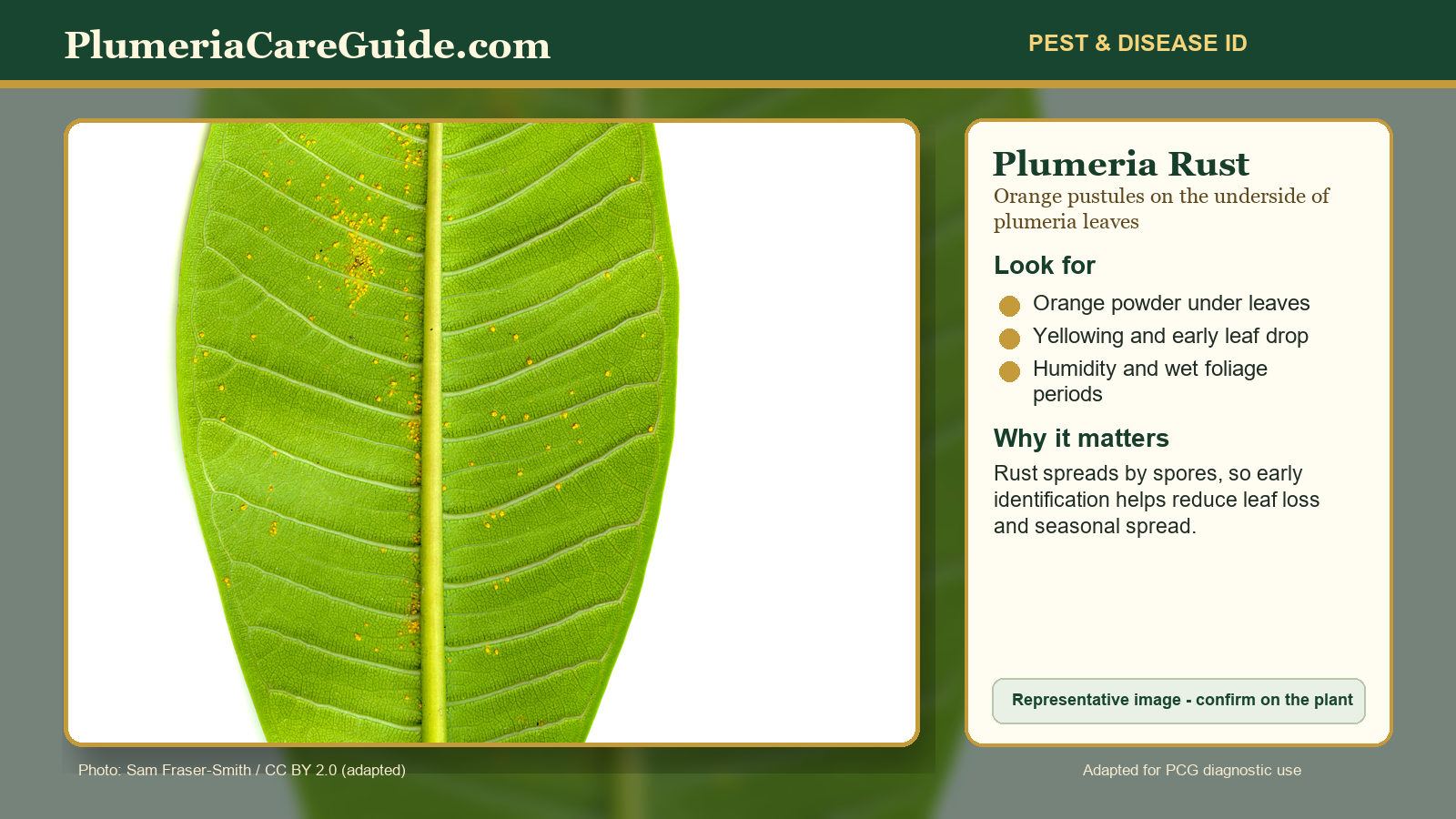
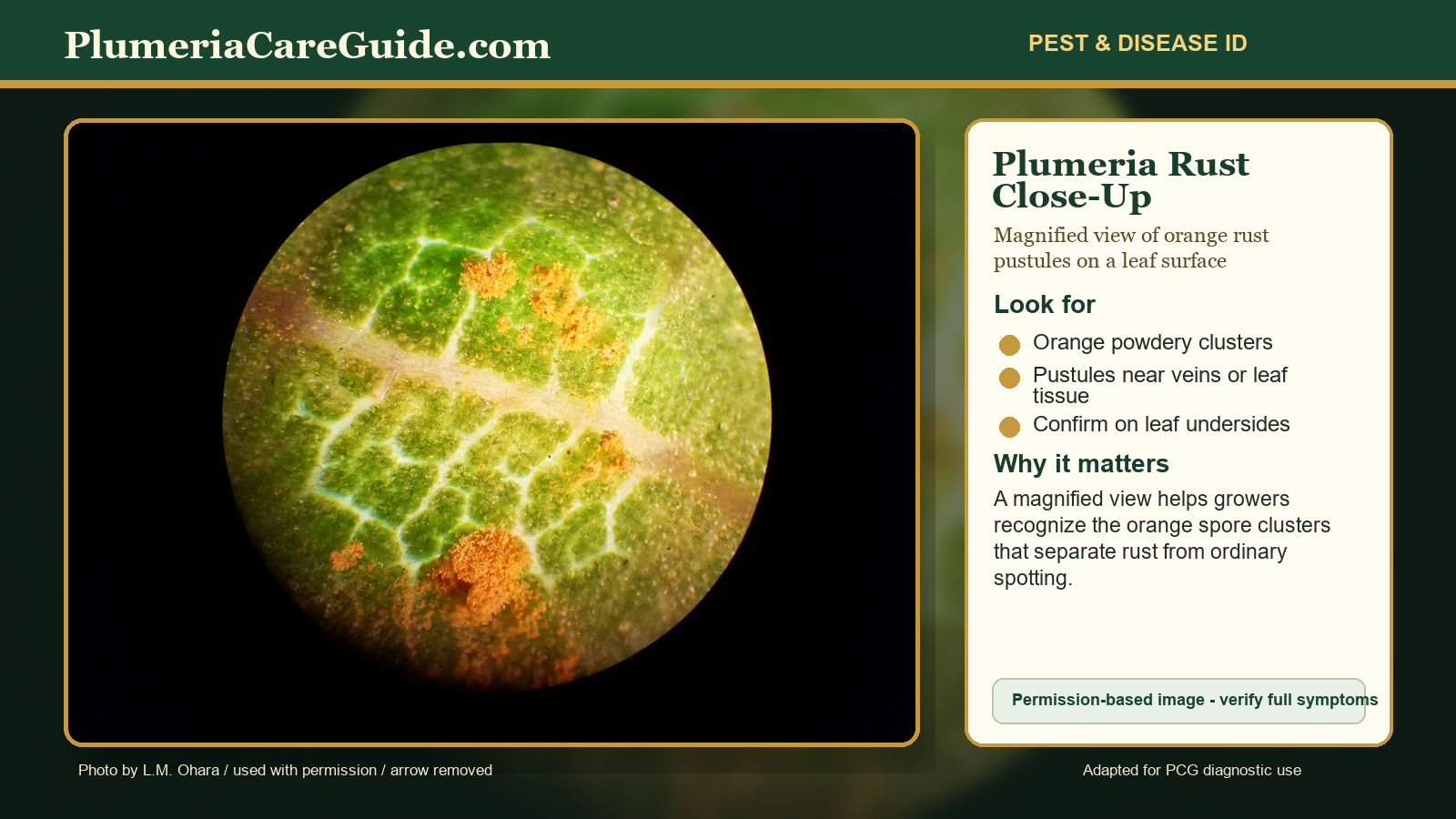
- Turn the leaf over and look for orange or yellow powdery pustules.
- Check whether orange spores rub onto a finger, tissue, or white paper.
- Look for yellow spotting on the upper surface opposite underside pustules.
- Inspect fallen leaves, because infected leaves often drop early.
- Compare with rust mites, spider mites, powdery mildew, and fungal leaf spot before treating.
Quick ID
- Most reliable clue: Orange, yellow, or rusty powder on the underside of leaves.
- Upper leaf clue: Yellow spotting or chlorosis above infected areas.
- Progression: Leaves yellow, brown, curl, and drop prematurely.
- Pattern: Often worse in humid, wet, crowded, or poorly ventilated conditions.
- Spread: Spores move on air currents, splashing water, and infected leaves.
Rust vs. Look-Alikes
- Rust mites: Cause bronzing, russeting, fine speckling, or distortion but do not make orange powdery pustules.
- Spider mites: Cause stippling, bronzing, dusty-looking leaves, and sometimes webbing.
- Powdery mildew: Produces white or gray surface film rather than orange underside spores.
- Fungal leaf spot: Creates defined lesions, halos, or dead spots rather than loose orange powder.
- Nutrient stress: Can yellow leaves but does not produce underside pustules.
When and Where to Inspect
Inspect during humid, rainy, or heavy-dew periods and after plants have been crowded together. Rust often starts low or inside the canopy where leaves stay damp longer. Turn leaves over rather than judging from the top surface alone, because the underside usually tells the story first.
In container collections, check the plants along walls, fences, benches, greenhouse sides, and shaded corners first. These protected spots can hold humidity and reduce airflow, giving rust more time to infect and spread.
Watering and Leaf-Drying Safeguard by Plant Stage
Plumeria rust develops on susceptible foliage and can spread when humidity, leaf moisture, and infected fallen leaves remain around the plant. Check leaf undersides for yellow-orange to rusty pustules before choosing treatment.
- Unrooted cutting: Water once at the beginning of rooting, then do not water again until 2-3 full-sized leaves have grown. Mist only the stem of a firm cutting if it appears dehydrated. With no leaves present, foliar rust treatment is not applicable.
- Newly rooted cutting: Water sparingly and allow the mix to approach dry before watering again. Apply water to the growing medium and avoid keeping new foliage wet.
- Established plant: Water according to root-zone moisture, drainage, weather, season, and active growth. Water early and near soil level, remove infected fallen leaves, and regularly inspect leaf undersides.
- Seedling: Keep the medium lightly and evenly moist, never saturated. Provide airflow and avoid prolonged leaf wetness. Use the dedicated seedling rust guide when young seedlings are affected.
Confirm rust before treating. Begin with sanitation and moisture management, and follow the product label for any fungicide used.
After identification: use the Plumeria Treatment Decision Guide to decide whether to monitor, isolate, rinse the canopy, prune, inspect roots, repot, apply a labeled product, or remove badly affected tissue or plants.
Confirming plumeria rust
Plumeria rust is a fungal disease, not the same thing as rust mites. The underside of the leaf usually tells the story.
- Look for orange, powdery pustules on the underside of leaves.
- Check the upper leaf surface for yellow spots that line up with underside pustules.
- Rub a pustule gently with white tissue; orange spores support a rust diagnosis.
- Rust mites cause bronzing or russeting without the same orange fungal pustules.
Related Guides
- How to Treat Plumeria Rust – Organic Sprays, Leaf Removal & Seasonal Control
- How to Prevent Plumeria Rust – Seasonal Sprays, Leaf Hygiene & Moisture Control
- How to Identify Rust Mites on Plumeria
- Fungal Leaf Spot vs. Rust vs. Sunburn
- Treatment Safety Checklist
Help Improve This Photo Reference
If you have a clear plumeria photo of plumeria rust, you can help improve this guide. The most useful photos show orange pustules on leaf undersides, the matching yellowing on the top of the leaf, and any leaf drop pattern around the plant.
Submit a photo for review. Photos are not published automatically; they are checked for permission, plant context, and diagnostic accuracy before being used.
Confirm rust on the underside of the leaf
Yellow spots on the upper leaf surface are a clue, not a complete diagnosis. Turn the leaf over. Powdery yellow-orange pustules beneath the matching spots are the strongest practical evidence of fungal plumeria rust.
Turn the explanation into an action plan
- Monitor
- Mark lesion borders and photograph the plant every two to three days during rapid change, or weekly when stable.
- Change one thing
- Make the smallest justified correction, record the date, and avoid stacking treatments before you can see which one helped.
- Escalate when needed
- Act quickly when soft decay moves into the trunk, foul odor appears, blackening advances daily, or several plants show the pattern.