
The Plumeria Pests and Diseases Guide is an essential resource for identifying, preventing, and treating the most common threats to plumeria plants, including pests, fungi, and environmental stressors. This guide offers detailed information on how to recognize early signs of trouble, from insect infestations to fungal infections, and provides practical solutions to address these issues. It also covers strategies for managing environmental factors such as excessive humidity, temperature fluctuations, and poor soil conditions, which can weaken plumeria. With expert tips on natural and chemical treatments, as well as proactive care practices, this guide ensures your plumeria remains healthy, resilient, and free from common ailments, allowing it to thrive season after season.
How to Identify Rust Mites on Plumeria
What to check next
This guide helps you confirm that a living pest is present, identify where it is feeding, and choose a measured response without treating inactive damage. Read the detailed explanation, then use this sequence to decide what to do.
Confirm the evidence for microscopic mites
- Look for
- Bronzing, rough or distorted new growth, shortened internodes, and active mites or eggs found with strong magnification.
- Compare with
- Thrips, herbicide exposure, nutrient problems, sun injury, and ordinary spider mites may overlap visually.
- Safest first response
- Confirm the affected tissue and mite type before selecting a labeled miticide; many general insecticides do not control mites.
Microclimate clue: Warm protected growth can favor rapid mite buildup, while rain and overhead rinsing may temporarily reduce exposed populations.
- 1
Inspect before treating
Use bright light and magnification on leaf undersides, tips, petioles, stems, and the soil line.
- 2
- 3
Identify the feeding pattern
Separate sucking, chewing, mining, boring, and root-zone damage.
- 4
Start with the least disruptive action
Isolate, wash, and use only a treatment labeled for the confirmed pest and plant.
- 5
Repeat the inspection
Eggs or protected life stages can survive the first response, so follow-up checks matter.
How microclimate changes this answer
Dry heat favors mites, protected humid growth favors some scale and mealybugs, and wet shade increases snail and slug activity.
Compare this insect or pest pattern with healthy growth
Use these references to confirm that this article matches the visible pattern before changing care or applying a treatment.
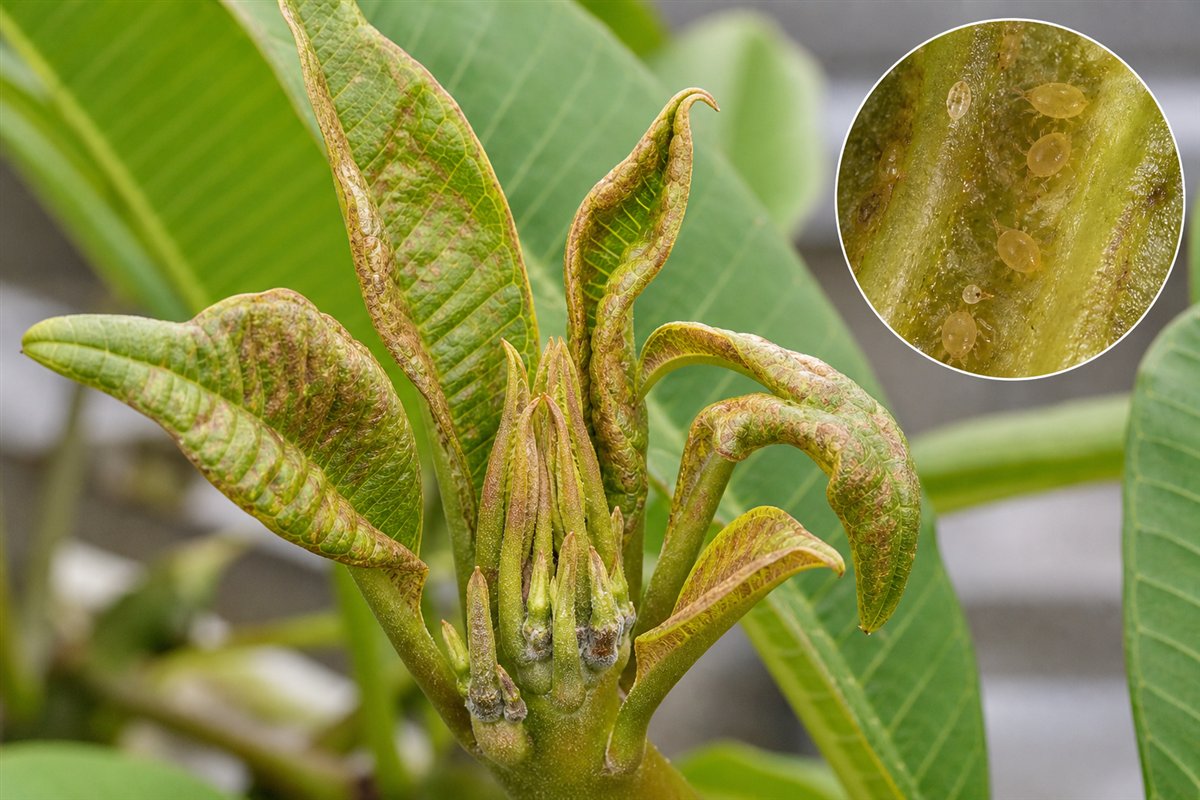 Condition reference
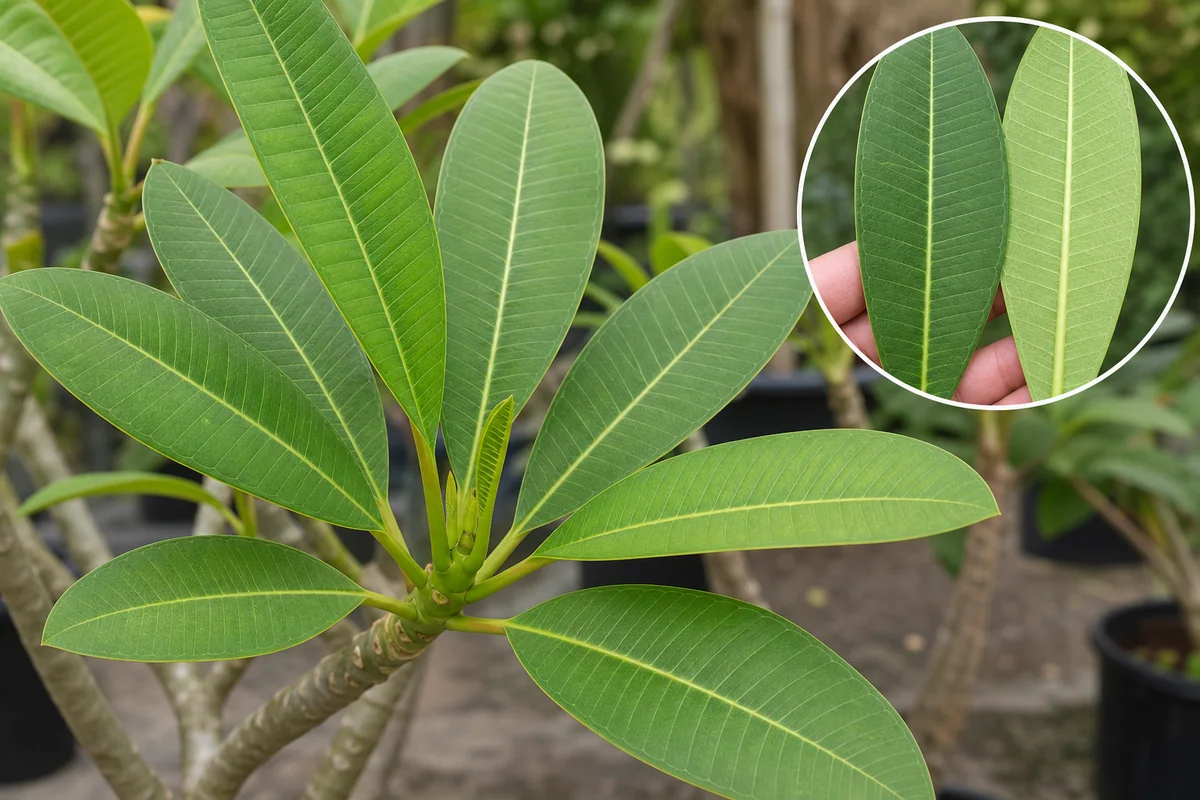 Healthy baseline
- LocationCheck which plant part, age of growth, and exposed or protected side is affected.
- TextureDecide whether the evidence is dry, powdery, sticky, raised, translucent, soft, or intact.
- ProgressionPhotograph the same area so you can tell whether the pattern is stable, improving, or spreading.
Use more than one clue. Confirm the photo with recent conditions, roots, watering history, and the rest of the plant before acting.
Rust vs. Rust Mite Guide Path
- Identify plumeria rust when orange or yellow powdery pustules appear, especially on leaf undersides.
- Identify rust mite-like damage when leaves show bronzing, russeting, fine speckling, or distortion without orange fungal spores.
- Use the disease symptom checklist when rust, mildew, leaf spot, mites, or stress are hard to separate.
Rust mite damage is a grower term for mite injury that creates a rusty, bronze, coppery, or russeted look on leaves. It is not the same as plumeria rust fungus. Rust fungus produces orange powdery pustules; mite injury does not.
Where This Page Fits
Primary rust mite identification guide. Use this page when damage looks mite-related: bronzing, roughened leaf surfaces, dull leaves, or distorted stress symptoms without obvious orange rust pustules.
- If you see orange powdery pustules, compare with Plumeria Rust before treating. If the symptom could fit several leaf problems, use Fungal Leaf Spot vs. Rust vs. Sunburn. For all mite look-alikes, start with Mites on Plumeria.
Rust Mites Article Path
Use this group in order when possible: identify the problem, treat only when needed, then prevent repeat outbreaks or recurrence.
- Identify rust mites
How to Identify Rust Mites on Plumeria - Treat rust mites
How to Treat Rust Mites on Plumeria (Organic & Chemical Control Options) - Prevent rust mites
How to Prevent Rust Mites on Plumeria (Seasonal and Year-Round Strategies)
Safety and diagnostics: before applying products, review the Treatment Safety Checklist. If symptoms do not match this group, return to the Pest & Disease Identification Guide.
Rust mite-like damage is usually associated with microscopic mites, often eriophyid or russet-type mites. Exact species identification requires magnification and sometimes expert confirmation. Many plumeria mite problems are actually spider mites, so always compare symptoms carefully.
Identity note: Use “rust mites” as a damage-pattern term unless the mite has been confirmed. Spider mites, including twospotted spider mite and other plumeria spider mites, can also bronze leaves and are more commonly confirmed by webbing, stippling, and moving dots.
Photo and Confirmation Checklist
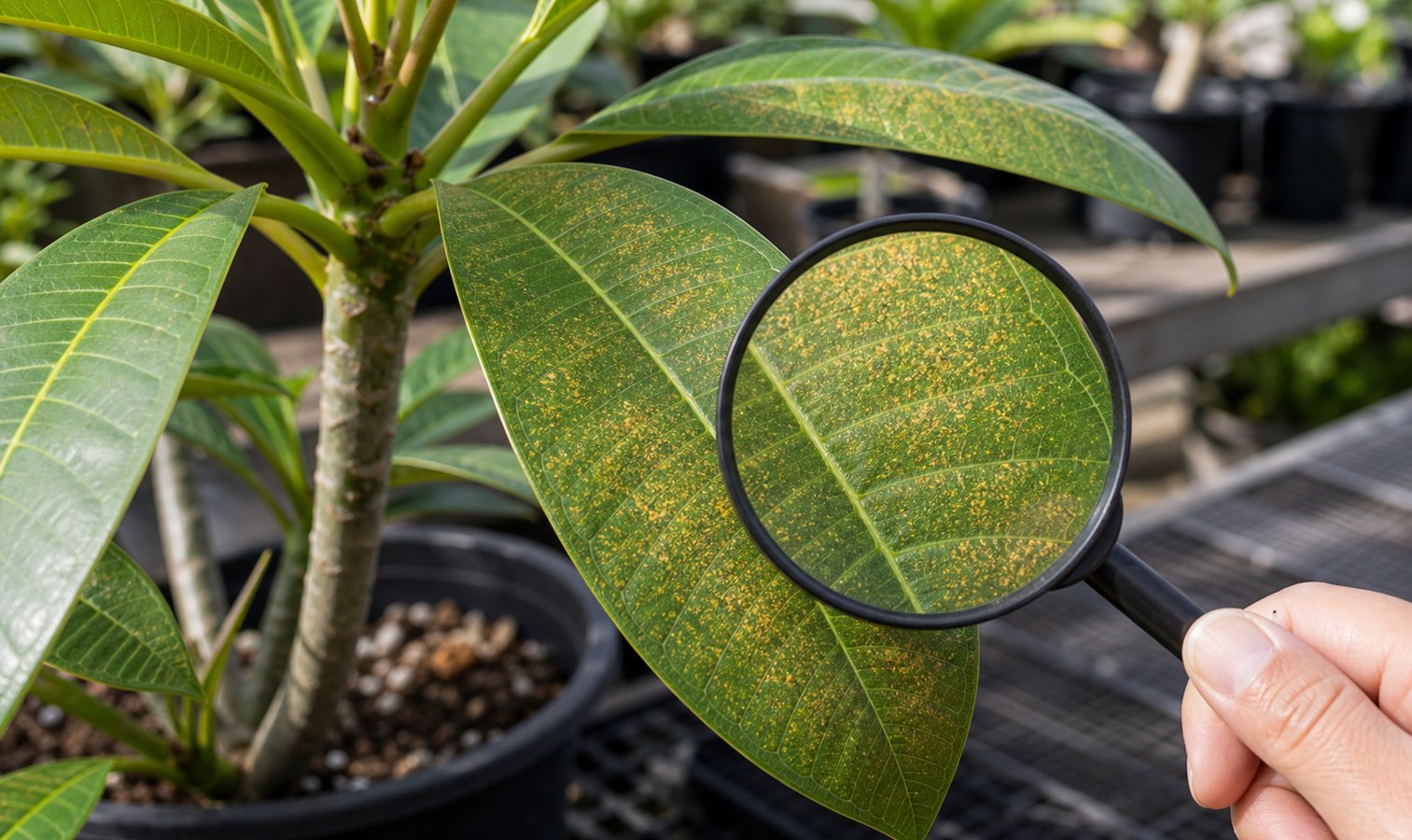
- Look for bronzing, russeting, fine speckling, curling, or distorted tender growth.
- Check whether orange powdery rust pustules are absent.
- Use a hand lens or microscope if possible; many mites are too small to see clearly unaided.
- Tap leaves over white paper to check for moving spider mites.
- Compare with spider mites, leafhopper damage, sunburn, nutrient stress, and rust fungus.
Quick ID
- Damage color: Bronze, rusty, coppery, grayish, or dusty-looking leaf surface.
- Texture: Fine speckling, roughened tissue, or russeting rather than orange powder.
- Growth response: Tender leaves may curl, twist, harden, or distort.
- Visibility: Rust mites or eriophyid mites may require strong magnification to confirm.
- Key separation: No orange spores rub off, unlike fungal rust.
Rust Mites vs. Look-Alikes
- Plumeria rust fungus: Orange or yellow powdery pustules, mostly on leaf undersides.
- Spider mites: Fine stippling, webbing, dusty leaves, and tiny moving dots on white paper.
- Leafhoppers: Fast jumping insects, marginal discoloration, puckering, and hooked tips.
- Sunburn: Bleached or scorched areas tied to exposure, often without pests present.
- Nutrient or water stress: Broad discoloration without mites, webbing, or feeding pattern.
How to Inspect
Start with leaves that look dusty, bronzed, or tired during hot dry weather. Check the underside, midrib, and tender growth. If you cannot see mites clearly, use a hand lens, tap leaves over white paper, and compare the damage with the spider mite guide.
Rust mite-like damage can be subtle at first. Recheck the same plant over several days. If new leaves keep developing bronzing or distortion and no orange fungal spores are present, a mite diagnosis becomes more likely.
Rust Mite Versus Plumeria Rust
Rust mites and plumeria rust are not the same problem. Plumeria rust is a fungal disease that produces orange or yellow powdery pustules, usually on the undersides of leaves. Rust mite-like injury is mite feeding damage that can create bronzing, russeting, roughened surfaces, or fine speckling without orange fungal spores.
Rust mites are often discussed as tiny eriophyid-type mites. They are much smaller than spider mites and may require strong magnification to see clearly. For most growers, the practical diagnosis comes from the damage pattern, the absence of orange rust spores, and whether new growth keeps showing fresh bronzing or roughening.
How to Confirm Before Treating
- Check the underside of leaves. Why: rust fungus, spider mites, and rust mite-like damage all leave different clues there.
- Look for orange powder. Why: orange pustules point toward fungal rust, not mites.
- Use magnification if possible. Why: rust mites are too small to identify reliably with the naked eye.
- Compare old and new leaves. Why: old bronzing may remain after the active problem has passed.
- Use the white-paper tap test too. Why: moving specks suggest mites, even if the exact mite type is not confirmed.
If the evidence is mixed, start with the Disease Symptom Checklist and then use the Treatment Decision Guide.
Rust Mite Confirmation Notes
Rust mite damage can resemble plumeria rust, spider mites, nutrient stress, sun stress, and general bronzing. The key is to compare the symptom pattern with true rust signs and inspect the leaf surface closely.
- True plumeria rust usually produces orange powdery pustules, most often on the underside of leaves.
- Rust mite-like damage is more bronzed, russeted, or rough-looking and does not wipe off as orange powder.
- Check whether damage is spreading from tender or protected areas and whether nearby leaves show similar bronzing.
- Use magnification when possible; rust mites are too small for easy naked-eye confirmation.
- When symptoms are unclear, compare with the disease symptom checklist before treating.
Photo note: real plumeria rust mite photos are still needed. Useful photos would show early bronzing, underside views, and comparison with true plumeria rust.
Related Guides
- How to Treat Rust Mites on Plumeria (Organic & Chemical Control Options)
- How to Prevent Rust Mites on Plumeria (Seasonal and Year-Round Strategies)
- How to Identify Spider Mite Damage on Plumeria
- How to Identify Plumeria Rust
- Treatment Safety Checklist
Help Improve This Photo Reference
If you have a clear plumeria photo of rust mites, you can help improve this guide. The most useful photos show bronzing, roughened leaf surfaces, underside close-ups, and comparison photos that help separate mite injury from true plumeria rust.
Submit a photo for review. Photos are not published automatically; they are checked for permission, plant context, and diagnostic accuracy before being used.
Turn the explanation into an action plan
- Monitor
- Check the same marked leaves and nearby plants every three to seven days until no active pests or fresh damage remain.
- Change one thing
- Make the smallest justified correction, record the date, and avoid stacking treatments before you can see which one helped.
- Escalate when needed
- Seek local diagnostic help when damage accelerates despite treatment, borers enter major stems, or the pest cannot be identified.