
The Plumeria Pests and Diseases Guide is an essential resource for identifying, preventing, and treating the most common threats to plumeria plants, including pests, fungi, and environmental stressors. This guide offers detailed information on how to recognize early signs of trouble, from insect infestations to fungal infections, and provides practical solutions to address these issues. It also covers strategies for managing environmental factors such as excessive humidity, temperature fluctuations, and poor soil conditions, which can weaken plumeria. With expert tips on natural and chemical treatments, as well as proactive care practices, this guide ensures your plumeria remains healthy, resilient, and free from common ailments, allowing it to thrive season after season.
How to Treat Bacterial Soft Rot in Plumeria – Cutback, Drying, and Disinfection Strategy
What to check next
This guide helps you separate infectious disease from pests, exposure injury, nutrition symptoms, and normal aging before pruning or treating. Read the detailed explanation, then use this sequence to decide what to do.
Confirm the evidence for bacterial soft rot or black-tip decay
- Look for
- Rapid water-soaked collapse, soft tissue, dark advancing margins, foul odor, or watery decay that progresses over days.
- Compare with
- Cold injury, sunburn, dry tip dieback, fungal canker, and bruising may darken tissue without wet foul-smelling collapse.
- Safest first response
- Isolate immediately, keep tissue dry, remove advancing soft decay with sanitized tools when salvageable, and disinfect between every cut.
Microclimate clue: Warm wet conditions, fresh wounds, trapped moisture, and contaminated tools can accelerate bacterial decay.
- 1
Stabilize and isolate
Keep questionable plants away from healthy collections and avoid splashing water or sharing tools.
- 2
Describe the tissue
Note whether damage is dry, powdery, water-soaked, sunken, soft, foul-smelling, or one-sided.
- 3
Map the progression
Photograph and mark the edge so you can tell whether the condition is spreading.
- 4
Confirm the closest match
Compare the defining sign, not only leaf color, and use laboratory testing when needed.
- 5
Intervene narrowly
Remove only unsalvageable tissue, sanitize tools, and treat only when the diagnosis supports it.
How microclimate changes this answer
Long leaf wetness, warm humidity, poor airflow, and cool wet roots increase disease pressure; intense sun and cold create look-alikes.
Compare this disease or rot pattern with healthy growth
Use these references to confirm that this article matches the visible pattern before changing care or applying a treatment.
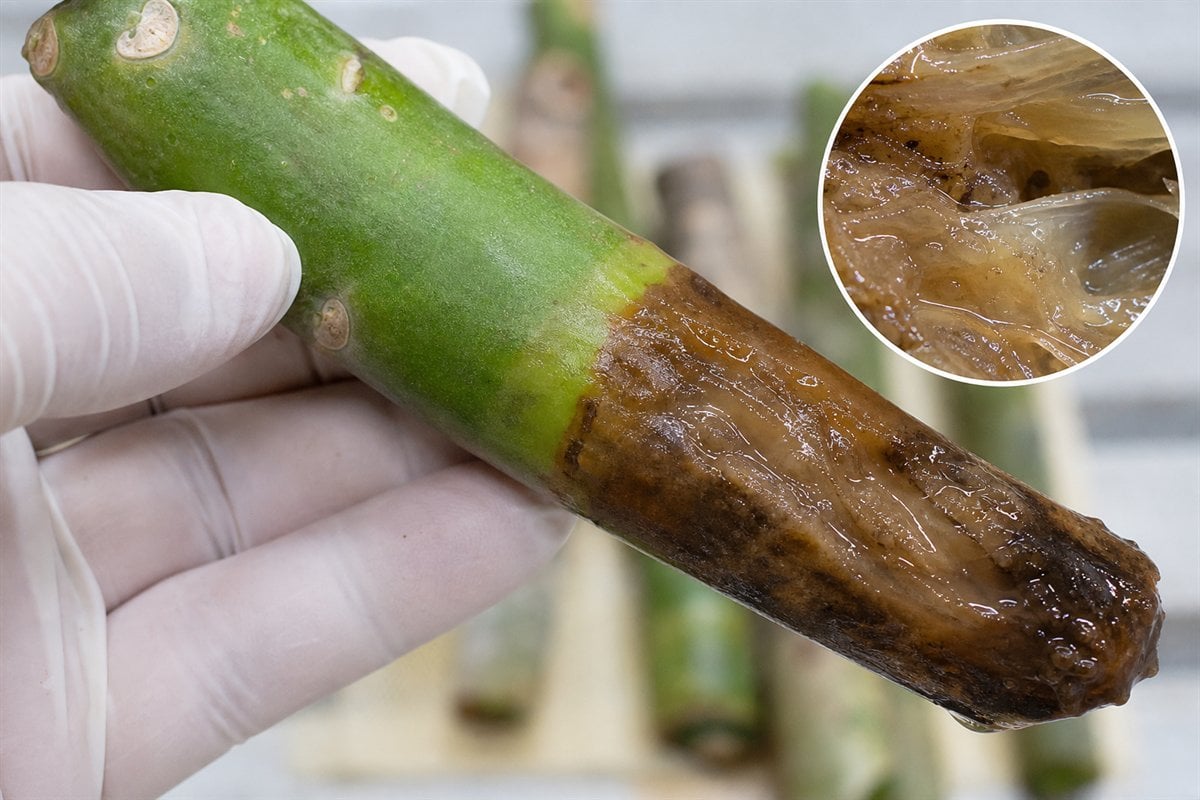 Condition reference
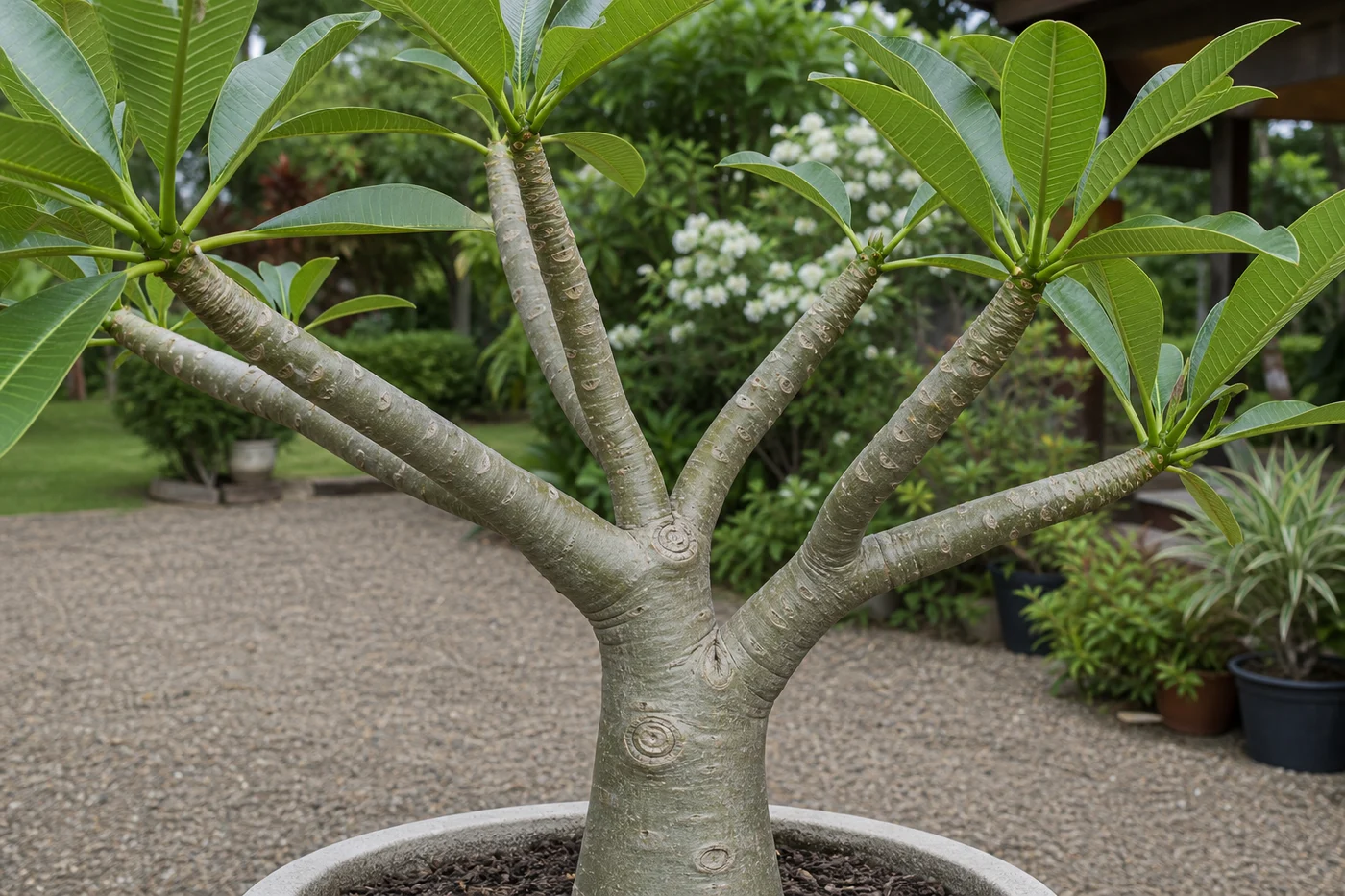 Healthy baseline
- LocationCheck which plant part, age of growth, and exposed or protected side is affected.
- TextureDecide whether the evidence is dry, powdery, sticky, raised, translucent, soft, or intact.
- ProgressionPhotograph the same area so you can tell whether the pattern is stable, improving, or spreading.
Use more than one clue. Confirm the photo with recent conditions, roots, watering history, and the rest of the plant before acting.
Bacterial soft rot decision path: Treat only after the defining evidence and progression support this condition.
- Confirm: Rapid watery collapse, very soft tissue, seepage, and a strong foul odor are the most concerning evidence. Frost, mechanical crushing, fungal rot, and simple dehydration require different responses.
- Start with culture and sanitation: Isolate immediately, keep affected tissue dry, and remove advancing decay back to firm clean tissue using a sterile tool. Disinfect the tool between every cut and bag removed tissue; do not compost it.
- Escalate only when justified: Use a fungicide, bactericide, wound treatment, or other product only when its label includes the disease or use site. Follow dilution, interval, temperature, protective-equipment, and maximum-application directions. A product cannot restore tissue that is already dead.
- Use clean tools: Remove diseased tissue only when justified. Disinfect cutting tools between cuts with 70% isopropyl alcohol or another tool disinfectant used according to its label, and allow the tool to dry before the next cut.
- Monitor: Inspect cut surfaces and adjacent tissue daily until the boundary remains dry and firm. Watch nearby plants for similar rapid watery symptoms.
Growing-condition check: Review recent rain, humidity, cold, heat, wind, irrigation, drainage, plant stage, pot or in-ground status, and the saved microclimate. These steps are a logical course based on observed evidence, not a laboratory-confirmed diagnosis.
Treat bacterial soft rot as an urgent problem. Wet, foul, mushy tissue does not recover. The only chance is to stop the spread by removing diseased tissue, drying the plant, sanitizing tools, and correcting the cold or wet conditions that allowed rot to start.
Bacterial Soft Rot Article Path
Use this group in order when possible: identify the problem, treat only when needed, then prevent repeat outbreaks or recurrence.
- Identify bacterial soft rot
How to Identify Bacterial Soft Rot in Plumeria – Sudden Collapse, Foul Odor & Watery Decay - Treat bacterial soft rot
How to Treat Bacterial Soft Rot in Plumeria – Cutback, Drying, and Disinfection Strategy - Prevent bacterial soft rot
How to Prevent Bacterial Soft Rot in Plumeria – Cutting Sanitation, Dry-Down & Watering Control
Safety and diagnostics: before applying products, review the Treatment Safety Checklist. If symptoms do not match this group, return to the Disease Symptom Checklist.
Before Applying Any Product
Use this article after the pest or disease has been identified. Before applying oils, soaps, sprays, drenches, fungicides, insecticides, miticides, systemics, copper, sulfur, peroxide products, biological products, or homemade mixtures, check the safety and application-method pages below.
- Treatment Safety Checklist
- Soil Drenches, Sprays, and Foliar Applications
- How to Mix and Apply Garden Products Safely
- When to Treat vs. Monitor Plumeria Pests
Why: the same product can help or harm depending on plant stress, weather, concentration, coverage, timing, beneficial insects, and whether the problem is active.
Rot & Bacterial Disease Diagnostic Path
Use this path when plumeria leaves, tips, nodes, cuttings, or stems turn wet, soft, black, sunken, foul-smelling, greasy, or rapidly collapsing. Rot and bacterial-like problems can look like cold injury, overwatering, sunburn, fungal leaf spot, pruning wounds, or pest damage, so confirm the pattern before cutting or treating.
- Start with the disease symptom checklist when more than one disease pattern is possible.
- Check bacterial leaf spot when wet-looking spots, brown margins, or spreading leaf lesions appear.
- Check bacterial soft rot when tissue becomes mushy, watery, foul-smelling, or collapses quickly.
- Check bacterial blight-like symptoms when dark leaf burn, wet lesions, or fast tip dieback follows warm wet conditions.
- Use isolation and sanitation steps before pruning, moving, or treating a plant with active rot.
Why: fast rot requires quick action, but cutting or spraying the wrong problem can weaken the plant and hide the real cause.
Quick Answer
Isolate the plant, stop watering temporarily, cut back to firm clean tissue if there is enough healthy stem, let the cut dry, discard contaminated media when the base or roots are involved, and sanitize everything that touched the rot. If rot reaches the base of a small cutting, discard is often the safest answer.
What Products Can and Cannot Do
| Use | Appropriate role | Important limit |
|---|---|---|
| No plant-applied product | The primary treatment for confirmed soft rot is isolation, removal of every soft or discolored section, drying, and disposal of contaminated media. | No spray, powder, or drench can restore internally collapsed tissue. |
| Tool and hard-surface disinfectant | Use 70% isopropyl alcohol or another labeled disinfectant on blades, benches, and suitable hard surfaces, following contact-time and drying directions. | Bleach solutions are for compatible tools or hard surfaces at an appropriate dilution, not for pouring into living stems or roots. |
| Labeled biological or copper protectant | After all rot is removed, a product labeled for the ornamental plant, bacterial disease, and wound or surface use may sometimes help protect healthy exposed tissue. | It is optional support, not a substitute for clean removal and drying. Copper can injure tender or stressed tissue. |
| Diagnostic testing | Use when decay returns, several plants are affected, or the clean-tissue boundary cannot be identified. | Pathogen-specific advice is more useful than repeating copper, sulfur, peroxide, cinnamon, or unrelated fungicides. |
Do not drench a rescued plant automatically. Bacterial soft rot usually worsens when moisture remains around injured tissue. Hydrogen peroxide, cinnamon, sulfur dust, and homemade mixtures are not dependable cures unless a registered product label specifically supports that use.
Step-by-Step Treatment Plan
| Step | Action | Why |
|---|---|---|
| 1. Isolate immediately | Move the plant away from clean cuttings, seedlings, and grafting work. | Rot management is messy, and contaminated tissue should stay away from clean stock. |
| 2. Stop added moisture | Pause watering until you know whether roots and stems are firm. | Wet conditions feed soft rot. |
| 3. Cut to firm tissue | Use a clean blade and remove all mushy, dark, wet tissue until the remaining tissue is firm and healthy. | Leaving soft tissue behind usually allows rot to continue. |
| 4. Dry the cut | Let the cut surface dry in warm, bright shade with airflow before replanting or sealing decisions. | Drying reduces the wet conditions rot needs. |
| 5. Replace contaminated media | Discard wet media if the base or roots were rotting. | Reusing contaminated, soggy mix can restart the problem. |
| 6. Sanitize tools and surfaces | Clean blades, benches, pots, labels, and hands after contact with rot. | Sanitation prevents moving decay to healthy plants. |
When to Discard
- The entire cutting base is mushy or hollow.
- Rot has moved into the root crown of a young plant.
- The stem smells foul and has no firm clean section left above the rot.
- The plant is part of a propagation area where saving one questionable plant risks many clean plants.
Aftercare If Saved
- Let every rescue cut callus fully. Keep it warm, dry, and well ventilated before placing it into clean rooting media.
- Treat a salvaged top as an unrooted cutting. Water the rooting medium once at the beginning, then do not water it again until 2 to 3 fully expanded leaves have grown. A bud or one opening leaf does not count.
- Mist only for visible dehydration. Light stem misting is allowed only when the firm cutting looks dehydrated; keep water off the base and do not saturate the mix.
- For a plant that retained healthy roots, resume watering cautiously only after clean tissue is stable and the root zone approaches dry. Do not keep injured tissue or media continuously wet.
- Watch for renewed softness above or below the cut, and do not fertilize aggressively until roots are functioning again.
What Not To Do
- Do not seal wet rot inside the stem. Why: trapped moisture can keep decay active.
- Do not make one cut and assume the problem is gone. Why: hidden rot may extend farther than the outside color suggests.
- Do not place a freshly cut rescue piece into wet media. Why: it needs drying and warmth before rooting conditions.
- Do not reuse the same blade on another plant without cleaning. Why: cutting tools can move contaminated sap and tissue.
Bottom Line
Soft rot treatment is decisive: isolate, remove wet diseased tissue, dry the plant, discard contaminated media, and do not try to water or fertilize the plant out of rot.
Confirm Active Disease Before Escalating
Before pruning, spraying, or changing care, confirm that the bacterial pattern is active. This matters because dry old damage, cold injury, sunburn, and healed wounds can look alarming but may not be spreading.
- Mark or photograph the edge of the symptom and recheck whether it expands.
- Feel for softness, collapse, wet tissue, odor, or spreading discoloration.
- Review recent conditions: cool wet weather, overhead moisture, pruning wounds, leaf scars, crowded airflow, or stressed roots.
- Remove actively collapsing tissue when needed, but avoid cutting healthy tissue unnecessarily.
- Sanitize tools and let cuts dry before returning the plant to wet or crowded conditions.
Continue with the Complete Bacterial Soft Rot Guide
Use the complete guide to confirm active soft rot, decide whether clean tissue can be saved, follow stage-specific aftercare, and prevent spread without losing your place.
Watering Safeguard by Plant Stage
| Plant stage | Watering rule |
|---|---|
| Salvaged unrooted cutting | Remove all soft, watery, or foul-smelling tissue, disinfect tools between cuts, and allow the cut surface to fully callus. Water once at the beginning of the rooting process, then do not water again until two to three full-sized leaves have grown. Mist the stem only if the firm cutting looks dehydrated. |
| Newly rooted cutting | Water sparingly and allow the mix to approach dry before watering again. New roots and recently healed tissue are easily damaged by continually wet media. |
| Established plant | Match watering to root-zone moisture, drainage, weather, season, and active growth. Keep water away from open wounds and do not allow water to stand around the roots. |
| Seedling | Keep the small root zone lightly and evenly moist, never saturated. Isolate and remove seedlings with rapidly spreading soft decay. |
Emergency Soft-Rot Response
- Isolate immediately. Move the plant away from healthy plants and stop overhead watering. Keep infected liquid away from shared benches and soil.
- Prepare sanitation first. Use disposable gloves, a sharp sterile blade, a clean work surface, and a bag ready for discarded tissue.
- Cut in small stages. Remove affected tissue well beyond the wet or discolored boundary until the entire cut face is uniformly firm, pale, clean, and odor-free. Sterilize the blade between every cut.
- Know when salvage is unlikely. If clean tissue cannot be reached, decay extends into the base, or the plant is collapsing rapidly, disposing of the plant may protect the rest of the collection.
- Bag and clean. Do not compost infected tissue. Disinfect tools and the work area, and change gloves before handling another plant.
- Dry the remaining tissue. Protect the cut from rain, harsh sun, and condensation while providing gentle airflow for callusing.
- Correct the cause before watering resumes. Review cold injury, wounds, drainage, media moisture, storage humidity, and plant stage.
Related Guides
- How to Identify Bacterial Soft Rot in Plumeria – Sudden Collapse, Foul Odor & Watery Decay
- How to Prevent Bacterial Soft Rot in Plumeria – Cutting Sanitation, Dry-Down & Watering Control
- Disease Symptom Checklist
- Isolation and Sanitation Checklist
- Fungal Leaf Spot vs. Rust vs. Sunburn
Turn the explanation into an action plan
- Monitor
- Mark lesion borders and photograph the plant every two to three days during rapid change, or weekly when stable.
- Change one thing
- Make the smallest justified correction, record the date, and avoid stacking treatments before you can see which one helped.
- Escalate when needed
- Act quickly when soft decay moves into the trunk, foul odor appears, blackening advances daily, or several plants show the pattern.