
The Plumeria Pests and Diseases Guide is an essential resource for identifying, preventing, and treating the most common threats to plumeria plants, including pests, fungi, and environmental stressors. This guide offers detailed information on how to recognize early signs of trouble, from insect infestations to fungal infections, and provides practical solutions to address these issues. It also covers strategies for managing environmental factors such as excessive humidity, temperature fluctuations, and poor soil conditions, which can weaken plumeria. With expert tips on natural and chemical treatments, as well as proactive care practices, this guide ensures your plumeria remains healthy, resilient, and free from common ailments, allowing it to thrive season after season.
Frangipani Mosaic Virus (FrMV): Identification, Testing and Management
What to check next
This guide helps you separate infectious disease from pests, exposure injury, nutrition symptoms, and normal aging before pruning or treating. Read the detailed explanation, then use this sequence to decide what to do.
Confirm the evidence for virus-like symptoms
- Look for
- Persistent mosaic, rings, unusual color breaking, distortion, or repeated patterned symptoms in new growth that do not track with feeding or weather.
- Compare with
- Mites, herbicide exposure, nutrient imbalance, temperature stress, genetic variegation, and photography can resemble viral symptoms.
- Safest first response
- Isolate the plant, stop sharing tools, document several growth cycles, control possible vectors, and use laboratory testing before making permanent decisions.
Microclimate clue: Weather can strengthen or hide visible symptoms, but it does not confirm or eliminate a virus; testing and repeated growth patterns matter.
- 1
Stabilize and isolate
Keep questionable plants away from healthy collections and avoid splashing water or sharing tools.
- 2
Describe the tissue
Note whether damage is dry, powdery, water-soaked, sunken, soft, foul-smelling, or one-sided.
- 3
Map the progression
Photograph and mark the edge so you can tell whether the condition is spreading.
- 4
Confirm the closest match
Compare the defining sign, not only leaf color, and use laboratory testing when needed.
- 5
Intervene narrowly
Remove only unsalvageable tissue, sanitize tools, and treat only when the diagnosis supports it.
How microclimate changes this answer
Long leaf wetness, warm humidity, poor airflow, and cool wet roots increase disease pressure; intense sun and cold create look-alikes.
Compare this disease or rot pattern with healthy growth
Use these references to confirm that this article matches the visible pattern before changing care or applying a treatment.
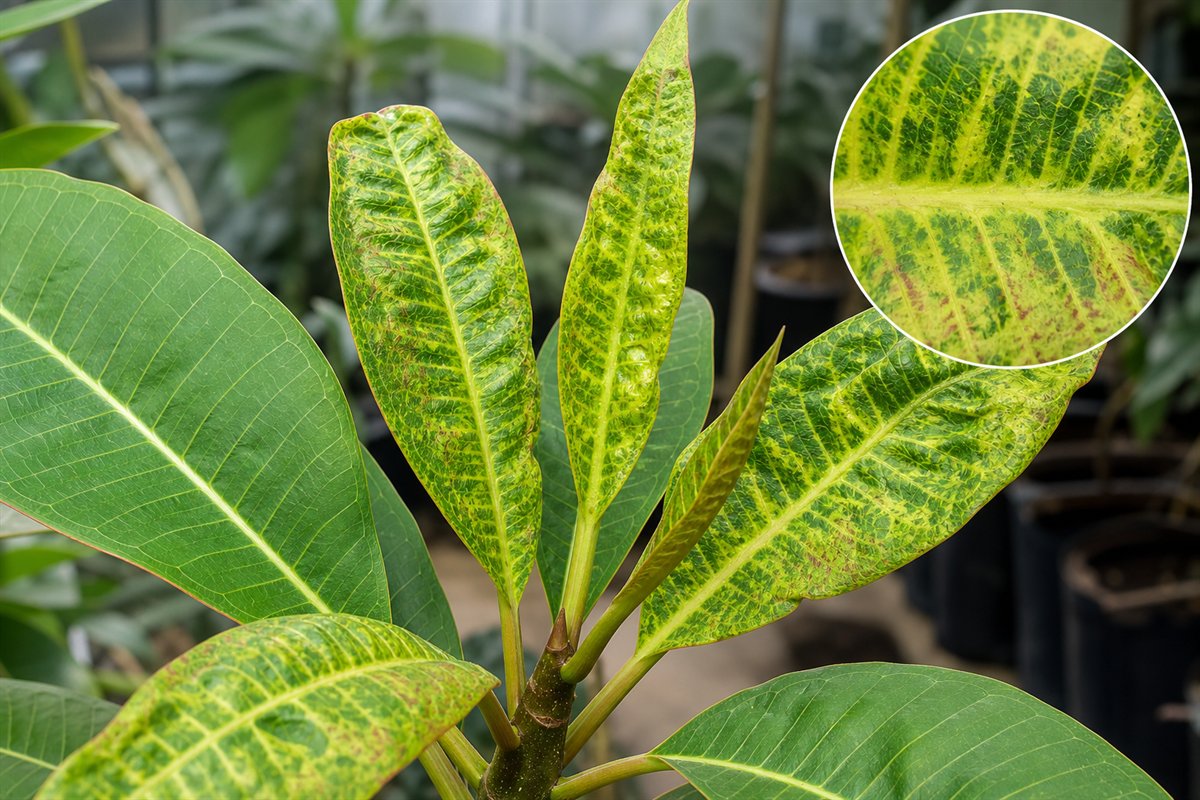 Condition reference
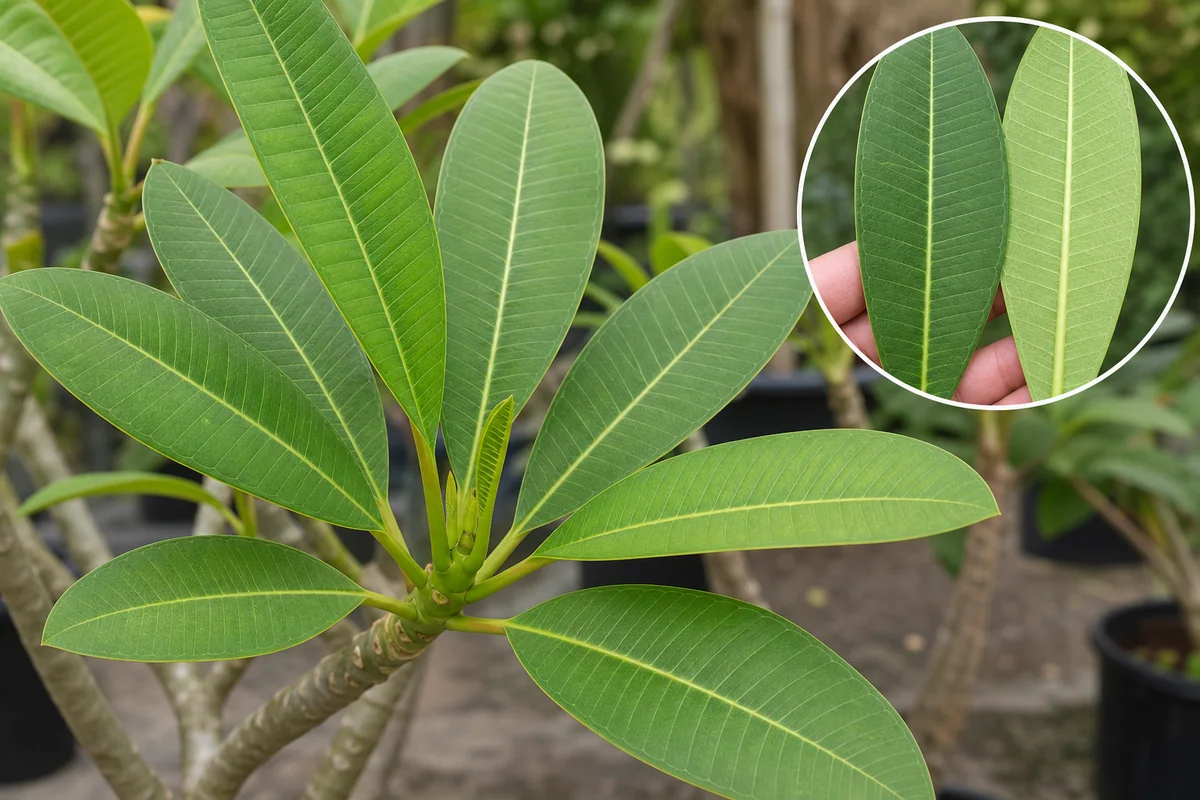 Healthy baseline
- LocationCheck which plant part, age of growth, and exposed or protected side is affected.
- TextureDecide whether the evidence is dry, powdery, sticky, raised, translucent, soft, or intact.
- ProgressionPhotograph the same area so you can tell whether the pattern is stable, improving, or spreading.
Use more than one clue. Confirm the photo with recent conditions, roots, watering history, and the rest of the plant before acting.
Frangipani Mosaic Virus (FrMV) may produce bold vein-associated chlorosis, mosaic-like color breaks, distorted leaves, and irregular growth. Those symptoms overlap with Plumeria Mosaic Virus (PlMV), nutrition, mites, thrips, herbicide injury, weather stress, and normal cultivar variation. A photograph cannot reliably identify the virus species; virus-specific testing is needed when the distinction matters.
1. Recognize a Repeatable Systemic Pattern
| Evidence | What it means |
|---|---|
| Strong light and dark banding associated with veins | Can support FrMV suspicion but is not species confirmation |
| Mosaic, chlorosis, streaking, or distortion repeated on successive new leaves | Supports a systemic cause more than one damaged leaf |
| Symptoms appear only after a spray, nutrient change, heat, cold, or sun exposure | Compare environmental and product injury before labeling the plant infected |
| Active mites, thrips, or root stress are confirmed | Address the confirmed problem and monitor whether the virus-like pattern persists |
| PlMV and FrMV both seem possible | Do not choose between them from appearance alone; use appropriate testing |
Photograph young and mature leaves, both leaf surfaces, and the entire plant. Record the cultivar, source, propagation history, recent weather, products, and confirmed pests.
2. Isolate and Request the Right Test
- Move the plant out of cutting, grafting, seed-production, sales, and exchange work while the cause is uncertain.
- Use dedicated or appropriately disinfected tools and avoid transferring fresh sap.
- Ask a plant-disease laboratory or extension service whether it offers FrMV testing and whether PlMV or a broader panel should be included.
- Follow its instructions for leaf age, sample size, packaging, temperature, and shipping.
- Interpret a negative result only for the viruses tested and the sample submitted.
If no suitable test is available, manage the plant as suspected rather than declaring it clean or infected from a photograph.
3. Manage Without Promising a Cure
No fertilizer, supplement, pesticide, fungicide, bactericide, or soil drench cures FrMV inside an infected plant. Management is intended to prevent propagation and sap transfer while supporting ordinary plant health.
- Do not take cuttings or scions, graft from the plant, or use it as breeding or sales stock.
- Disinfect tools and work surfaces using a method appropriate for plant-virus sanitation and follow the product label or validated laboratory guidance.
- Control confirmed pests for their own damage, not as a claimed virus treatment.
- Maintain normal stage-appropriate watering, drainage, light, and nutrition without trying to force symptoms away.
- Monitor nearby plants and keep dated photographs of new growth.
4. Protect Clean Stock and Other Growers
| Situation | Logical response |
|---|---|
| Virus is suspected but unconfirmed | Isolate, stop propagation, check look-alikes, and test when possible |
| Confirmed plant can be permanently isolated and never propagated | Keeping it may be possible when the owner accepts the collection risk and maintains strict sanitation |
| Confirmed plant is part of a nursery, exchange, grafting, breeding, or clean-stock program | Removal is the safer decision for protecting other plants and growers |
| Plant or material has already been distributed | Inform recipients clearly so they can isolate and seek testing |
Do not distribute a suspected or confirmed plant without clear disclosure. Follow local disposal guidance and avoid carrying sap or contaminated tools to healthy plants.
Use the Disease and Rot Checker Use the Visual Condition Finder
Turn the explanation into an action plan
- Monitor
- Mark lesion borders and photograph the plant every two to three days during rapid change, or weekly when stable.
- Change one thing
- Make the smallest justified correction, record the date, and avoid stacking treatments before you can see which one helped.
- Escalate when needed
- Act quickly when soft decay moves into the trunk, foul odor appears, blackening advances daily, or several plants show the pattern.