
The Plumeria Pests and Diseases Guide is an essential resource for identifying, preventing, and treating the most common threats to plumeria plants, including pests, fungi, and environmental stressors. This guide offers detailed information on how to recognize early signs of trouble, from insect infestations to fungal infections, and provides practical solutions to address these issues. It also covers strategies for managing environmental factors such as excessive humidity, temperature fluctuations, and poor soil conditions, which can weaken plumeria. With expert tips on natural and chemical treatments, as well as proactive care practices, this guide ensures your plumeria remains healthy, resilient, and free from common ailments, allowing it to thrive season after season.
How to Manage Plumeria Mosaic Virus (PlMV) – Sanitation, Propagation Control & Visual Containment
What to check next
This guide helps you separate infectious disease from pests, exposure injury, nutrition symptoms, and normal aging before pruning or treating. Read the detailed explanation, then use this sequence to decide what to do.
Confirm the evidence for virus-like symptoms
- Look for
- Persistent mosaic, rings, unusual color breaking, distortion, or repeated patterned symptoms in new growth that do not track with feeding or weather.
- Compare with
- Mites, herbicide exposure, nutrient imbalance, temperature stress, genetic variegation, and photography can resemble viral symptoms.
- Safest first response
- Isolate the plant, stop sharing tools, document several growth cycles, control possible vectors, and use laboratory testing before making permanent decisions.
Microclimate clue: Weather can strengthen or hide visible symptoms, but it does not confirm or eliminate a virus; testing and repeated growth patterns matter.
- 1
Stabilize and isolate
Keep questionable plants away from healthy collections and avoid splashing water or sharing tools.
- 2
Describe the tissue
Note whether damage is dry, powdery, water-soaked, sunken, soft, foul-smelling, or one-sided.
- 3
Map the progression
Photograph and mark the edge so you can tell whether the condition is spreading.
- 4
Confirm the closest match
Compare the defining sign, not only leaf color, and use laboratory testing when needed.
- 5
Intervene narrowly
Remove only unsalvageable tissue, sanitize tools, and treat only when the diagnosis supports it.
How microclimate changes this answer
Long leaf wetness, warm humidity, poor airflow, and cool wet roots increase disease pressure; intense sun and cold create look-alikes.
Compare this disease or rot pattern with healthy growth
Use these references to confirm that this article matches the visible pattern before changing care or applying a treatment.
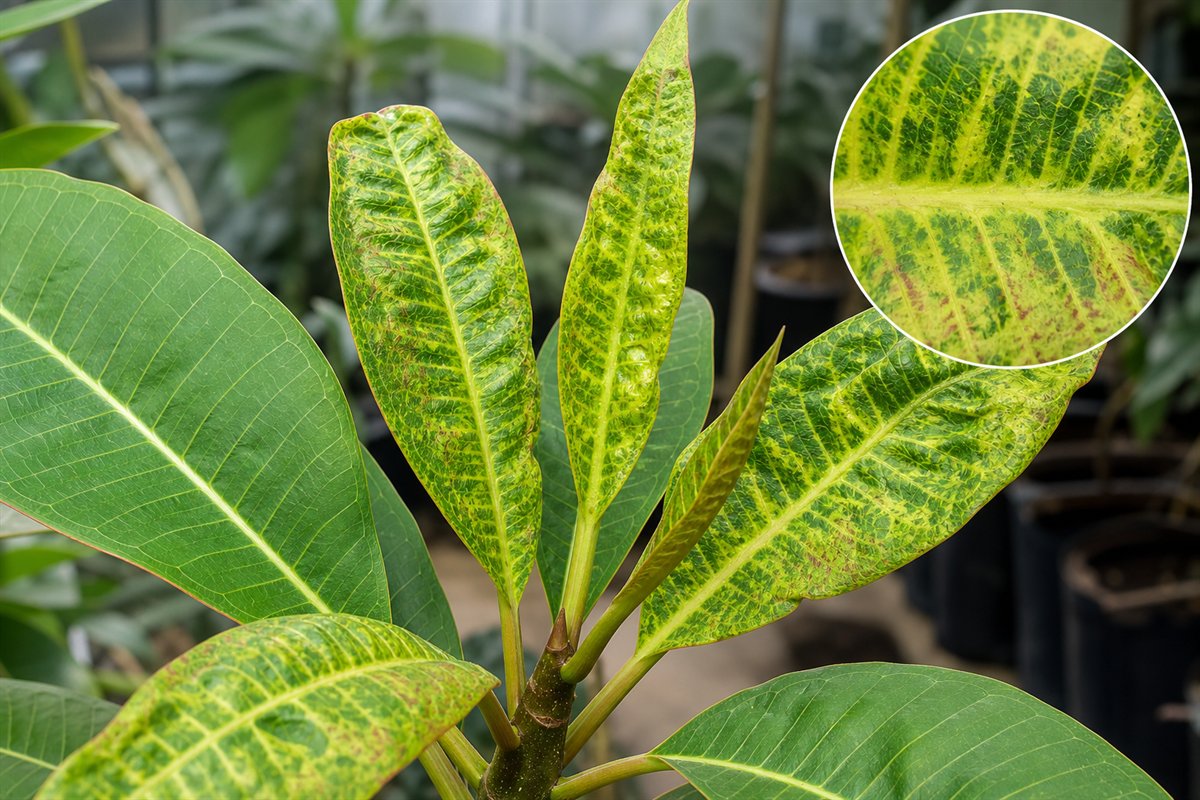 Condition reference
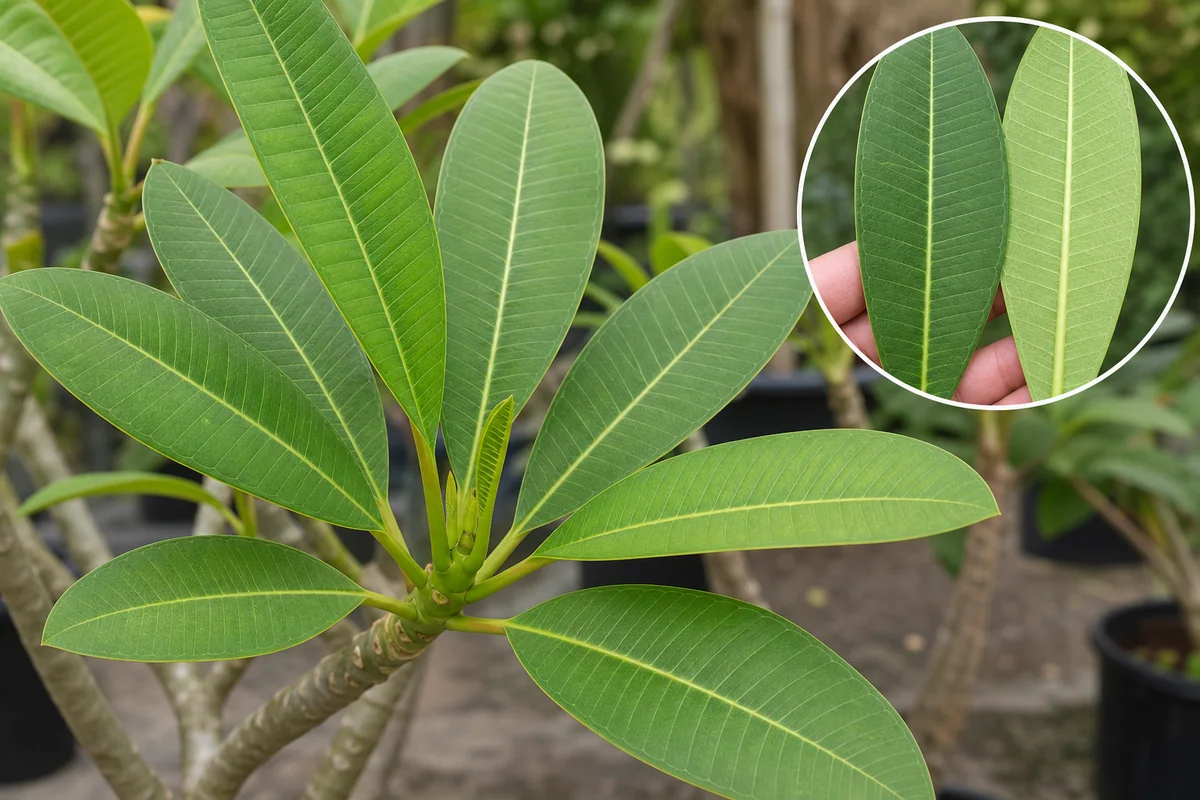 Healthy baseline
- LocationCheck which plant part, age of growth, and exposed or protected side is affected.
- TextureDecide whether the evidence is dry, powdery, sticky, raised, translucent, soft, or intact.
- ProgressionPhotograph the same area so you can tell whether the pattern is stable, improving, or spreading.
Use more than one clue. Confirm the photo with recent conditions, roots, watering history, and the rest of the plant before acting.
Possible mosaic-virus pattern decision path: Confirm the pattern and progression before changing care.
- Confirm: Look for mottling, vein banding, rings, streaking, or distortion that repeats on multiple newly formed leaves. Nutrient imbalance, mites, herbicide exposure, cold, and cultivar coloration can mimic a virus. Visual symptoms alone do not prove PlMV or FrMV.
- Start conservatively: Isolate the plant from propagation stock, photograph successive leaves, avoid grafting or taking cuttings from it, and disinfect tools between plants. Do not apply fertilizer or pesticide merely to test the diagnosis.
- Confirm before permanent decisions: No fungicide, bactericide, fertilizer, or routine spray cures a plant virus. When the plant is valuable, symptoms persist on new growth, or the plant may be propagated, seek laboratory testing or qualified plant-diagnostic help before discarding it.
- Contain propagation risk: Keep the plant out of cutting, grafting, sales, and trades while it remains suspect. Disinfect tools between plants, control possible sap-contact spread, and keep a clear record of the plant and its source.
- Monitor: Compare at least two new growth cycles when the plant is otherwise growing normally. Laboratory testing is the strongest confirmation when the plant is valuable or will be propagated.
Growing-condition check: Review recent weather, watering, airflow, drainage, plant age and stage, pot or in-ground status, recent applications, and saved microclimate. This is a logical response based on the evidence, not a confirmed laboratory diagnosis.
Use this guide path: Overview | Plmv Identify | Plmv Manage | Frmv Identify | Frmv Manage
Managing suspected Plumeria Mosaic Virus (PlMV) is mostly about containment, sanitation, and careful propagation decisions. There is no spray that cures a plant virus. The practical goal is to keep questionable material from moving through the collection while you confirm what is really happening.
Plumeria Mosaic Virus Article Path
Use this group in order when possible: identify the problem, treat only when needed, then prevent repeat outbreaks or recurrence.
- Identify Plumeria Mosaic Virus
How to Identify Plumeria Mosaic Virus (PlMV) – Mottled Leaves, Streaks & Growth Irregularities - Manage Plumeria Mosaic Virus
How to Manage Plumeria Mosaic Virus (PlMV) – Sanitation, Propagation Control & Visual Containment - Use isolation and sanitation
Isolation and Sanitation Checklist: What to Do Before Pests or Disease Spread
Safety and diagnostics: before applying products, review the Treatment Safety Checklist. If symptoms do not match this group, return to the Disease Symptom Checklist.
Before Applying Any Product
Use this article after the pest or disease has been identified. Before applying oils, soaps, sprays, drenches, fungicides, insecticides, miticides, systemics, copper, sulfur, peroxide products, biological products, or homemade mixtures, check the safety and application-method pages below.
- Treatment Safety Checklist
- Soil Drenches, Sprays, and Foliar Applications
- How to Mix and Apply Garden Products Safely
- When to Treat vs. Monitor Plumeria Pests
Why: the same product can help or harm depending on plant stress, weather, concentration, coverage, timing, beneficial insects, and whether the problem is active.
Virus-Like Symptom Diagnostic Path
Use this path when plumeria leaves show mosaic patterns, mottling, streaking, rings, strong vein banding, unusual color breaks, or distorted growth. Treat the pattern as a clue first, not proof. Virus labels affect propagation, sharing, sales, and collection decisions, so confirm carefully before calling a plant infected.
- Start with the inspection checklist to rule out mites, thrips, scale, whiteflies, spray injury, nutrient stress, watering stress, and weather damage.
- Compare disease symptoms before assuming the pattern is viral.
- Check Plumeria Mosaic Virus (PlMV) when mottling, mosaic patterns, streaks, or irregular chlorosis keep returning.
- Check Frangipani Mosaic Virus (FrMV) when bold vein banding, virus-like chlorosis, and distorted leaves appear.
- Use isolation and sanitation steps before pruning, grafting, sharing, or propagating from a suspicious plant.
Why: many plumeria stress symptoms overlap. A careful process prevents unnecessary disposal, unnecessary spraying, and accidental movement of questionable plant material.
Quick Answer
If a plant repeatedly shows virus-like mosaic symptoms, isolate it from propagation work, sanitize tools carefully, document the symptoms, and avoid sharing or selling cuttings as clean material unless the issue has been confidently ruled out or tested. Many hobby plants can be kept for observation, but they should be managed honestly and separately.
What Management Can and Cannot Do
There is no fertilizer, fungicide, insecticide, oil, copper spray, or other garden product that cures a systemically infected plumeria. Management prevents uncertain or confirmed virus material from moving through tools, sap, cuttings, and grafts while the grower decides whether to keep, test, permanently separate, or remove the plant.
| Situation | Reasonable decision | Required safeguard |
|---|---|---|
| One suspicious leaf or one stressful season | Observe and rule out pests, roots, nutrition, spray injury, heat, and cold before assuming a virus. | Photograph the plant and pause propagation until the next flush clarifies the pattern. |
| Repeated virus-like symptoms on new growth | Isolate and test when the result will affect sharing, sales, grafting, breeding, or valuable collection stock. | Ask whether the laboratory differentiates Plumeria mosaic virus from Frangipani mosaic virus and can detect mixed infection. |
| Unconfirmed sentimental hobby plant | Keeping it may be reasonable if it remains separate and is not used as clean propagation material. | Label it clearly, work on it last, use dedicated or properly disinfected tools, and disclose the uncertainty. |
| Confirmed positive plant | Permanent separation or removal is safer when clean propagation, nursery, breeding, or high-value stock is nearby. | Do not distribute cuttings, scions, grafts, or plants as virus-free. Keep the test result with the plant record. |
Sanitation for a Suspected Tobamovirus
- Remove sap and plant debris first. Disinfectants work poorly when residue remains on the blade or surface.
- Use a separate tool when possible. Finish all work on clean plants before handling the questionable plant.
- Use a validated tobamovirus protocol. Research on other tobamoviruses supports specific sodium-hypochlorite or Virkon S concentrations and contact times, but the evidence is not a direct PlMV or FrMV product label. Follow the disinfectant label, protective-equipment directions, contact time, corrosion precautions, rinsing, and drying instructions.
- Do not rely on a quick alcohol wipe alone. A routine tool-cleaning habit may not equal a validated tobamovirus inactivation protocol.
- Discard contaminated cuttings and debris. Do not return questionable material to propagation benches or compost used around clean stock.
Step-by-Step Management Plan
| Step | What to do | Why |
|---|---|---|
| 1. Isolate the plant | Move it away from active propagation benches, grafting work, and high-value plants if possible. | Isolation buys time to inspect, compare symptoms, and avoid accidental movement of questionable material. |
| 2. Rule out look-alikes | Check for mites, thrips, whiteflies, leafhoppers, nutrient stress, heat injury, spray injury, and root stress. | Many non-virus problems can create mottling or streaking and may be correctable. |
| 3. Pause propagation | Do not take cuttings, graft wood, or share material from the plant while symptoms are unresolved. | Propagation material is one of the easiest ways for a questionable plant to become a collection-wide issue. |
| 4. Sanitize tools | Clean cutting tools between plants and especially before moving from a suspicious plant to a healthy one. | Tool hygiene reduces risk from sap, wounds, and contaminated plant material. |
| 5. Document new growth | Photograph symptoms over time and compare each new flush. | Repeated symptoms on new leaves are more meaningful than old isolated damage. |
| 6. Decide keep, test, or remove | Keep isolated for observation, test if certainty matters, or remove if risk is unacceptable. | The right decision depends on collection value, production risk, and how likely the diagnosis appears. |
Sanitation Priorities
- Use a clean blade for suspicious plants and disinfect before cutting another plant. Why: cutting tools can move sap and tissue from plant to plant.
- Keep labels clear if a plant is under observation. Why: memory fades, especially in large collections.
- Remove fallen leaves and discarded cuttings from propagation areas. Why: plant debris creates confusion and can carry other pests or diseases.
- Work on questionable plants last. Why: this reduces the chance of carrying sap or debris back into healthy stock.
When Keeping the Plant May Be Reasonable
A hobby grower may choose to keep a sentimental or rare plant if it grows well, is not used for propagation, and is managed separately. The key is honesty and documentation. A plant can be enjoyed without being shared as clean propagation material.
When Removal Is Safer
Removal may be the better choice when symptoms are persistent, the plant is part of a nursery or breeding program, the plant is near valuable stock, or diagnostic testing confirms a virus and the risk is not acceptable.
What Not To Do
- Do not keep cutting from the plant just in case. Why: saving questionable wood can spread the problem later.
- Do not sell or trade it as clean material. Why: virus uncertainty should travel with the plant, not be hidden from the next grower.
- Do not depend on fertilizer, fungicide, or insecticide to cure it. Why: those tools do not remove a plant virus.
- Do not skip pest inspection. Why: mites and thrips can be the real cause of leaf symptoms and need a different response.
Bottom Line
PlMV management is less about panic and more about discipline: isolate, document, sanitize, pause propagation, and make a risk-based decision. That protects the rest of the collection while giving the plant a fair diagnosis.
Continue with the Complete Plumeria Mosaic Virus Guide
Use the complete guide to compare look-alikes, isolate and test a suspected plant, understand what management can and cannot do, and make a propagation or collection decision.
Related Guides
- How to Identify Plumeria Mosaic Virus (PlMV) – Mottled Leaves, Streaks & Growth Irregularities
- Isolation and Sanitation Checklist: What to Do Before Pests or Disease Spread
- Plumeria Pest & Disease Identification Guide
- Pest and Disease Inspection Checklist
- Disease Symptom Checklist
Turn the explanation into an action plan
- Monitor
- Mark lesion borders and photograph the plant every two to three days during rapid change, or weekly when stable.
- Change one thing
- Make the smallest justified correction, record the date, and avoid stacking treatments before you can see which one helped.
- Escalate when needed
- Act quickly when soft decay moves into the trunk, foul odor appears, blackening advances daily, or several plants show the pattern.