
The Plumeria Pests and Diseases Guide is an essential resource for identifying, preventing, and treating the most common threats to plumeria plants, including pests, fungi, and environmental stressors. This guide offers detailed information on how to recognize early signs of trouble, from insect infestations to fungal infections, and provides practical solutions to address these issues. It also covers strategies for managing environmental factors such as excessive humidity, temperature fluctuations, and poor soil conditions, which can weaken plumeria. With expert tips on natural and chemical treatments, as well as proactive care practices, this guide ensures your plumeria remains healthy, resilient, and free from common ailments, allowing it to thrive season after season.
How to Treat Stem Canker in Plumeria – Pruning, Drying, and Monitoring
What to check next
This guide helps you separate infectious disease from pests, exposure injury, nutrition symptoms, and normal aging before pruning or treating. Read the detailed explanation, then use this sequence to decide what to do.
Confirm the evidence for canker, blight, or dieback
- Look for
- A defined sunken or discolored stem lesion, bark cracking, one-sided dieback, tip death, or tissue decline that advances from a clear boundary.
- Compare with
- Sunburn, freeze injury, borer damage, pruning wounds, dehydration, and ordinary branch aging can create similar dieback.
- Safest first response
- Mark the boundary, inspect for insects and internal discoloration, sanitize tools, and prune only when progression and tissue condition justify it.
Microclimate clue: Storm injury, wet weather, cold damage, and heat stress can open tissue or create look-alikes that change the correct response.
- 1
Stabilize and isolate
Keep questionable plants away from healthy collections and avoid splashing water or sharing tools.
- 2
Describe the tissue
Note whether damage is dry, powdery, water-soaked, sunken, soft, foul-smelling, or one-sided.
- 3
Map the progression
Photograph and mark the edge so you can tell whether the condition is spreading.
- 4
Confirm the closest match
Compare the defining sign, not only leaf color, and use laboratory testing when needed.
- 5
Intervene narrowly
Remove only unsalvageable tissue, sanitize tools, and treat only when the diagnosis supports it.
How microclimate changes this answer
Long leaf wetness, warm humidity, poor airflow, and cool wet roots increase disease pressure; intense sun and cold create look-alikes.
Compare this disease or rot pattern with healthy growth
Use these references to confirm that this article matches the visible pattern before changing care or applying a treatment.
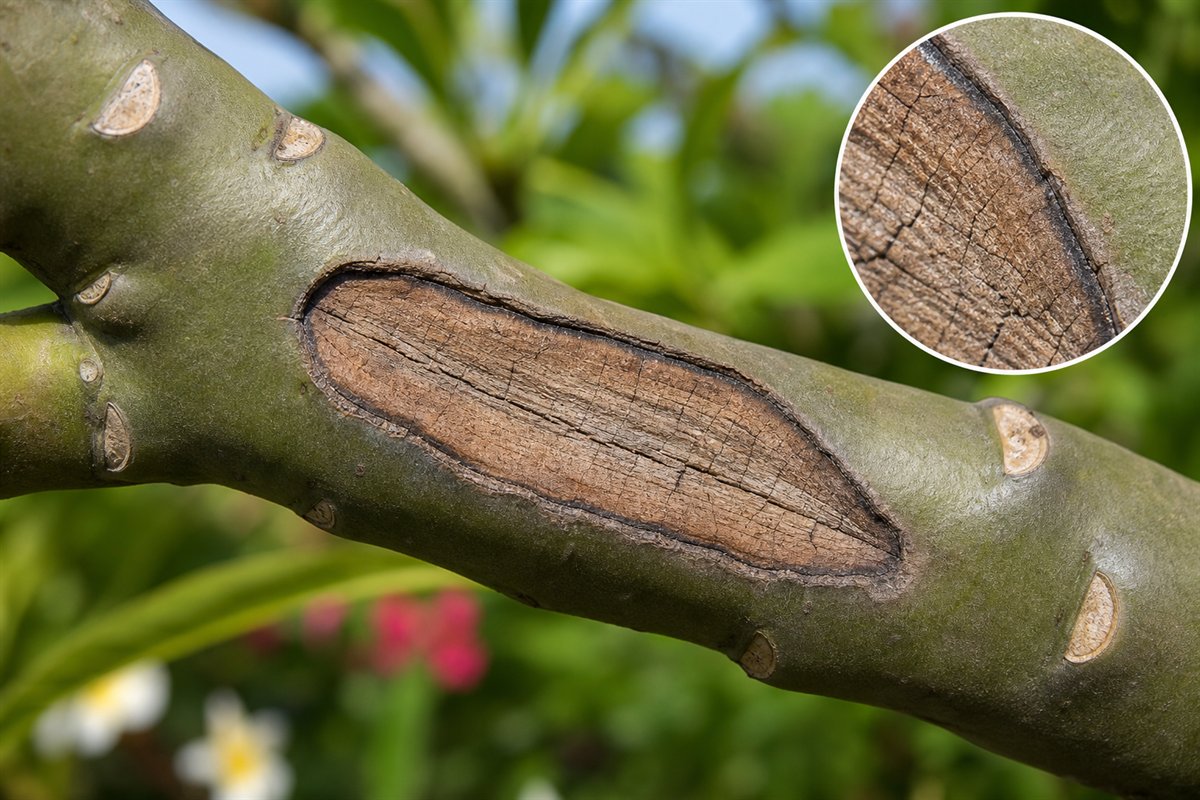 Condition reference
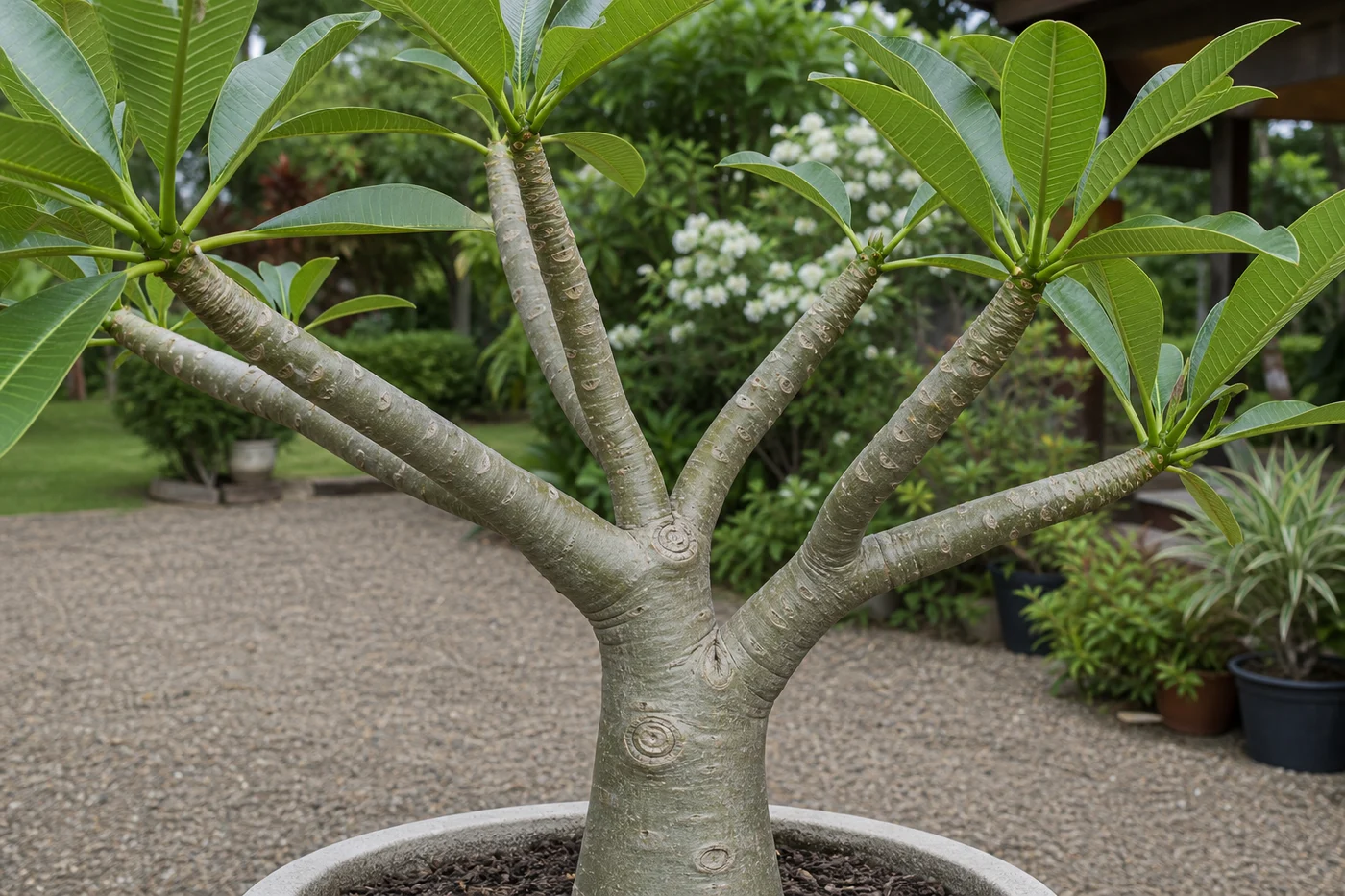 Healthy baseline
- LocationCheck which plant part, age of growth, and exposed or protected side is affected.
- TextureDecide whether the evidence is dry, powdery, sticky, raised, translucent, soft, or intact.
- ProgressionPhotograph the same area so you can tell whether the pattern is stable, improving, or spreading.
Use more than one clue. Confirm the photo with recent conditions, roots, watering history, and the rest of the plant before acting.
Stem canker decision path: Confirm the pattern and progression before changing care.
- Confirm: Look for a dry, firm, sunken lesion with a defined margin, cracking, or slow localized expansion. Soft watery tissue and foul odor fit active soft rot more strongly; uniform corking or an old wound may be stable.
- Start conservatively: Keep the lesion dry, mark its margin, improve airflow, and avoid injuring it. Prune only when it expands, girdles tissue, or threatens structural loss; cut into clean firm tissue using a disinfected tool.
- Escalate only when justified: Use a fungicide, bactericide, wound treatment, or other product only when its label includes the condition and treatment site. Follow all dilution, interval, temperature, protective-equipment, and maximum-application directions.
- Sanitize and contain: When cutting is justified, disinfect tools between cuts with 70% isopropyl alcohol or another labeled tool disinfectant and let the tool dry. Bag suspected infectious material instead of composting it.
- Monitor: Photograph and measure the marked margin every 5 to 7 days. Rapid softness or seepage requires reassessment for active rot.
Growing-condition check: Review recent weather, watering, airflow, drainage, plant age and stage, pot or in-ground status, recent applications, and saved microclimate. This is a logical response based on the evidence, not a confirmed laboratory diagnosis.
Treat stem canker based on whether the lesion is dry and stable or active and spreading. A stable scar may only need protection and monitoring, while an expanding, soft, wet, or girdling canker may require pruning or removal of affected tissue.
Stem Canker Article Path
Use this group in order when possible: identify the problem, treat only when needed, then prevent repeat outbreaks or recurrence.
- Identify stem canker
How to Identify Stem Canker in Plumeria – Sunken Lesions, Cracks, and Wounds - Treat stem canker
How to Treat Stem Canker in Plumeria – Pruning, Drying, and Monitoring - Prevent stem canker
How to Prevent Stem Canker in Plumeria – Wound Care, Airflow, and Protection
Safety and diagnostics: before applying products, review the Treatment Safety Checklist. If symptoms do not match this group, return to the Disease Symptom Checklist.
Before Applying Any Product
Use this article after the pest or disease has been identified. Before applying oils, soaps, sprays, drenches, fungicides, insecticides, miticides, systemics, copper, sulfur, peroxide products, biological products, or homemade mixtures, check the safety and application-method pages below.
- Treatment Safety Checklist
- Soil Drenches, Sprays, and Foliar Applications
- How to Mix and Apply Garden Products Safely
- When to Treat vs. Monitor Plumeria Pests
Why: the same product can help or harm depending on plant stress, weather, concentration, coverage, timing, beneficial insects, and whether the problem is active.
Rot Location Diagnostic Path
Use this path when plumeria tissue turns soft, wet, black, sunken, hollow, foul-smelling, cracked, or rapidly collapsing. First identify where the problem starts, because a root-zone problem, cutting-base problem, tender-tip problem, leaf-scar problem, and stem wound do not all need the same response.
- Start with the disease symptom checklist when several disease patterns are possible.
- Check root rot when a plant wilts while the media is wet, roots are dark or mushy, or the pot smells sour.
- Check stem rot when the branch or cutting becomes soft, hollow, wet, or foul-smelling.
- Check black tip rot when tender growing tips blacken, stall, soften, or die back after cool damp weather.
- Check leaf node rot when a leaf scar or node stays wet, dark, soft, or sunken.
- Check stem canker when a localized crack, sunken lesion, wound, or sap-weeping area progresses slowly.
Why: rot decisions depend on location, texture, speed, smell, and moisture history. Cutting too soon can remove healthy wood, but waiting too long can let active rot move deeper.
Quick Answer
Keep stable dry cankers dry and monitored. For active cankers, sanitize tools, remove diseased tissue only as needed, let clean cuts dry, improve airflow, and prevent moisture from sitting in cracks. If the lesion threatens the whole branch, pruning below the damage may be safer than carving.
Treatment Choices
| Condition | Best response | Why |
|---|---|---|
| Dry stable scar | Monitor and keep dry. | Unnecessary cutting creates new wounds. |
| Shallow active lesion | Remove loose dead tissue only if needed and dry the area. | Drying reduces disease pressure. |
| Soft or wet lesion | Treat as active rot and cut to firm clean tissue. | Softness means decay may be moving inward. |
| Girdling canker | Remove or reroot above the damage if necessary. | A girdled branch may not recover structurally. |
| Repeated wound reopening | Correct rubbing, staking, sunburn, or pest injury. | Treatment fails if the wound keeps recurring. |
Should You Use a Product?
| Situation | Product decision | Reason |
|---|---|---|
| Dry, firm, stable scar | Usually no product. | Keep it dry, remove the cause of rubbing or injury, photograph the edge, and monitor. Coating a stable scar can trap moisture or hide change. |
| Fresh clean pruning cut | Dry wound care first. | Use clean tools, cut into firm clean tissue, protect the cut from rain while it dries, and do not apply household paint, glue, wax, or an unlabeled sealant. |
| Superficial fungal or bacterial risk | Consider a labeled surface protectant only when justified. | A copper or biological product may be appropriate when its current label includes the ornamental plant, target disease, wound use, and application site. It cannot repair dead or internally infected wood. |
| Soft, wet, odorous, or rapidly advancing tissue | Do not rely on a surface spray. | Move to the stem-rot or bacterial-soft-rot path, remove advancing decay when salvage is possible, and seek diagnostic help if the boundary is unclear. |
| Repeated cankers or several affected plants | Use laboratory or professional guidance before stronger products. | Fungi, bacteria, water molds, borers, sunburn, cold injury, and physical damage can produce similar lesions. Pathogen-specific products should follow a supported diagnosis. |
Avoid false disinfection: bleach is for appropriately diluted tool or hard-surface sanitation, not for pouring into living stem tissue. Hydrogen peroxide, cinnamon, sulfur dust, and homemade mixtures are not dependable cures for an established canker unless a registered product label specifically supports that use.
Aftercare
- Keep the lesion or cut out of extended rain while it dries.
- Improve airflow around crowded branches.
- Remove tight ties, rubbing stakes, or abrasive supports.
- Watch for softening, widening, fresh ooze, or dieback beyond the lesion.
- Support root health before pushing new growth.
What Not To Do
- Do not coat over wet or dirty tissue. Why: moisture and debris can stay trapped.
- Do not carve deep wounds casually. Why: removing too much wood can weaken the branch.
- Do not keep a girdling branch as source wood. Why: internal tissue may already be compromised.
- Do not overlook pest entry holes. Why: borers can create canker-like damage.
Bottom Line
Stem canker treatment is conservative until the lesion becomes active. Keep dry stable scars dry; remove soft, spreading, or girdling damage before it becomes stem rot.
Confirm Active Disease Before Escalating
Before pruning, spraying, or changing care, confirm that the bacterial pattern is active. This matters because dry old damage, cold injury, sunburn, and healed wounds can look alarming but may not be spreading.
- Mark or photograph the edge of the symptom and recheck whether it expands.
- Feel for softness, collapse, wet tissue, odor, or spreading discoloration.
- Review recent conditions: cool wet weather, overhead moisture, pruning wounds, leaf scars, crowded airflow, or stressed roots.
- Remove actively collapsing tissue when needed, but avoid cutting healthy tissue unnecessarily.
- Sanitize tools and let cuts dry before returning the plant to wet or crowded conditions.
Watering Safeguard by Plant Stage
| Plant stage | Watering rule |
|---|---|
| Unrooted cutting | Keep cankers, cracks, and fresh pruning wounds dry. Water the rooting medium once at the beginning of the rooting process, then do not water again until two to three full-sized leaves have grown. Mist the stem only if the firm cutting looks dehydrated. |
| Newly rooted cutting | Water sparingly and allow the mix to approach dry before watering again. Do not keep damaged bark or pruning wounds repeatedly wet. |
| Established plant | Match watering to root-zone moisture, drainage, weather, season, and active growth. Redirect irrigation away from cankers and allow the bark to dry promptly after rain. |
| Seedling | Keep the small root zone lightly and evenly moist, never saturated. Maintain airflow and avoid leaving tender stems wet. |
Stem Canker Treatment and Monitoring
- Isolate and document. Photograph the lesion and protect it from rain and overhead watering.
- Confirm activity. Do not cut a dry, firm, unchanged scar. Escalate when the edge expands, cracks deepen, tissue softens, or growth above the lesion declines.
- Remove the source of injury. Take off tight ties or labels, stop rubbing, improve support, and correct any repeated wetting.
- Prune advancing tissue with sterile tools. When removal is necessary, cut below the affected area into uniformly firm, pale, clean tissue. Sterilize the blade between every cut.
- Dispose and dry. Bag removed tissue, clean the work area, and allow the cut surface to dry and callus under protection from rain with gentle airflow.
- Correct the growing conditions. Review drainage, recent cold or sun injury, crowding, sanitation, and moisture around wounds.
- Monitor the new boundary. Recheck for fresh discoloration, softness, cracking, seepage, odor, or dieback before returning to routine care.
Related Guides
- How to Identify Stem Canker in Plumeria – Sunken Lesions, Cracks, and Wounds
- How to Prevent Stem Canker in Plumeria – Wound Care, Airflow, and Protection
- Disease Symptom Checklist
- Isolation and Sanitation Checklist
- Bacterial Soft Rot
Look for a localized, sharply bounded stem lesion
A canker is a localized area of dead or damaged bark and stem tissue, not the name of one pathogen. Photograph the entire branch and the lesion edge, mark its boundary, and compare its firmness, depth, circumference, and change over time.
Turn the explanation into an action plan
- Monitor
- Mark lesion borders and photograph the plant every two to three days during rapid change, or weekly when stable.
- Change one thing
- Make the smallest justified correction, record the date, and avoid stacking treatments before you can see which one helped.
- Escalate when needed
- Act quickly when soft decay moves into the trunk, foul odor appears, blackening advances daily, or several plants show the pattern.