
The Plumeria Pests and Diseases Guide is an essential resource for identifying, preventing, and treating the most common threats to plumeria plants, including pests, fungi, and environmental stressors. This guide offers detailed information on how to recognize early signs of trouble, from insect infestations to fungal infections, and provides practical solutions to address these issues. It also covers strategies for managing environmental factors such as excessive humidity, temperature fluctuations, and poor soil conditions, which can weaken plumeria. With expert tips on natural and chemical treatments, as well as proactive care practices, this guide ensures your plumeria remains healthy, resilient, and free from common ailments, allowing it to thrive season after season.
Sap-Sucking Pest Checklist: How to Spot Mites, Mealybugs, Scale, Aphids, and Whiteflies
What to check next
This guide helps you confirm that a living pest is present, identify where it is feeding, and choose a measured response without treating inactive damage. Read the detailed explanation, then use this sequence to decide what to do.
Confirm the evidence for mealybugs
- Look for
- White cottony insects or egg masses in tips, nodes, petiole joints, roots, and protected crevices, often with honeydew and ants.
- Compare with
- Mold, mineral residue, dried latex, and ordinary plant fibers do not move or reveal soft-bodied insects beneath the wax.
- Safest first response
- Isolate the plant, inspect both canopy and roots, physically remove visible colonies, and repeat checks for newly hatched insects.
Microclimate clue: Warm, sheltered, humid locations and crowded collections favor concealed colonies and repeated reinfestation.
- 1
Inspect before treating
Use bright light and magnification on leaf undersides, tips, petioles, stems, and the soil line.
- 2
- 3
Identify the feeding pattern
Separate sucking, chewing, mining, boring, and root-zone damage.
- 4
Start with the least disruptive action
Isolate, wash, and use only a treatment labeled for the confirmed pest and plant.
- 5
Repeat the inspection
Eggs or protected life stages can survive the first response, so follow-up checks matter.
How microclimate changes this answer
Dry heat favors mites, protected humid growth favors some scale and mealybugs, and wet shade increases snail and slug activity.
Compare this insect or pest pattern with healthy growth
Use these references to confirm that this article matches the visible pattern before changing care or applying a treatment.
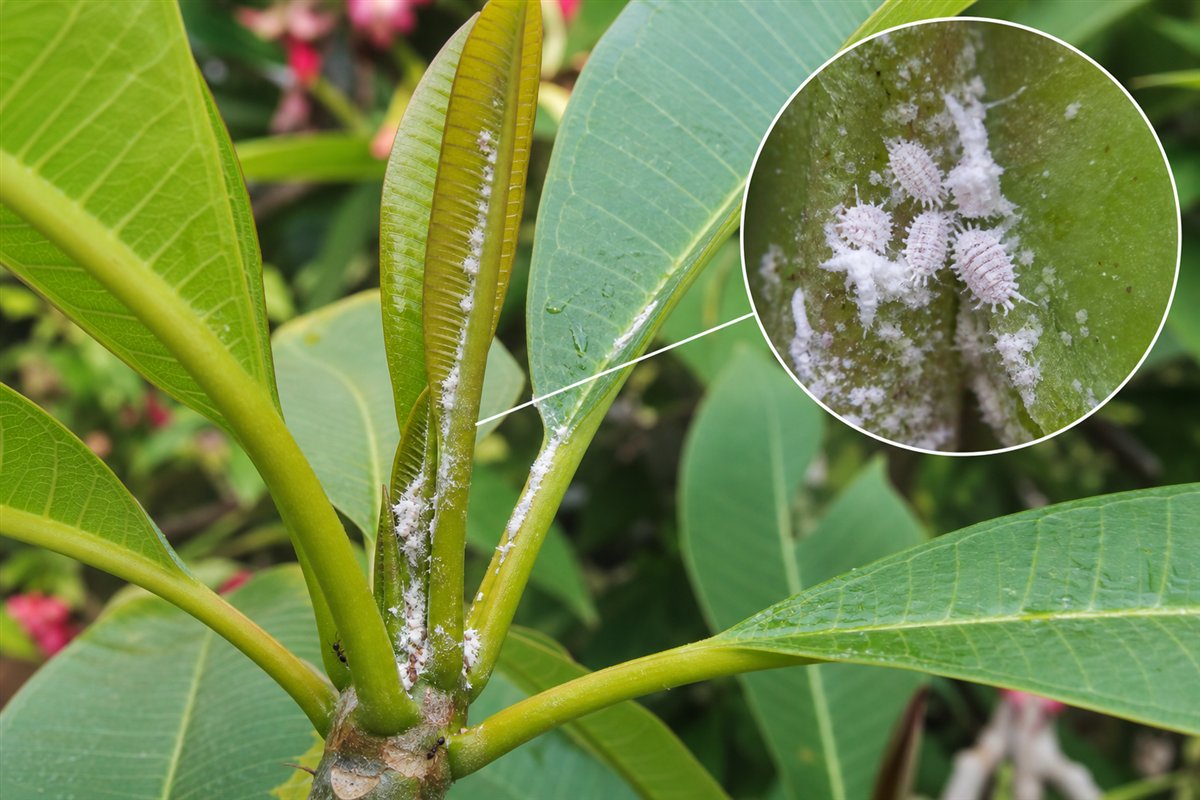 Condition reference
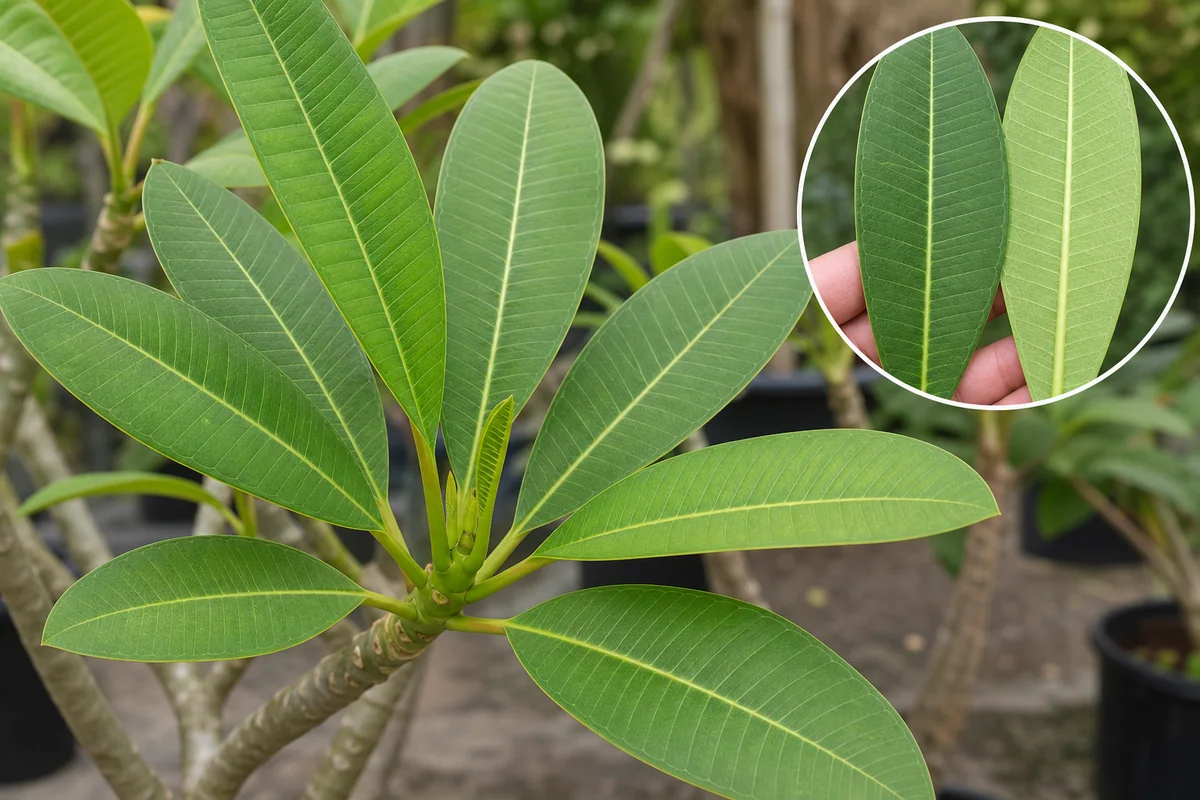 Healthy baseline
- LocationCheck which plant part, age of growth, and exposed or protected side is affected.
- TextureDecide whether the evidence is dry, powdery, sticky, raised, translucent, soft, or intact.
- ProgressionPhotograph the same area so you can tell whether the pattern is stable, improving, or spreading.
Use more than one clue. Confirm the photo with recent conditions, roots, watering history, and the rest of the plant before acting.
Use this checklist when plumeria leaves look sticky, speckled, bronzed, dusty, curled, distorted, weakened, or covered with small insects. Sap-sucking pests remove plant juices from leaves, stems, buds, and tender growth. The damage may look like nutrient stress or dry weather at first, so confirmation matters.
Sap-Sucking Pest Diagnostic Path
- Fine stippling, bronzing, dull leaves, or webbing: start with spider mite identification. Spider mites are especially common in hot, dry, dusty, protected conditions.
- White cottony clusters in crevices: check mealybugs.
- Hard, shell-like bumps on stems or leaves: check scale insects.
- Clusters on tender tips with sticky residue: check aphids.
- Small white insects flying up from leaf undersides: check whiteflies.
- Flower scarring, bud damage, or silver streaking: check thrips.
Quick ID Box
Look for tiny moving specks, pale stippling, bronzing, webbing, and damage that often starts on older or lower leaves. Tap a leaf over white paper or use magnification.
Look for white cottony masses, sticky honeydew, ants, and hiding spots around leaf joints, stem crevices, and tight new growth.
Look for fixed, raised bumps that may scrape off with a fingernail. Crawlers may be hard to see, so inspect stems and leaf midribs closely.
Look for insects on tender growth or leaf undersides, sticky leaves, ants, and black sooty mold that grows on honeydew.
Look for flower damage, bud blast, silvery streaks, and tiny slender insects that hide in flowers and tight growth.
Look for small wedge-shaped insects that jump or move sideways and cause stippling, speckling, or spotting on leaves.
Confirm by Appearance and Behavior
Use the insect or mite itself, where it hides, and how it moves. Sticky honeydew, ants, yellowing, curling, and sooty mold are useful clues, but several pests can create the same secondary symptoms.
| Closest match | What to look for | Best confirmation |
|---|---|---|
| Mealybugs | White cottony insects or wax in leaf joints, tips, stems, and protected crevices | Look for individual oval insects beneath the cottony material. They may move slowly when disturbed. |
| Scale insects | Firm fixed bumps or covers on stems, leaves, petioles, or leaf scars | Check whether the cover remains attached while a crawler stage may move nearby. Do not identify every raised stem mark as scale. |
| Aphids | Clusters of soft pear-shaped insects on tender tips, buds, or leaf undersides | Look for cornicle-like projections, shed skins, curled new growth, and honeydew. |
| Whiteflies | Tiny white adults that flutter when leaves are disturbed; flat pale nymphs below leaves | Confirm both underside stages and feeding residue rather than relying only on one flying insect. |
| Leafhoppers | Small wedge-shaped insects that jump, sidestep, or fly quickly from leaves and stems | Observe movement and look for pale stippling, cast skins, or fresh feeding on the same growth. |
| Spider mites | Very small moving specks, pale stippling, bronzing, and sometimes fine webbing beneath leaves | Tap a leaf over white paper and inspect moving specks with a hand lens. Mites are not insects. |
| No pest visible | Yellowing, curling, residue, or old damage without an active organism | Check roots, moisture, nutrition, heat, spray injury, and whether the pest has already left before treating. |
Cottony clusters and fixed bumps are not the same diagnosis. Cottony, mobile insects support mealybugs; firm attached covers support scale. Use the matching cornerstone page before choosing treatment.
Why These Pests Are Easy To Confuse
Most sap-sucking pests cause some form of yellowing, stippling, weakening, curling, or sticky residue. The difference is where they feed and what they leave behind. Mites often make leaves look dusty or bronzed. Mealybugs and scale hide in protected areas. Aphids and whiteflies often create honeydew and attract ants. Thrips often show up first as flower or bud damage.
First Response
- Spray the canopy with water when mites, aphids, or whiteflies are suspected. Why: a firm rinse helps knock down pests and dust on leaves; it is different from watering the soil.
- Inspect the underside of leaves every few days during hot, dry periods. Why: spider mite populations can build quickly from late June until cooler weather returns.
- Remove heavily infested leaves only when needed. Why: removing every imperfect leaf can weaken the plant, but removing the worst pest reservoirs can reduce spread.
- Follow with the correct treatment page. Why: scale, mites, mealybugs, aphids, thrips, and whiteflies do not respond equally to the same product or method.
What Not To Do
- Do not treat every sap-sucking pest the same way. Why: scale armor, mealybug wax, mite life cycles, and whitefly mobility require different timing and coverage.
- Do not ignore ants. Why: ants protect honeydew-producing pests and can make aphids, mealybugs, scale, and whiteflies harder to control.
- Do not rely on one spray for a heavy mite outbreak. Why: repeated inspection, canopy rinsing, coverage of leaf undersides, and follow-up timing are usually needed.
Scale Versus Other Sap-Sucking Pests
Scale insects are different from most sap-sucking pests because many stages stay fixed in place under a cover. That is why they can look like bumps, scabs, or old plant scars instead of insects. Mites usually cause stippling or bronzing. Mealybugs form cottony clusters. Whiteflies fly up when disturbed. Leafhoppers jump. Scale usually stays attached.
- Confirm scale by checking whether the bump is attached, whether a cover lifts, and whether crawlers are nearby.
- Look for honeydew and ants because soft scale may be protected by ants.
- Do not treat every bump because old covers and plant scars can look suspicious but may not be active pests.
Best Next Pages
- How to Treat Spider Mites on Plumeria
- How to Treat Mealybugs on Plumeria
- How to Treat Scale Insects on Plumeria
- How to Treat Aphids on Plumeria
- How to Treat Whiteflies on Plumeria
- How to Treat Thrips on Plumeria
- How to Identify Leafhoppers on Plumeria
- When to Treat vs. Monitor Plumeria Pests
Related Guides
- Mites on Plumeria: Spider Mites, Rust Mites, Broad Mites, and Cyclamen Mites
- How to Identify Scale Insects on Plumeria
- How to Identify Mealybugs on Plumeria
- How to Identify Aphids on Plumeria
- How to Identify Whiteflies on Plumeria
- Plumeria Treatment Decision Guide
- How to Identify and Manage Sooty Mold on Plumeria
Turn the explanation into an action plan
- Monitor
- Check the same marked leaves and nearby plants every three to seven days until no active pests or fresh damage remain.
- Change one thing
- Make the smallest justified correction, record the date, and avoid stacking treatments before you can see which one helped.
- Escalate when needed
- Seek local diagnostic help when damage accelerates despite treatment, borers enter major stems, or the pest cannot be identified.