
The Plumeria Pests and Diseases Guide is an essential resource for identifying, preventing, and treating the most common threats to plumeria plants, including pests, fungi, and environmental stressors. This guide offers detailed information on how to recognize early signs of trouble, from insect infestations to fungal infections, and provides practical solutions to address these issues. It also covers strategies for managing environmental factors such as excessive humidity, temperature fluctuations, and poor soil conditions, which can weaken plumeria. With expert tips on natural and chemical treatments, as well as proactive care practices, this guide ensures your plumeria remains healthy, resilient, and free from common ailments, allowing it to thrive season after season.
How to Treat Spider Mites on Plumeria (Organic & Chemical Methods)
What to check next
This guide helps you confirm that a living pest is present, identify where it is feeding, and choose a measured response without treating inactive damage. Read the detailed explanation, then use this sequence to decide what to do.
Confirm the evidence for spider mites
- Look for
- Fine pale stippling that expands into bronzing, active mites or eggs on leaf undersides, and fine webbing in established infestations.
- Compare with
- Rust mites, thrips, dust, spray residue, drought stress, and natural leaf aging can create similar discoloration.
- Safest first response
- Isolate the plant, confirm activity with magnification, rinse leaf undersides, and use only a labeled control suited to the plant and temperature.
Microclimate clue: Hot, dry, dusty, protected locations can accelerate spider-mite reproduction and shorten the time between follow-up inspections.
- 1
Inspect before treating
Use bright light and magnification on leaf undersides, tips, petioles, stems, and the soil line.
- 2
- 3
Identify the feeding pattern
Separate sucking, chewing, mining, boring, and root-zone damage.
- 4
Start with the least disruptive action
Isolate, wash, and use only a treatment labeled for the confirmed pest and plant.
- 5
Repeat the inspection
Eggs or protected life stages can survive the first response, so follow-up checks matter.
How microclimate changes this answer
Dry heat favors mites, protected humid growth favors some scale and mealybugs, and wet shade increases snail and slug activity.
Compare this leaf pattern with healthy growth
Use these references to confirm that this article matches the visible pattern before changing care or applying a treatment.
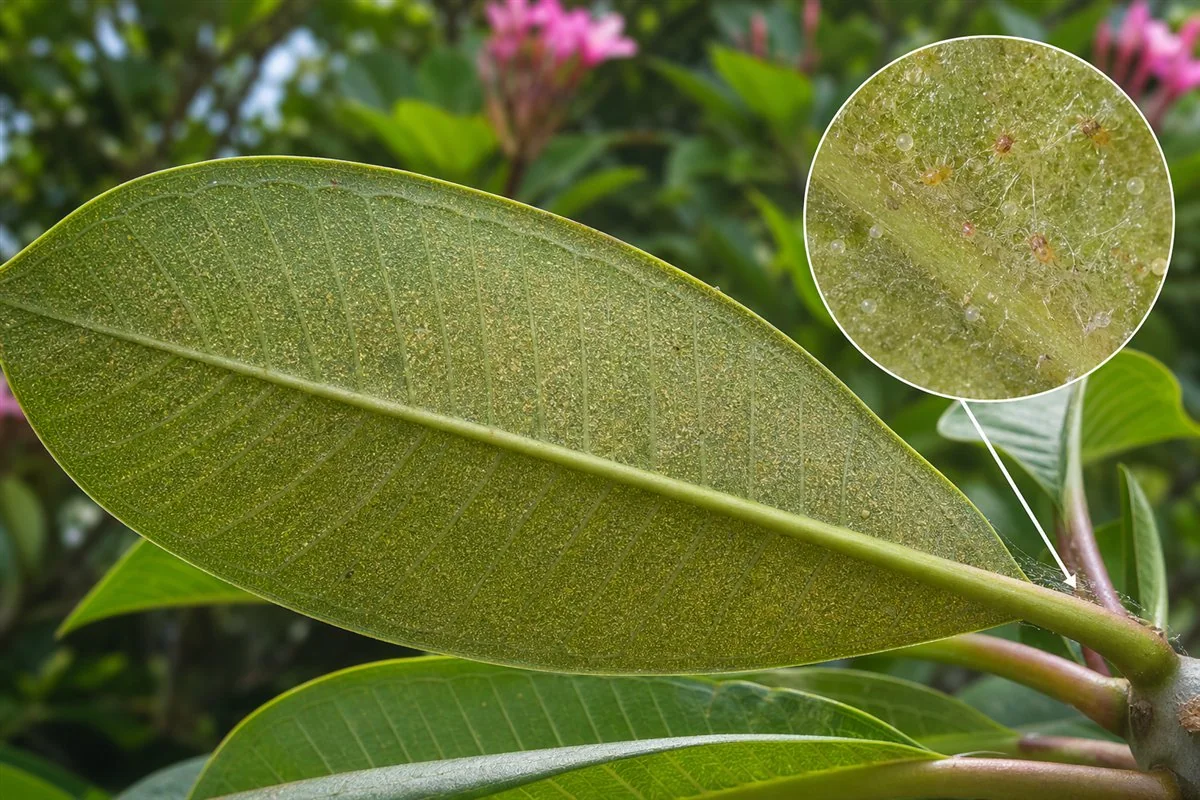 Condition reference
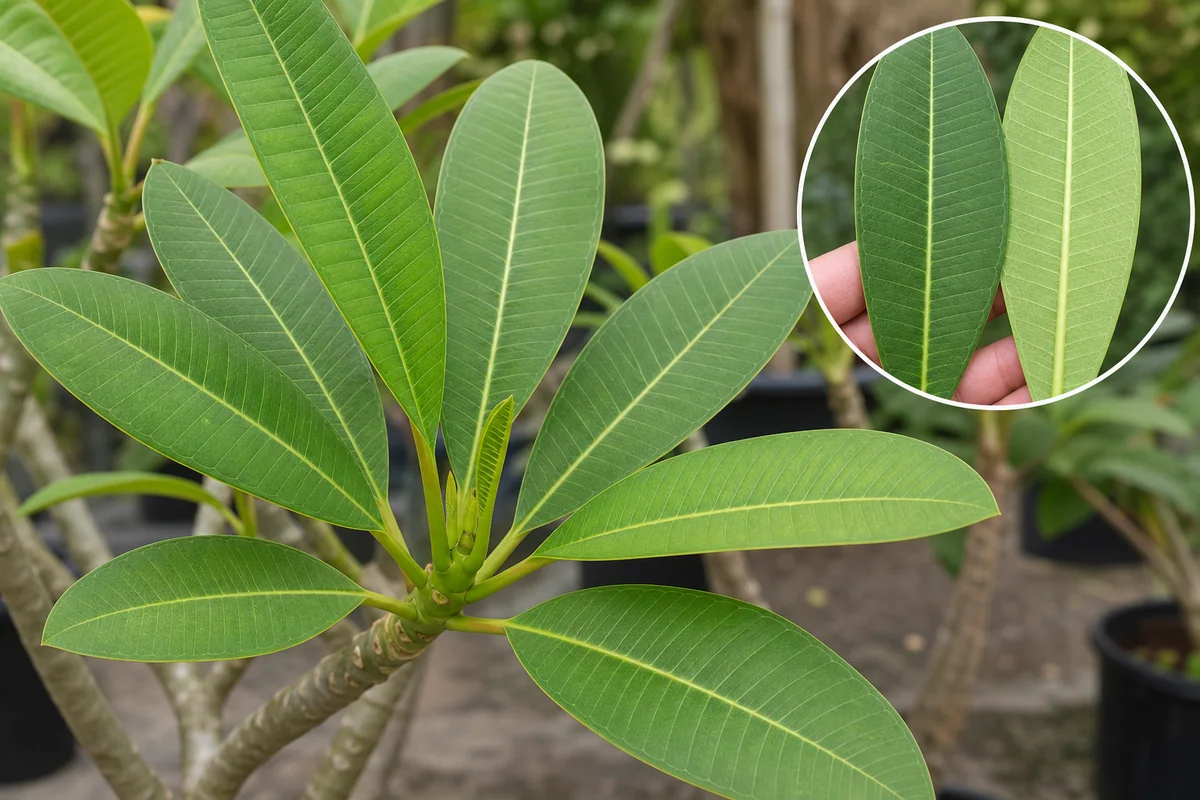 Healthy baseline
- LocationCheck which plant part, age of growth, and exposed or protected side is affected.
- TextureDecide whether the evidence is dry, powdery, sticky, raised, translucent, soft, or intact.
- ProgressionPhotograph the same area so you can tell whether the pattern is stable, improving, or spreading.
Use more than one clue. Confirm the photo with recent conditions, roots, watering history, and the rest of the plant before acting.
Spider mites decision path: Treat only after the defining evidence is present or the pest has been directly observed.
- Confirm: Check leaf undersides with magnification for moving mites, eggs, fine webbing, and pale stippling that begins between veins. Heat or nutrient stress can resemble early stippling but will not produce mites or webbing.
- Start conservatively: Move the plant away from unaffected plants, rinse leaf undersides thoroughly, reduce dust, and correct excessive heat or drought stress without leaving the root zone wet.
- Escalate only when justified: If active pests persist, choose a product specifically labeled for the pest and the treatment site. Follow the label for dilution, coverage, interval, maximum applications, protective equipment, and temperature limits. Test a small area first.
- Protect flowers and beneficial insects: Avoid spraying open blooms or treating when bees and other pollinators are visiting. Never combine products unless both labels expressly allow it.
- Monitor: Reinspect leaf undersides every 3 to 4 days because eggs can survive the first treatment. Continue until at least two consecutive checks find no moving mites.
Microclimate check: Consider recent heat, rain, humidity, wind, indoor protection, plant stage, and whether the plumeria is potted or in-ground before choosing an action. These recommendations are a logical course based on observed evidence, not a guaranteed diagnosis.
How to Treat Spider Mites on Plumeria (Organic & Chemical Methods)
Spider mites are notorious for sneaking up on plumeria growers. By the time most people notice the stippling, webbing, and bronzed leaves, the infestation is already well established. Fortunately, once identified, spider mites can be managed with a combination of targeted treatments, environmental adjustments, and ongoing vigilance. This guide provides a step-by-step plan to eliminate spider mites from plumeria plants using both organic and chemical solutions — along with smart prevention strategies to stop them from returning.
Where This Page Fits
Spider mite treatment guide. Use this page after you have confirmed active spider mites or a strong symptom pattern that points to spider mites.
- If you still need to confirm the pest, use How to Identify Spider Mite Damage on Plumeria first. For prevention and repeat-outbreak planning, use Plumeria Spider Mites Seasonal and Year-Round Tips. For routine monitoring, use the Seasonal Spider Mite Checklist.
Spider Mites Article Path
Use this group in order when possible: identify the problem, treat only when needed, then prevent repeat outbreaks or recurrence.
- Identify spider mite damage
How to Identify Spider Mite Damage on Plumeria - Treat spider mites
How to Treat Spider Mites on Plumeria (Organic & Chemical Methods) - Use seasonal mite guidance
Plumeria Spider Mites (Seasonal and Year-Round Tips) - Check seasonal mite timing
Seasonal Spider Mite Checklist for Plumeria Growers
Safety and diagnostics: before applying products, review the Treatment Safety Checklist. If symptoms do not match this group, return to the Pest & Disease Identification Guide.
Before Applying Any Product
Use this article after the pest or disease has been identified. Before applying oils, soaps, sprays, drenches, fungicides, insecticides, miticides, systemics, copper, sulfur, peroxide products, biological products, or homemade mixtures, check the safety and application-method pages below.
- Treatment Safety Checklist
- Soil Drenches, Sprays, and Foliar Applications
- How to Mix and Apply Garden Products Safely
- When to Treat vs. Monitor Plumeria Pests
Why: the same product can help or harm depending on plant stress, weather, concentration, coverage, timing, beneficial insects, and whether the problem is active.
Mite note: On plumeria, the most common practical spider mite problems are usually twospotted spider mite (Tetranychus urticae) and sixspotted spider mite (Eotetranychus sexmaculatus). Red spider mite is often a grower term for reddish spider mites rather than one exact species. If the newest growth is twisted, hardened, or bud-damaged instead of mostly stippled and bronzed, also consider broad mites (Polyphagotarsonemus latus) or cyclamen mites (Phytonemus pallidus) as look-alikes.
Treatment Action Snapshot
- Confirm first: Inspect the affected tissue and compare look-alikes before spraying, pruning, repotting, or discarding a plant.
- Act on the source: Remove the worst pests or damaged tissue, isolate movable plants when spread is possible, and correct water, airflow, soil, or stress conditions.
- Choose the right control: Start with physical removal and cultural correction, then use targeted organic, biological, or chemical controls only when needed and always follow the product label.
- Follow up: Recheck in 3 to 7 days for insects and mites, and watch the next watering cycle closely for root, stem, or rot problems.
- Why it matters: Treatment works best when the cause and the stress conditions are corrected together, not when only the visible symptom is treated.
Spider Mite Guide Path
- Identify spider mite damage before treating.
- Treat active spider mites with rinsing, coverage, and follow-up inspection.
- Use seasonal prevention during hot, dry, dusty weather.
- Follow the seasonal checklist for routine monitoring.
Spider Mite Treatment Ladder
| Confirmed level | Preferred response | Important limit |
|---|---|---|
| Light, localized activity on a sturdy plant | Isolate, remove manageable mites, and rinse leaf undersides with plain water when weather and plant condition permit. | Shield the root zone from unnecessary saturation and do not use a forceful spray on tender seedlings or fragile new growth. |
| Active mites continue after physical removal | Consider a labeled insecticidal soap or horticultural oil with thorough underside coverage. | Test a small area first. Do not apply during unsafe heat, direct sun, drought stress, or other label-restricted conditions. |
| Protected growing area with recurring mites | Consider predatory mites selected for the pest species, temperature, humidity, and crop conditions. | Recent pesticide residues and incompatible sprays can kill the predators. Follow supplier release, storage, and monitoring directions. |
| Heavy webbing or rapidly increasing damage | Use a miticide labeled for spider mites and the plant or use site, covering the surfaces and life stages stated on the label. | One product may not control every life stage. Follow repeat timing rather than spraying more often. |
| Repeated treatments are failing | Confirm live mites, review coverage, and rotate modes of action when labels and resistance guidance support it. | Changing brand names does not rotate chemistry when the active ingredient or mode of action is the same. |
| Seedling, graft, or newly rooted cutting | Use isolation and the gentlest effective method first; test any permitted foliar treatment on a small area or small group. | Tender leaves burn easily. Newly rooted cuttings must not be left in persistently wet medium. |
Do not combine soap, oil, miticide, fertilizer, peroxide, or other sprays unless every applicable label permits the mixture and timing. Record the product, rate, date, weather, plant stage, and recheck date.
Understanding the Treatment Approach
Spider mites reproduce quickly, especially in dry and warm conditions. Successful treatment focuses on:
- Killing all life stages, including eggs and nymphs
- Disrupting their environment
- Protecting new growth
- Preventing recurrence
Treatment should be consistent and repeated every 5–7 days until all symptoms disappear.
Step-by-Step Spider Mite Treatment Guide
Step 1: Isolate and Prepare the Plant
If your plumeria is in a pot, move it away from other plants to prevent the mites from spreading. Clean up all fallen leaves around the base, and if webbing or visible dust covers the foliage, gently rinse it off with a strong stream of water from a hose or sink sprayer. This is a canopy rinse for pest removal, not soil watering; avoid flooding the pot or leaving water in saucers.
Tip: Spider mites often start on one plant but quickly move to neighboring ones. Early isolation protects your entire collection.
Step 2: Use Physical Removal First
Water Spray Method:
- Use a strong, directed canopy spray to wash mites off leaves, aiming upward at the undersides and along the veins.
- Repeat every other day for one week; during peak mite season, continue routine canopy rinses 1-3 times per week as prevention.
- This method alone can significantly reduce populations because it physically dislodges mites, eggs, dust, and webbing, and is ideal for light infestations.
Leaf Wipe Option:
- For indoor or greenhouse plumerias, use a damp cloth or soft sponge to gently wipe both sides of each leaf.
Step 3: Apply Organic Treatments
For mild to moderate infestations, start with natural and low-impact solutions.
✅ Option 1: Neem Oil Spray
- Mix neem oil according to label directions (usually 2 tbsp per gallon of water + a few drops of mild soap).
- Spray on the entire plant, including stems and undersides of leaves.
- Apply early morning or late afternoon to avoid sunburn.
- Reapply every 5–7 days until mites are gone.
✅ Option 2: Insecticidal Soap
- Spray ready-to-use insecticidal soap generously over the plant.
- Ideal for small plants or new growth.
- It works by suffocating soft-bodied pests like mites.
- Reapply every 5–7 days.
✅ Option 3: Horticultural Oil (e.g., Canola or Mineral Oil)
- Smothers eggs and mites alike.
- Useful during early stages or after pruning to prevent re-infestation.
- Don’t apply when temperatures exceed 85°F.
✅ Option 4: Biological Control
- In enclosed environments, such as greenhouses, release predatory mites like Phytoseiulus persimilis.
- These beneficial mites hunt and consume spider mites.
- Not suitable for outdoor conditions unless contained.
Step 4: Apply Chemical Controls (for Severe Infestations)
If the population is heavy, or organic methods fail after 2–3 rounds, consider miticides. Use sparingly and only when necessary.
🔹 Selective Miticides:
- Look for products labeled for spider mites and ornamental plants.
- Common active ingredients:
- Abamectin
- Spiromesifen
- Bifenthrin
- Follow label instructions exactly.
- Rotate between products with different modes of action to prevent resistance.
🔹 Systemic Options:
- Products containing imidacloprid can be applied as a soil drench.
- Less effective on mites (not a true miticide), but helpful if aphids, scale, or whiteflies are also present.
Caution: Avoid using broad-spectrum insecticides repeatedly. They can kill beneficial insects and worsen mite problems long-term.
Product Suggestions
| Product Type | Example Brands | Use Case |
|---|---|---|
| Neem Oil | Bonide Neem Oil, Garden Safe | Organic spray for mild infestations |
| Insecticidal Soap | Safer Brand, Bonide Insecticidal Soap | Organic spray, contact action |
| Horticultural Oil | Monterey Horticultural Oil | Organic smothering spray |
| Selective Miticide | Avid (abamectin), Forbid (spiromesifen) | Severe infestations, targeted kill |
| Biological Control | Phytoseiulus persimilis (predatory mites) | Enclosed growing areas |
When to Treat
- Early morning or late afternoon to avoid leaf burn
- Every 5–7 days during active infestation
- Start treatment as soon as signs of stippling or webbing are visible
- Repeat for 2–3 weeks after symptoms subside to catch hidden eggs
Aftercare and Monitoring
Once mite activity is under control:
- Continue inspecting plants weekly.
- Maintain good airflow between plants.
- Canopy-rinse leaves, especially undersides, to remove dust, debris, and early mite colonies; increase frequency during hot, dry periods from late June until temperatures cool.
- Avoid excess nitrogen which encourages soft growth that attracts mites.
- Consider preventive neem oil sprays every 2–3 weeks during summer.
Safety Reminders
- Always wear gloves and eye protection when handling sprays.
- Read and follow label instructions carefully.
- Keep all products away from children and pets.
- Avoid spraying when pollinators are active or flowers are open.
Conclusion
Treating spider mites on plumeria doesn’t have to be difficult, but it does require consistency and attention to detail. Start with canopy water sprays and organic options, escalate only if needed, and monitor closely. With careful management, your plumeria can bounce back from even a serious infestation and continue to thrive through the growing season.
Canopy Spraying Matters
For spider mites, hosing or spraying the canopy is different from watering the soil. Spider mites live and feed on leaves, especially the undersides, so physical removal from the foliage can reduce populations before products are used.
- Use a firm but safe water spray on leaf tops, leaf undersides, petioles, and growing tips.
- Repeat regularly during hot, dry mite season, especially from late June until cooler weather in many warm regions.
- Let foliage dry with good airflow so mite control does not turn into a fungal disease problem.
- Follow canopy spraying with inspection, not guessing. If mites remain active, then choose the next treatment step.
Canopy rinsing is part of treatment
Hosing off the plant is not the same thing as watering the soil. Spider mites live and feed on leaves, especially leaf undersides, so spraying the canopy can physically knock mites, webbing, dust, and eggs off the plant.
- Rinse the underside of leaves with a firm but plant-safe spray of water.
- Repeat during hot, dry mite season, especially from late June until temperatures cool in many warm regions.
- Improve airflow and reduce dust around patio, greenhouse, and protected plants.
- Use soaps, oils, miticides, or other products only according to the label, and avoid oil or soap sprays during heat or direct sun.
The goal is population pressure, not one perfect spray. Recheck leaves every few days until new stippling and moving mites decline.
Related Guides
- How to Identify Spider Mite Damage on Plumeria
- Plumeria Spider Mites (Seasonal and Year-Round Tips)
- Seasonal Spider Mite Checklist for Plumeria Growers
- Treatment Safety Checklist
- Pest & Disease Identification Guide
Turn the explanation into an action plan
- Monitor
- Check the same marked leaves and nearby plants every three to seven days until no active pests or fresh damage remain.
- Change one thing
- Make the smallest justified correction, record the date, and avoid stacking treatments before you can see which one helped.
- Escalate when needed
- Seek local diagnostic help when damage accelerates despite treatment, borers enter major stems, or the pest cannot be identified.