
The Plumeria Pests and Diseases Guide is an essential resource for identifying, preventing, and treating the most common threats to plumeria plants, including pests, fungi, and environmental stressors. This guide offers detailed information on how to recognize early signs of trouble, from insect infestations to fungal infections, and provides practical solutions to address these issues. It also covers strategies for managing environmental factors such as excessive humidity, temperature fluctuations, and poor soil conditions, which can weaken plumeria. With expert tips on natural and chemical treatments, as well as proactive care practices, this guide ensures your plumeria remains healthy, resilient, and free from common ailments, allowing it to thrive season after season.
How to Prevent Root Aphids in Plumeria
What to check next
This guide helps you confirm that a living pest is present, identify where it is feeding, and choose a measured response without treating inactive damage. Read the detailed explanation, then use this sequence to decide what to do.
Confirm the evidence for aphids
- Look for
- Clusters of soft-bodied insects on tender tips, buds, and leaf undersides, plus curled growth, cast skins, honeydew, or ants.
- Compare with
- Thrips, leafhoppers, heat-distorted tips, and nutrient-related curling can resemble aphid injury without visible colonies.
- Safest first response
- Rinse or remove concentrated colonies, protect beneficial insects, and use a labeled treatment only if active populations continue.
Microclimate clue: Mild weather and soft new growth can support rapid aphid reproduction; heavy rain may temporarily knock colonies down.
- 1
Inspect before treating
Use bright light and magnification on leaf undersides, tips, petioles, stems, and the soil line.
- 2
- 3
Identify the feeding pattern
Separate sucking, chewing, mining, boring, and root-zone damage.
- 4
Start with the least disruptive action
Isolate, wash, and use only a treatment labeled for the confirmed pest and plant.
- 5
Repeat the inspection
Eggs or protected life stages can survive the first response, so follow-up checks matter.
How microclimate changes this answer
Dry heat favors mites, protected humid growth favors some scale and mealybugs, and wet shade increases snail and slug activity.
Compare this insect or pest pattern with healthy growth
Use these references to confirm that this article matches the visible pattern before changing care or applying a treatment.
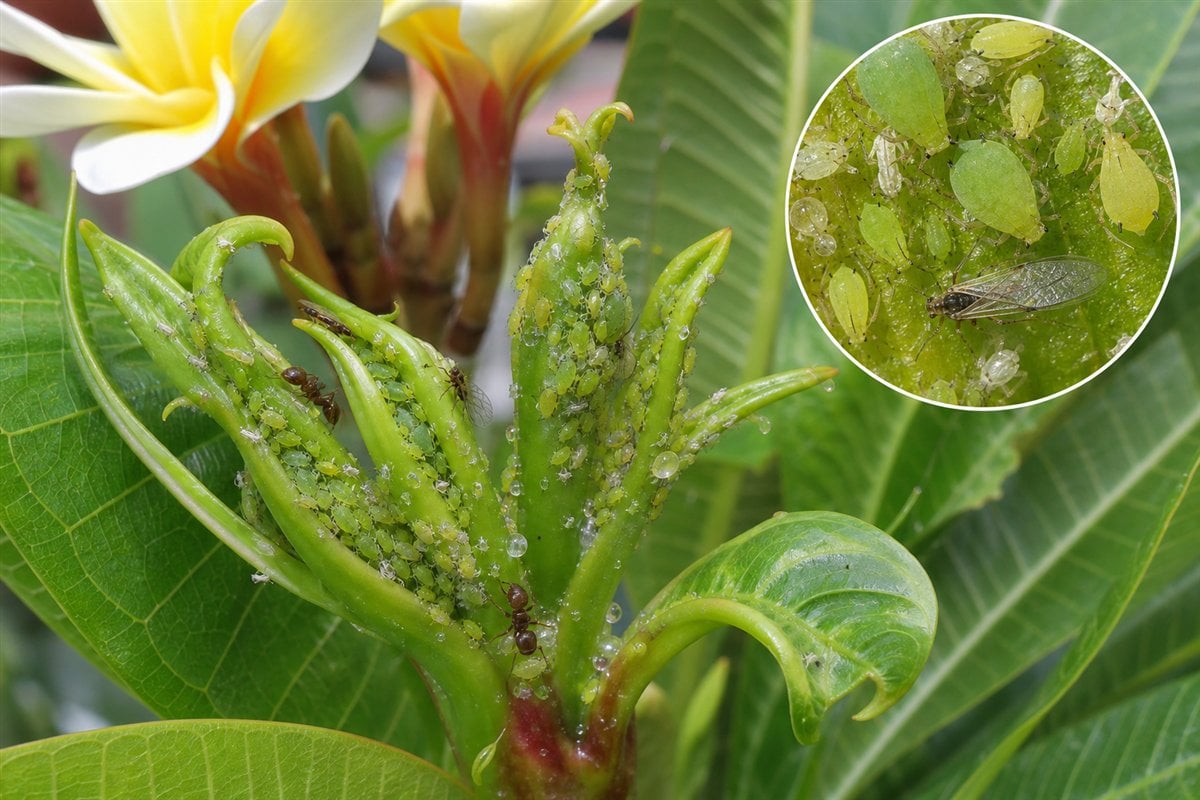 Condition reference
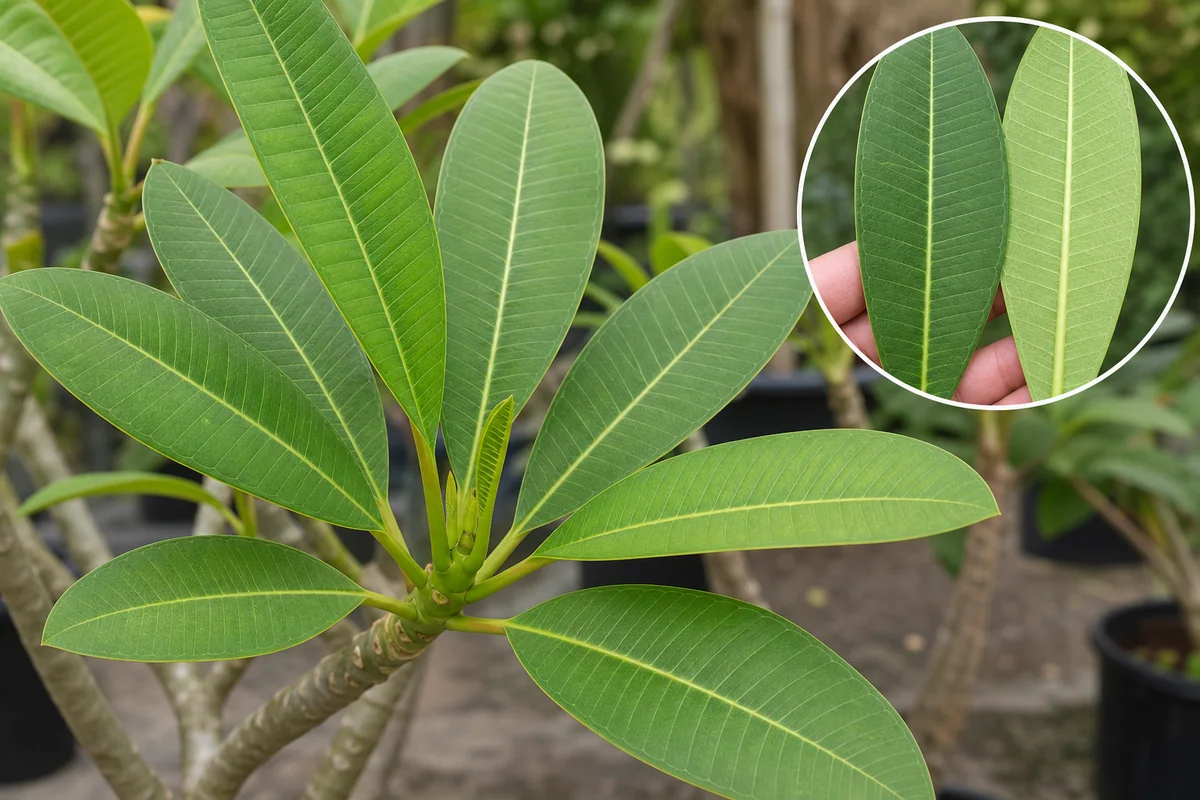 Healthy baseline
- LocationCheck which plant part, age of growth, and exposed or protected side is affected.
- TextureDecide whether the evidence is dry, powdery, sticky, raised, translucent, soft, or intact.
- ProgressionPhotograph the same area so you can tell whether the pattern is stable, improving, or spreading.
Use more than one clue. Confirm the photo with recent conditions, roots, watering history, and the rest of the plant before acting.
Root-Zone Pest Diagnostic Path
Use this path when plumeria decline starts below the soil line: weak growth, poor rooting, yellowing, unexplained wilting, pests near drain holes, root damage, or symptoms that do not match normal watering.
- Start with the soil-dwelling pest hub to compare fungus gnats, root mealybugs, root aphids, nematodes, root weevils, larvae, and root rot look-alikes.
- Check fungus gnats when small dark flies hover around wet media, seedling trays, rooting containers, or algae-prone surfaces.
- Check root mealybugs when white waxy or cottony residue appears around roots, pot walls, drainage holes, or media pockets.
- Check root aphids when mobile root-zone aphids, ants, or colonies appear without the cottony wax pattern of root mealybugs.
- Check nematodes when roots show galls, swollen knots, poor feeder roots, and chronic decline in warm soil or reused ground soil.
- Check root weevils when adult leaf-edge notching appears together with hidden root decline.
Why it matters: A foliar spray rarely solves a root-zone problem. Hidden pests require root inspection, clean media, clean containers, isolation, and pest-specific treatment choices.
Root Aphid Guide Path
- Identify root aphids when root-zone insects, ants, poor rooting, yellowing, or wilting suggest hidden sap feeding.
- Treat root aphids only after root-zone inspection confirms the pest or strong evidence supports it.
- Prevent root aphids through quarantine, clean media, clean containers, and ant management.
Preventing root aphids is mostly about keeping hidden colonies out of the root zone. Unlike leaf aphids, root aphids may not be obvious until roots are already stressed. Clean potting habits, quarantine, ant management, and routine inspection are more useful than repeated preventive drenches.
Root Aphids Article Path
Use this group in order when possible: identify the problem, treat only when needed, then prevent repeat outbreaks or recurrence.
- Identify root aphids
How to Identify Root Aphids on Plumeria - Treat root aphids
How to Treat Root Aphids on Plumeria - Prevent root aphids
How to Prevent Root Aphids in Plumeria
Safety and diagnostics: before applying products, review the Treatment Safety Checklist. If symptoms do not match this group, return to the Pest & Disease Identification Guide.
Prevention Checklist
- Quarantine new plants, seedlings, and rooted cuttings. The why: roots can carry pests even when leaves look clean.
- Use clean media and containers. The why: old mix and dirty pots can move hidden pests.
- Inspect drain holes and lower pot edges. The why: root-zone pests may show at the edge before the root ball is inspected.
- Manage ants around containers. The why: ants can protect honeydew-producing root pests.
- Do root checks when decline is unexplained. The why: early detection protects the rest of the collection.
What Not to Do
- Do not assume roots are clean because leaves are pest-free. The why: root aphids are hidden below the soil line.
- Do not share suspect pots, trays, or media. The why: root-zone pests can move through supplies.
- Do not drench as routine prevention. The why: sanitation and inspection are safer first-line prevention.
Root Aphid Prevention Check
Root aphid prevention is mostly about keeping hidden pests from entering the collection. Scientific context: root-feeding aphid-type pests may not be identifiable to species without magnification, so prevention focuses on clean material and early detection. Because symptoms can look like ordinary root stress, prevention depends on quarantine, clean media, and not moving questionable plants into shared spaces too quickly.
- Quarantine new plants, rooted cuttings, and traded material. Why: early root aphid problems may be invisible from above.
- Use clean, well-draining media. Why: weak roots and constantly wet media make diagnosis harder and may favor other soil pests.
- Inspect before up-potting. Why: a small hidden issue becomes harder to control in a larger container.
- Keep benches, trays, and tools clean. Why: root-zone pests and contaminated media can move through shared handling.
- Use sticky cards near suspect plants. Why: winged adults can be an early warning that root-zone inspection is needed.
If you suspect root aphids, confirm before treating and use the Treatment Decision Guide.
Prevent Root Aphids Without Routine Insecticide
Prevention is mainly plant handling, clean media, drainage, and early observation. A systemic insecticide should not be used routinely on healthy plants simply as insurance.
| When | What to do | Why it helps |
|---|---|---|
| Before a new plant joins the collection | Quarantine it, inspect the pot surface and drainage holes, and keep its runoff separate. | Root aphids and ants can travel with pots, media, water, and equipment. |
| When potting or repotting is already justified | Use clean, fast-draining media and a cleaned pot. Do not reuse suspect mix. Clean tools before moving to another plant. | This removes common transfer routes without disturbing healthy roots unnecessarily. |
| During routine watering | Do not let one pot drain into another. Correct media that remains continuously wet and empty shared saucers. | Shared runoff and persistently wet root zones increase spread and make root problems harder to distinguish. |
| When ants repeatedly enter drainage holes | Inspect for honeydew-producing insects and manage the ants as part of the response. | Ant traffic is a warning sign, but ant control alone does not prove or eliminate root aphids. |
| When growth declines | Check drainage, moisture, salts, nutrition, root rot, and visible insects before choosing a treatment. | Similar symptoms have different causes and require different actions. |
Protect Cuttings and Seedlings
Do not bare-root an unrooted or newly rooted cutting merely to look for root aphids. An unrooted cutting is watered once at the beginning of rooting and not again until two or three full-sized leaves have grown; mist the stem only if a firm cutting looks dehydrated, not the rooting media. Water a newly rooted cutting sparingly and let the mix approach dry before watering again. Keep seedlings lightly and evenly moist, never saturated.
When prevention becomes treatment: If you find live, mobile, pear-shaped insects in the root zone, move to the identification and treatment steps. Do not apply a preventive drench to every nearby plant without evidence and label support.
Continue with the Complete Root Aphid Guide
Use the complete guide to move from confirmation to careful root-zone treatment, ant management, prevention, and follow-up without losing your place.
Related Guides
- How to Identify Root Aphids on Plumeria
- How to Treat Root Aphids on Plumeria
- How to Identify Soil-Dwelling Pests on Plumeria
- Integrated Pest Management for Plumeria
- Treatment Safety Checklist
Turn the explanation into an action plan
- Monitor
- Check the same marked leaves and nearby plants every three to seven days until no active pests or fresh damage remain.
- Change one thing
- Make the smallest justified correction, record the date, and avoid stacking treatments before you can see which one helped.
- Escalate when needed
- Seek local diagnostic help when damage accelerates despite treatment, borers enter major stems, or the pest cannot be identified.