
The Plumeria Pests and Diseases Guide is an essential resource for identifying, preventing, and treating the most common threats to plumeria plants, including pests, fungi, and environmental stressors. This guide offers detailed information on how to recognize early signs of trouble, from insect infestations to fungal infections, and provides practical solutions to address these issues. It also covers strategies for managing environmental factors such as excessive humidity, temperature fluctuations, and poor soil conditions, which can weaken plumeria. With expert tips on natural and chemical treatments, as well as proactive care practices, this guide ensures your plumeria remains healthy, resilient, and free from common ailments, allowing it to thrive season after season.
How to Identify Root Aphids on Plumeria
What to check next
This guide helps you confirm that a living pest is present, identify where it is feeding, and choose a measured response without treating inactive damage. Read the detailed explanation, then use this sequence to decide what to do.
Confirm the evidence for aphids
- Look for
- Clusters of soft-bodied insects on tender tips, buds, and leaf undersides, plus curled growth, cast skins, honeydew, or ants.
- Compare with
- Thrips, leafhoppers, heat-distorted tips, and nutrient-related curling can resemble aphid injury without visible colonies.
- Safest first response
- Rinse or remove concentrated colonies, protect beneficial insects, and use a labeled treatment only if active populations continue.
Microclimate clue: Mild weather and soft new growth can support rapid aphid reproduction; heavy rain may temporarily knock colonies down.
- 1
Inspect before treating
Use bright light and magnification on leaf undersides, tips, petioles, stems, and the soil line.
- 2
- 3
Identify the feeding pattern
Separate sucking, chewing, mining, boring, and root-zone damage.
- 4
Start with the least disruptive action
Isolate, wash, and use only a treatment labeled for the confirmed pest and plant.
- 5
Repeat the inspection
Eggs or protected life stages can survive the first response, so follow-up checks matter.
How microclimate changes this answer
Dry heat favors mites, protected humid growth favors some scale and mealybugs, and wet shade increases snail and slug activity.
Compare this insect or pest pattern with healthy growth
Use these references to confirm that this article matches the visible pattern before changing care or applying a treatment.
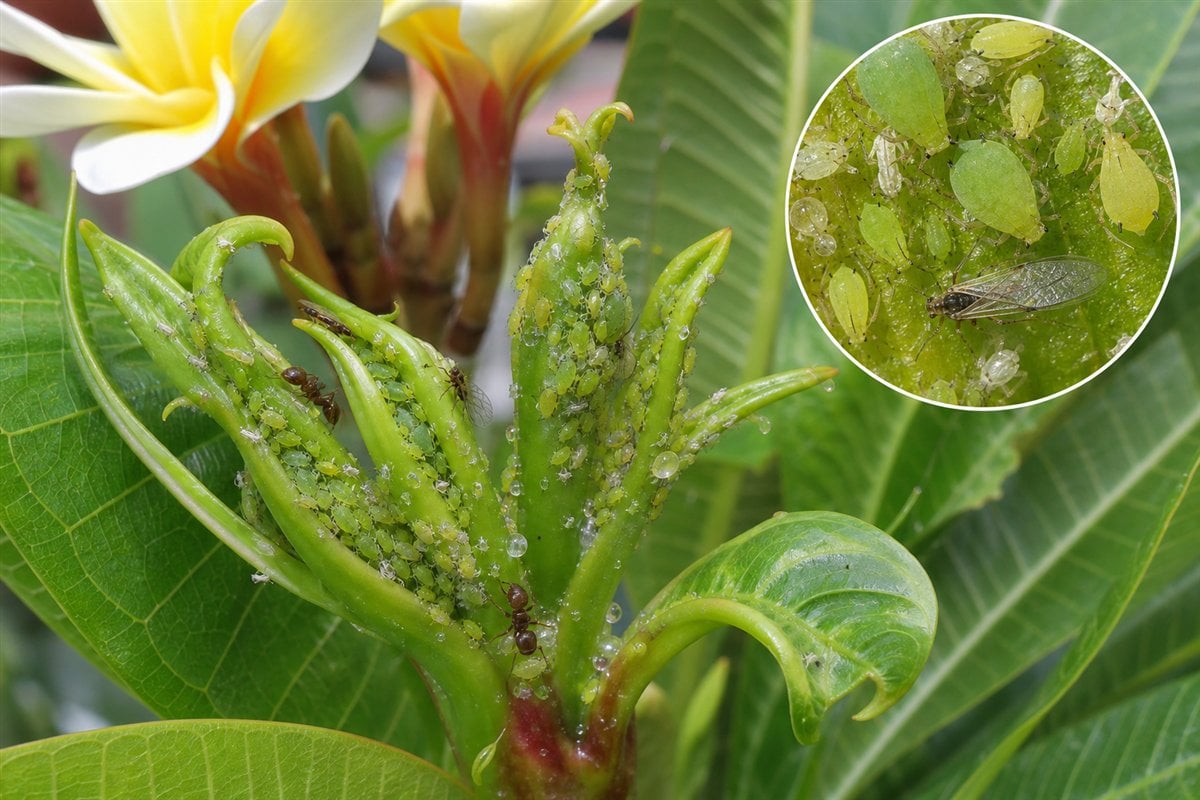 Condition reference
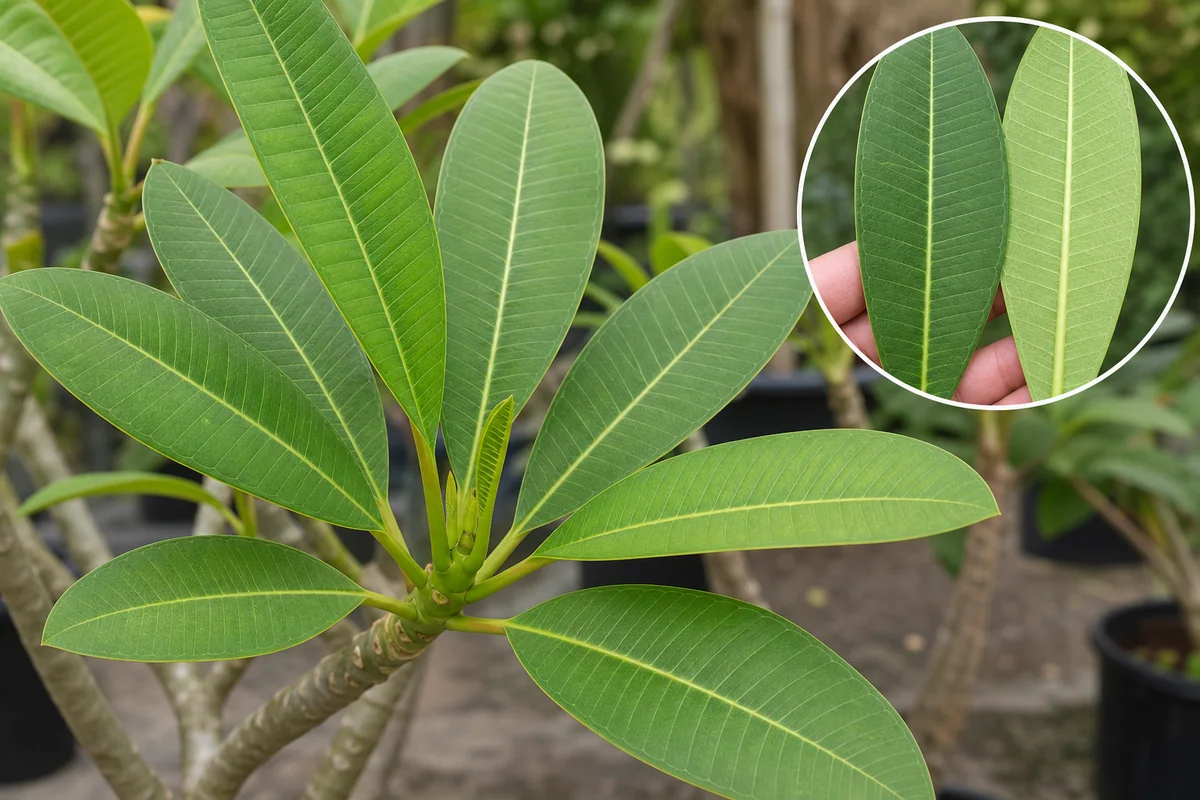 Healthy baseline
- LocationCheck which plant part, age of growth, and exposed or protected side is affected.
- TextureDecide whether the evidence is dry, powdery, sticky, raised, translucent, soft, or intact.
- ProgressionPhotograph the same area so you can tell whether the pattern is stable, improving, or spreading.
Use more than one clue. Confirm the photo with recent conditions, roots, watering history, and the rest of the plant before acting.
Root-Zone Pest Diagnostic Path
Use this path when plumeria decline starts below the soil line: weak growth, poor rooting, yellowing, unexplained wilting, pests near drain holes, root damage, or symptoms that do not match normal watering.
- Start with the soil-dwelling pest hub to compare fungus gnats, root mealybugs, root aphids, nematodes, root weevils, larvae, and root rot look-alikes.
- Check fungus gnats when small dark flies hover around wet media, seedling trays, rooting containers, or algae-prone surfaces.
- Check root mealybugs when white waxy or cottony residue appears around roots, pot walls, drainage holes, or media pockets.
- Check root aphids when mobile root-zone aphids, ants, or colonies appear without the cottony wax pattern of root mealybugs.
- Check nematodes when roots show galls, swollen knots, poor feeder roots, and chronic decline in warm soil or reused ground soil.
- Check root weevils when adult leaf-edge notching appears together with hidden root decline.
Why it matters: A foliar spray rarely solves a root-zone problem. Hidden pests require root inspection, clean media, clean containers, isolation, and pest-specific treatment choices.
Root aphids are hidden sap-feeding insects that may live in or near the root zone. On plumeria, they are easy to confuse with root mealybugs, fungus gnats, root rot, dry roots, and nutrient problems because the first symptoms often appear above the soil as weak growth, yellowing, wilting, or poor rooting.
Where This Page Fits
Primary root aphid guide. Use this page when weak growth, ants, sticky residue, pests near the media, or root-zone inspection points toward aphids below the soil line.
- If the evidence is unclear, compare with the Soil-Dwelling Pest Hub. If root aphids are confirmed, use How to Treat Soil-Dwelling Pests on Plumeria. Check for look-alikes such as fungus gnats, root mealybugs, root rot, and poor-draining media before choosing a treatment.
Root Aphids Article Path
Use this group in order when possible: identify the problem, treat only when needed, then prevent repeat outbreaks or recurrence.
- Identify root aphids
How to Identify Root Aphids on Plumeria - Treat root aphids
How to Treat Root Aphids on Plumeria - Prevent root aphids
How to Prevent Root Aphids in Plumeria
Safety and diagnostics: before applying products, review the Treatment Safety Checklist. If symptoms do not match this group, return to the Pest & Disease Identification Guide.
The goal is not to guess from leaves alone. Confirm the pattern by checking roots, media, ants, pot edges, drainage holes, and the lower stem area before choosing a treatment.
Photo and Confirmation Checklist
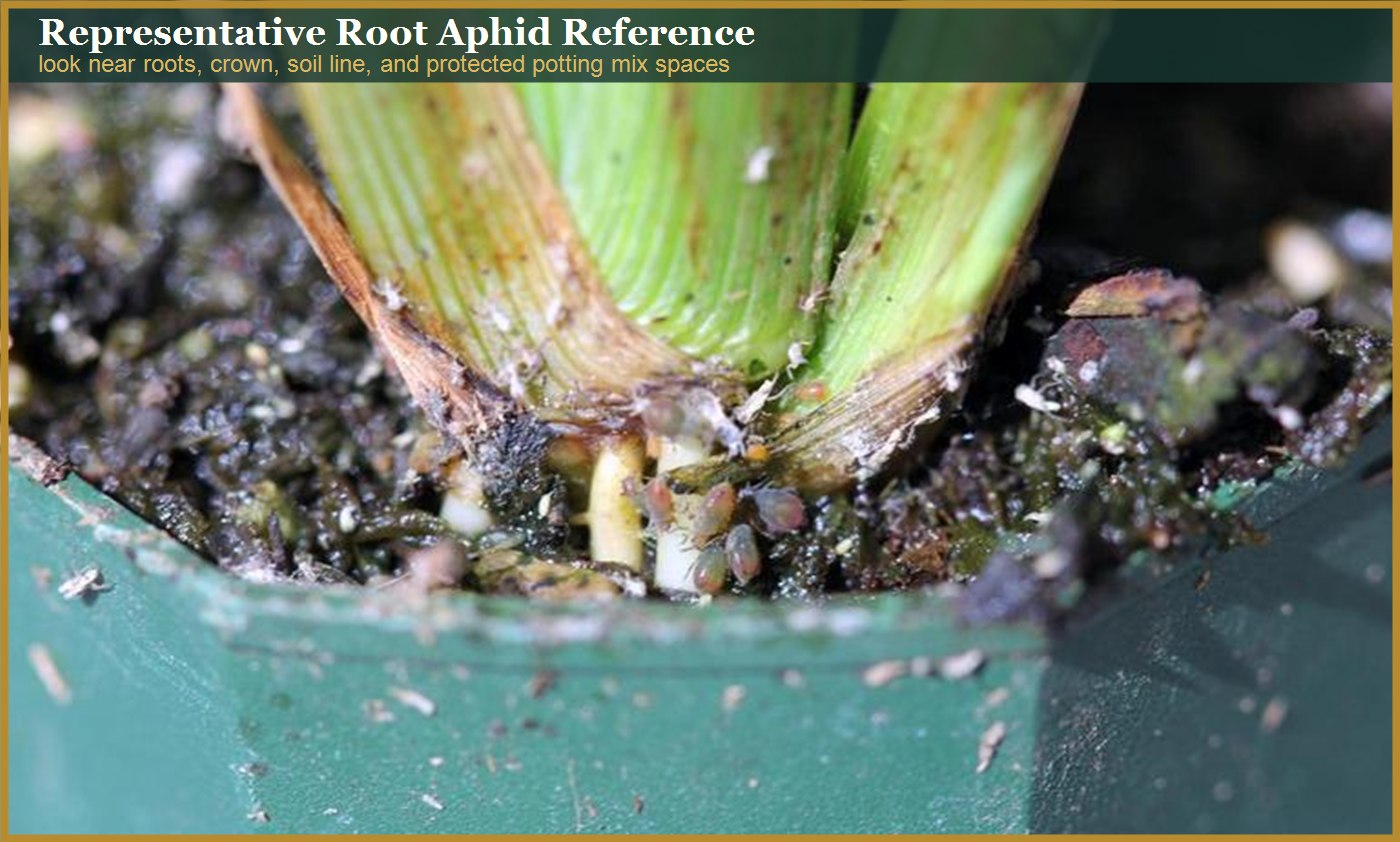
- Inspect roots, media, pot edges, drainage holes, and the lower stem.
- Look for mobile insects rather than cottony waxy patches.
- Watch for ants, poor rooting, yellowing, wilting, and slow decline.
- Compare with root mealybugs, fungus gnat larvae, and root rot before treating.
Root Aphid Guide Path
- Identify root aphids when root-zone insects, ants, poor rooting, yellowing, or wilting suggest hidden sap feeding.
- Treat root aphids only after root-zone inspection confirms the pest or strong evidence supports it.
- Prevent root aphids through quarantine, clean media, clean containers, and ant management.
Confirm the Insect, Not Just the Symptoms
Yellow leaves, weak growth, and poor roots can come from many causes. Root aphids are better supported when you find small, mobile, pear-shaped insects in the root zone, often with ants tending or traveling to them.
| What you observe | What it suggests | What to do next |
|---|---|---|
| Small mobile, pear-shaped insects on roots or inside the pot | Root aphids are possible | Photograph a close-up and compare movement and body shape. |
| Ants repeatedly entering the drainage holes or root zone | A honeydew-producing pest may be present | Inspect for aphids; ants alone do not confirm them. |
| White cottony or waxy masses attached to roots | Root mealybugs may be a closer match | Use the root-mealybug comparison before treating. |
| Tiny flies above wet media, with slender larvae in the mix | Fungus gnats are more likely | Review moisture and the fungus-gnat guide. |
| Loose white particles or crust without insects | Perlite, pumice, fertilizer salts, or mineral deposits | Do not apply insecticide until a living pest is confirmed. |
| Root decline without visible insects | Drainage, rot, salts, nutrition, or transplant stress | Use the Root and Soil Checker for a broader diagnosis. |
Protect young plants: do not bare-root an unrooted or newly rooted cutting merely to look for aphids. Inspect only when evidence is strong enough to justify the disturbance.
Quick ID
- Main clue: Mobile root-zone insects plus root decline and possible ant activity.
- Plant symptoms: Weak growth, yellowing, wilting, poor rooting, or decline that does not match normal watering.
- Look-alikes: Root mealybugs, fungus gnat larvae, springtails, root rot, perlite, and mineral residue.
- Best confirmation: Root-zone inspection, not leaf symptoms alone.
What Not to Do
- Do not diagnose root aphids from yellow leaves alone. The why: many root problems cause yellowing.
- Do not confuse root aphids with root mealybugs. The why: root mealybugs usually show more waxy or cottony residue.
- Do not ignore ants in the root area. The why: ants can be associated with honeydew-producing root pests.
How to Confirm Root Aphids
Root aphids are root-feeding aphid-type pests that can be hard to confirm without magnification. Scientific context: root aphid is often used as a practical grower category, and exact species may fall across aphid or phylloxera-type groups. On plumeria, the practical question is whether active insects are feeding in the root zone and whether decline continues after water, media, and nutrition problems are ruled out.
- Inspect roots and media closely. Why: root aphids are not confirmed by yellow leaves alone.
- Look for moving insects near roots. Why: live activity matters more than old debris in the pot.
- Compare winged adults with fungus gnats. Why: winged root aphids may fly more directly, while fungus gnats often flutter near moist media.
- Check for repeating decline after repotting or watering corrections. Why: hidden root feeding can mimic nutrient or moisture problems.
- Use sticky cards as a clue, not proof. Why: flying adults do not always tell you which larvae or insects are damaging roots.
Use the Treatment Decision Guide before applying root-zone products because stressed plumeria roots can be damaged by unnecessary drenches.
Representative Image Note
Some root-zone pest images are representative references rather than perfect plumeria-specific examples. Use them to understand the general pest or symptom pattern, but confirm the diagnosis by inspecting the actual rootball, potting mix, drainage, root condition, and plant symptoms together.
- Look for the pest itself when possible, not just weak growth above the soil line.
- Compare root symptoms with watering stress, root rot, fertilizer burn, transplant damage, poor drainage, and old perlite or organic residue.
- Photograph the whole plant, pot, rootball, and close-up evidence if you are documenting the problem.
Photo note: plumeria-specific root-zone pest photos are still needed. See the Plumeria Pest & Disease Photo Contribution Guide.
Continue with the Complete Root Aphid Guide
Use the complete guide to move from confirmation to careful root-zone treatment, ant management, prevention, and follow-up without losing your place.
Root aphids vs. fungus gnats
Root aphids and fungus gnats can appear in the same wet or protected growing area, but they are not the same problem.
- Fungus gnat adults are small flies; sticky cards help monitor adults but do not prove root aphids are present.
- Fungus gnat larvae are slender and pale, often with a dark head, and are most common in damp organic media.
- Root aphids cluster on roots, may have waxy coating, and can cause decline even when adult flies are not obvious.
- Confirm by inspecting the root ball, pot wall, and lower media rather than treating only what flies above the pot.
Related Guides
- How to Treat Root Aphids on Plumeria
- How to Prevent Root Aphids in Plumeria
- How to Identify and Treat Root Mealybugs in Plumeria
- How to Identify Soil-Dwelling Pests on Plumeria
- Treatment Safety Checklist
Help Improve This Photo Reference
If you have a clear plumeria photo of root aphids, you can help improve this guide. The most useful photos show close-ups of insects or waxy residue around roots, ants if present, and the whole plant symptoms that led to inspection.
Submit a photo for review. Photos are not published automatically; they are checked for permission, plant context, and diagnostic accuracy before being used.
Turn the explanation into an action plan
- Monitor
- Check the same marked leaves and nearby plants every three to seven days until no active pests or fresh damage remain.
- Change one thing
- Make the smallest justified correction, record the date, and avoid stacking treatments before you can see which one helped.
- Escalate when needed
- Seek local diagnostic help when damage accelerates despite treatment, borers enter major stems, or the pest cannot be identified.