
The Plumeria Pests and Diseases Guide is an essential resource for identifying, preventing, and treating the most common threats to plumeria plants, including pests, fungi, and environmental stressors. This guide offers detailed information on how to recognize early signs of trouble, from insect infestations to fungal infections, and provides practical solutions to address these issues. It also covers strategies for managing environmental factors such as excessive humidity, temperature fluctuations, and poor soil conditions, which can weaken plumeria. With expert tips on natural and chemical treatments, as well as proactive care practices, this guide ensures your plumeria remains healthy, resilient, and free from common ailments, allowing it to thrive season after season.
How to Identify Fungus Gnats on Plumeria
What to check next
This guide helps you confirm that a living pest is present, identify where it is feeding, and choose a measured response without treating inactive damage. Read the detailed explanation, then use this sequence to decide what to do.
Confirm the evidence for root-zone pests
- Look for
- Active insects, larvae, wax, feeding lesions, poor roots, ants, or adults associated consistently with the potting mix and root decline.
- Compare with
- Wet media, ordinary soil organisms, fertilizer salts, compaction, and root rot often cause decline without a damaging pest population.
- Safest first response
- Confirm the pest in a root sample or trap before disturbing the plant, then correct excess moisture and use a life-stage-specific labeled control.
Microclimate clue: Persistently moist, organic, protected media favors fungus gnats and some root-zone pests; hot dry pots create different root symptoms.
- 1
Inspect before treating
Use bright light and magnification on leaf undersides, tips, petioles, stems, and the soil line.
- 2
- 3
Identify the feeding pattern
Separate sucking, chewing, mining, boring, and root-zone damage.
- 4
Start with the least disruptive action
Isolate, wash, and use only a treatment labeled for the confirmed pest and plant.
- 5
Repeat the inspection
Eggs or protected life stages can survive the first response, so follow-up checks matter.
How microclimate changes this answer
Dry heat favors mites, protected humid growth favors some scale and mealybugs, and wet shade increases snail and slug activity.
Root-Zone Pest Diagnostic Path
Use this path when plumeria decline starts below the soil line: weak growth, poor rooting, yellowing, unexplained wilting, pests near drain holes, root damage, or symptoms that do not match normal watering.
- Start with the soil-dwelling pest hub to compare fungus gnats, root mealybugs, root aphids, nematodes, root weevils, larvae, and root rot look-alikes.
- Check fungus gnats when small dark flies hover around wet media, seedling trays, rooting containers, or algae-prone surfaces.
- Check root mealybugs when white waxy or cottony residue appears around roots, pot walls, drainage holes, or media pockets.
- Check root aphids when mobile root-zone aphids, ants, or colonies appear without the cottony wax pattern of root mealybugs.
- Check nematodes when roots show galls, swollen knots, poor feeder roots, and chronic decline in warm soil or reused ground soil.
- Check root weevils when adult leaf-edge notching appears together with hidden root decline.
Why it matters: A foliar spray rarely solves a root-zone problem. Hidden pests require root inspection, clean media, clean containers, isolation, and pest-specific treatment choices.
Fungus gnats are small dark flies that often appear around wet potting media, seedling trays, rooting containers, and propagation areas. Adults are mostly a warning sign. Larvae are the stage that matters most because they live in moist media and may feed on fungi, decaying organic matter, and tender root tissue.
Fungus Gnats Article Path
Use this group in order when possible: identify the problem, treat only when needed, then prevent repeat outbreaks or recurrence.
- Identify fungus gnats
How to Identify Fungus Gnats on Plumeria - Treat fungus gnats
How to Treat Fungus Gnats on Plumeria - Prevent fungus gnats
How to Prevent Fungus Gnats in Plumeria
Safety and diagnostics: before applying products, review the Treatment Safety Checklist. If symptoms do not match this group, return to the Pest & Disease Identification Guide.
For plumeria growers, fungus gnats are most important in seedlings, fresh cuttings, recently rooted plants, and containers that stay too wet. They often point to a moisture and media problem, not just an insect problem.
Photo and Confirmation Checklist
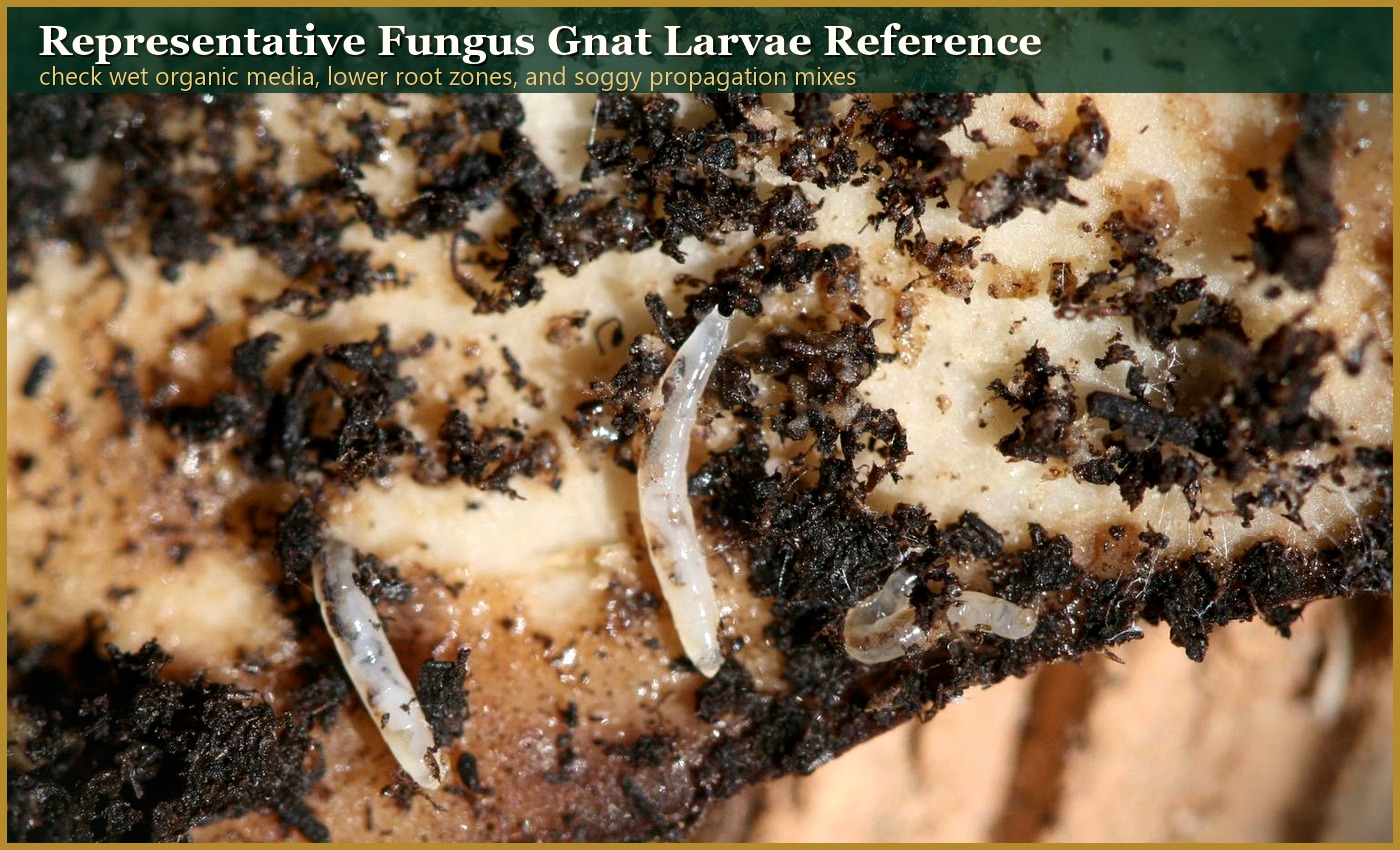
- Look for small dark flies walking or flying near the media surface.
- Use yellow sticky cards near pot level to monitor adults.
- Inspect moist media for small translucent larvae with dark heads.
- Check seedlings and cuttings first because tender roots are most vulnerable.
Fungus Gnat Guide Path
- Identify fungus gnats when adult flies, moist media, seedling stress, or larvae in the top layer of media are present.
- Treat fungus gnats by correcting wet media, targeting larvae, monitoring adults, and protecting tender roots.
- Prevent fungus gnats with clean trays, moisture discipline, fast-draining media, and early sticky-card monitoring.
- Use the seedling summary when fungus gnats appear in seed trays, humidity domes, or fresh propagation areas.
Quick ID
- Adult clue: Small dark flies near wet media, trays, pots, or humidity domes.
- Larva clue: Small pale larvae in moist media, often near organic debris or the surface layer.
- Risk pattern: Seedlings, cuttings, and recently rooted plants are more vulnerable than established plumeria.
- Cause clue: Constantly damp media, algae, old organic debris, and dirty trays often support the problem.
Look-Alikes
- Fruit flies: Often gather around fruit, drains, or fermenting material rather than potting media.
- Shore flies: Often appear around algae and wet surfaces and may be confused with fungus gnats.
- Root aphids: Live in the root zone and are not simply tiny flies above the media.
- Root rot: Causes root decline from moisture or disease, with or without fungus gnats.
Confirm Fungus Gnats Before Treating
Small flies near a pot are a clue, not proof of root damage. Confirm the insect and the growing conditions before changing the plant’s care.
| What you find | What it suggests | Best next check |
|---|---|---|
| Delicate dark adults that run or make short flights near moist media | Fungus gnats are likely present | Place a yellow sticky card just above the media to confirm continuing adult activity. |
| Small translucent larvae with a dark head in the upper media | Active breeding is confirmed | Check several pots and note whether seedlings or newly rooted plants are declining. |
| Adults only, with a firm healthy plant and normal roots | Usually a moisture-management warning, not proof of serious injury | Correct standing water, wet saucers, and media that stays continuously soggy. |
| White wax, cottony material, or clustered insects on roots | Root mealybugs or root aphids may be a closer match | Use the soil-dwelling pest comparison before treating. |
Do not bare-root an unrooted cutting merely to look for larvae. Water an unrooted cutting once at the beginning of rooting, then do not water again until two or three full-sized leaves have grown. If a firm cutting looks dehydrated, mist the stem rather than wetting the media. Keep seedling media lightly and evenly moist, never saturated; do not severely dry seedlings simply to control gnats.
Continue with the Complete Fungus Gnat Guide
Use the complete guide to move from confirmation to plant-stage-specific moisture correction, treatment choices, prevention, and follow-up without losing your place.
Adult gnats vs. larval root damage
Adult fungus gnats are a warning sign, but the larvae in the damp upper media are the stage most likely to bother seedlings, cuttings, and weak roots.
- Use yellow sticky cards to monitor flying adults.
- Inspect damp media for slender, translucent larvae with dark heads.
- A raw potato slice placed on the media surface can help reveal larvae feeding near the top layer.
- Correct wet media first; repeated sprays will not solve fungus gnats if the potting mix stays too wet.
Related Guides
- How to Treat Fungus Gnats on Plumeria
- How to Prevent Fungus Gnats in Plumeria
- Protecting Plumeria Seedlings from Fungus Gnats
- How to Identify Soil-Dwelling Pests on Plumeria
- Treatment Safety Checklist
Turn the explanation into an action plan
- Monitor
- Check the same marked leaves and nearby plants every three to seven days until no active pests or fresh damage remain.
- Change one thing
- Make the smallest justified correction, record the date, and avoid stacking treatments before you can see which one helped.
- Escalate when needed
- Seek local diagnostic help when damage accelerates despite treatment, borers enter major stems, or the pest cannot be identified.