
Welcome to the Plumeria Cultivation & Planting Guide. This is your definitive starting point for turning rooted cuttings, seedlings, or mature specimens into thriving, bloom-laden trees. Inside, you’ll learn how to choose the ideal micro-climate. You will craft well-draining soil mixes. Mastering container-versus-in-ground decisions is also included. You will time each planting task to your growing zone. Step-by-step instructions guide each aspect of planting. Troubleshooting checkpoints help resolve common issues. Nutrition tips based on science ensure your plumeria has strong roots, vigorous growth, and abundant flowers. Whether you garden on a balcony or use raised beds, this guide offers decades of practical experience. It is also helpful if you maintain a full grove. It turns that knowledge into practical, easy-to-follow advice. The guide empowers beginners and seasoned collectors alike to cultivate with confidence.
Powdery Mildew on Plumeria: Prevention & Control
What to check next
This guide helps you connect growth habit, light, roots, water, nutrition, season, and cultivar traits before trying to correct the whole plant. Read the detailed explanation, then use this sequence to decide what to do.
- 1
Describe the whole pattern
Compare height, branching, canopy density, leaf size, flowering, leaning, and vigorous areas.
- 2
Check the foundation
Inspect anchorage, container size, roots, drainage, and the amount and direction of light.
- 3
Compare season and cultivar
Confirm whether the habit is new, worsening, seasonal, or normal for the variety.
- 4
Correct the strongest limiter
Address the clearest root, light, structural, moisture, or nutrition limitation first.
- 5
Measure new growth
Use dated photos, internode length, branching, and the next leaf flush to judge progress.
How microclimate changes this answer
A sheltered wall, partial canopy, wind, container heat, and winter storage can shape the plant more than its regional Zone.
Compare this disease or rot pattern with healthy growth
Use these references to confirm that this article matches the visible pattern before changing care or applying a treatment.
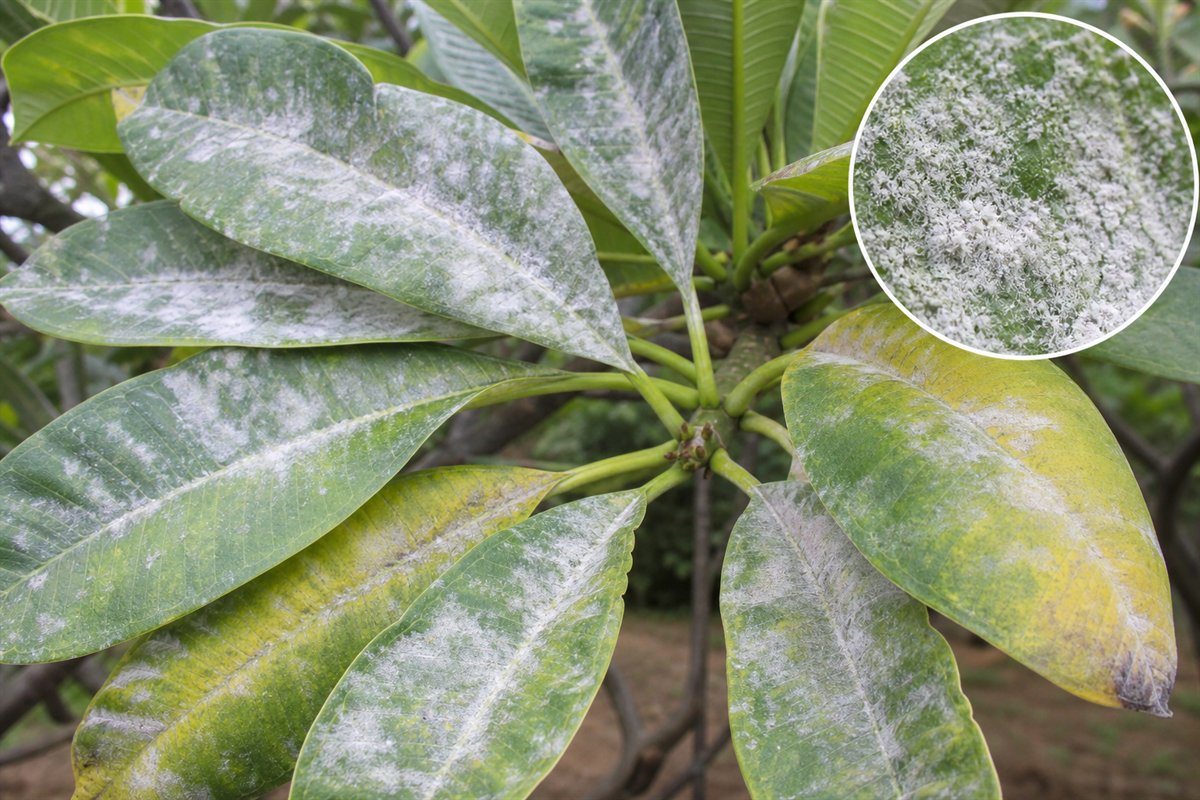 Condition reference
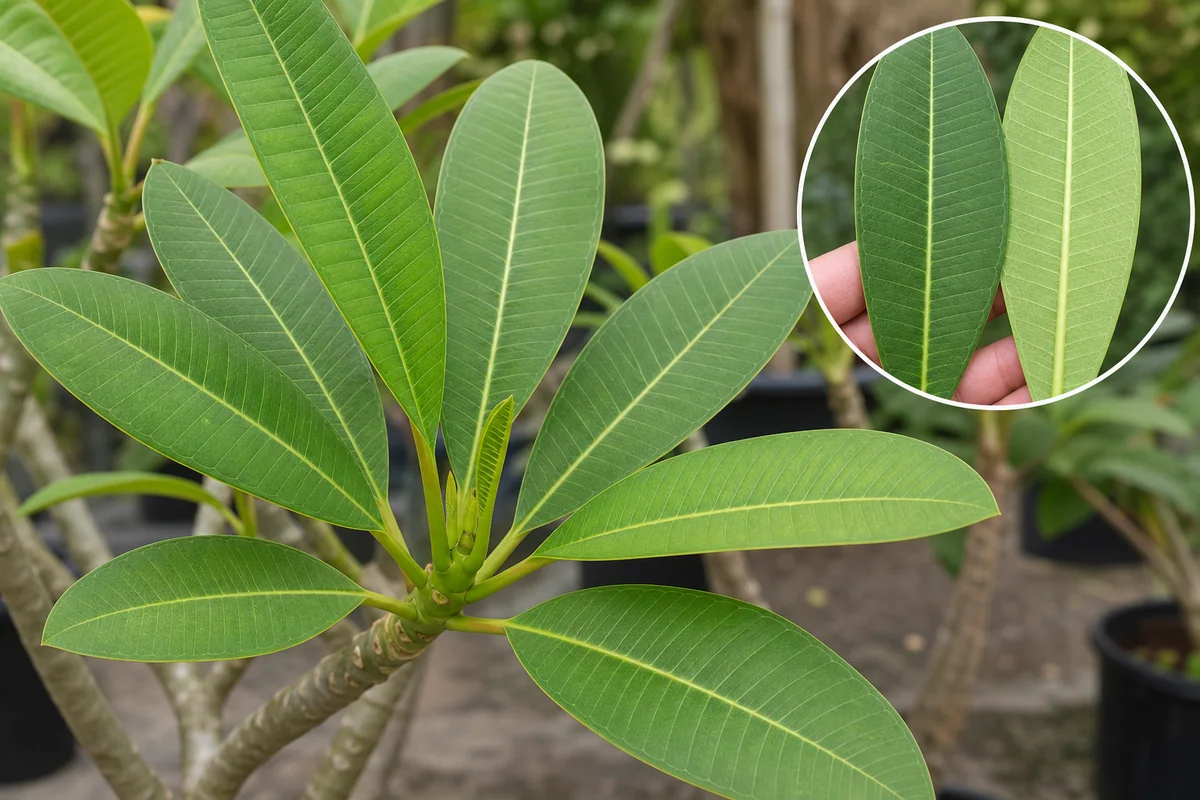 Healthy baseline
- LocationCheck which plant part, age of growth, and exposed or protected side is affected.
- TextureDecide whether the evidence is dry, powdery, sticky, raised, translucent, soft, or intact.
- ProgressionPhotograph the same area so you can tell whether the pattern is stable, improving, or spreading.
Use more than one clue. Confirm the photo with recent conditions, roots, watering history, and the rest of the plant before acting.
START WITH THE COMPLETE GUIDE
Powdery Mildew on Plumeria
This article covers one focused part of the subject. Begin with the complete Powdery Mildew guide for the main identification, treatment, testing, and prevention or management path.
Powdery Mildew on Plumeria: Prevention & Control
How to Identify, Manage, and Prevent One of Plumeria’s Most Misunderstood Fungal Issues
Powdery mildew is a fast-spreading, surface-level fungal infection that commonly affects plumeria in humid, warm climates with poor airflow, especially in greenhouses or crowded container setups. While not typically fatal, it can reduce photosynthesis, weaken blooming, deform new growth, and leave plants more vulnerable to secondary infections like black tip or stem rot.
This guide explains how to correctly identify powdery mildew on plumeria and provides a full range of organic and chemical control options, along with actionable prevention strategies to keep this nuisance in check.
What Is Powdery Mildew?
Powdery mildew is caused by various species of fungi, including Oidium and Erysiphe, that thrive in:
- Warm (65–85°F), shady environments
- High humidity (above 60%)
- Stagnant air or crowded branches
- Nutrient-stressed or overwatered plants
Unlike most fungi, powdery mildew does not require free water to germinate—it spreads rapidly through airborne spores and establishes on leaf surfaces, especially young or shaded foliage.
Symptoms of Powdery Mildew in Plumeria
| Symptom | Description |
|---|---|
| White or grayish powder on leaves | Often starts on the undersides or shaded areas |
| Distorted or curled new leaves | Infected buds may twist or fail to open fully |
| Sticky or dull upper leaf surface | May feel rough or dry when touched |
| Premature leaf drop | Especially in young or thin-leaved varieties |
| Reduced blooming or bud deformities | In advanced cases |
| No yellow halo or necrotic centers | Helps distinguish from leaf spot or blight |
Powdery mildew is superficial but persistent—treatment is required to prevent spread to nearby plants.
Organic Control Options
| Treatment | Instructions |
|---|---|
| Neem oil (0.5–1%) | Apply every 5–7 days during outbreaks |
| Potassium bicarbonate sprays | Disrupts surface pH—kills spores on contact |
| Diluted milk spray (1:10 with water) | Antifungal proteins suppress mildew (reapply weekly) |
| Sulfur dust or spray | Preventive and curative (do not use above 85°F) |
| Compost tea (aerated) | May outcompete fungal colonization on leaves |
Always apply organic sprays early morning or in shade to prevent phytotoxicity.
Chemical Treatment Options
| Product Type | Active Ingredient | Notes |
|---|---|---|
| Fungicides | Myclobutanil, Propiconazole | Systemic protection; rotate for resistance |
| Broad-spectrum contact sprays | Chlorothalonil | Surface-only control; apply every 7–10 days |
| Sulfur-based fungicides | Wettable sulfur | Very effective but avoid during heat waves |
| Copper fungicide | Copper octanoate | Some suppressive effect; combine with pruning |
Begin treatment at first sign of symptoms. Use protective equipment and follow all label instructions.
Cultural & Environmental Prevention
| Action | Why It Helps |
|---|---|
| Improve airflow by spacing plants or pruning interiors | Reduces humidity around leaf surfaces |
| Provide morning sun | Allows leaves to dry quickly |
| Avoid overhead watering | Keeps leaf surfaces dry |
| Water early in the day | Prevents nighttime moisture buildup |
| Avoid high nitrogen feeding during warm humid periods | Reduces overly soft, mildew-prone growth |
| Disinfect tools between uses | Prevents spread between plants |
Powdery mildew spores spread easily—isolate infected plants when possible during treatment.
Resistant Cultivars?
While no plumeria is immune, anecdotal grower reports suggest that:
- Thick-leaved cultivars (e.g., obtusa types) are more resistant
- Compact or dwarf varieties with dense branching are more vulnerable
- Plants grown in full-sun, breezy environments experience fewer infections
When to Remove Infected Leaves
- If more than 50% of a leaf is covered, remove it
- Always discard infected leaves—do not compost
- Wash hands and tools immediately after removal
Conclusion
Powdery mildew is a manageable problem in plumeria if caught early. With the right balance of air circulation, sun exposure, and routine leaf monitoring, this fungal intruder can be kept in check. Whether you prefer organic remedies or targeted fungicides, the key is to act promptly, treat thoroughly, and prevent recurrence with smart garden design and clean care practices.
Turn the explanation into an action plan
- Monitor
- Compare whole-plant photographs monthly during active growth and at each seasonal transition.
- Change one thing
- Make the smallest justified correction, record the date, and avoid stacking treatments before you can see which one helped.
- Escalate when needed
- Inspect roots and major stems promptly when decline is sudden, anchorage fails, or several branches soften or die back.