
The Plumeria How-To Guide offers step-by-step instructions for essential tasks like rooting, pruning, fertilizing, and repotting—helping you grow strong, healthy plumeria with proven techniques.
How to Protect Plumerias from Snails and Slugs
What to check next
This guide helps you connect growth habit, light, roots, water, nutrition, season, and cultivar traits before trying to correct the whole plant. Read the detailed explanation, then use this sequence to decide what to do.
- 1
- 2
Check the foundation
Inspect anchorage, container size, roots, drainage, and the amount and direction of light.
- 3
Compare season and cultivar
Confirm whether the habit is new, worsening, seasonal, or normal for the variety.
- 4
Correct the strongest limiter
Address the clearest root, light, structural, moisture, or nutrition limitation first.
- 5
Measure new growth
Use dated photos, internode length, branching, and the next leaf flush to judge progress.
How microclimate changes this answer
A sheltered wall, partial canopy, wind, container heat, and winter storage can shape the plant more than its regional Zone.
Compare this insect or pest pattern with healthy growth
Use these references to confirm that this article matches the visible pattern before changing care or applying a treatment.
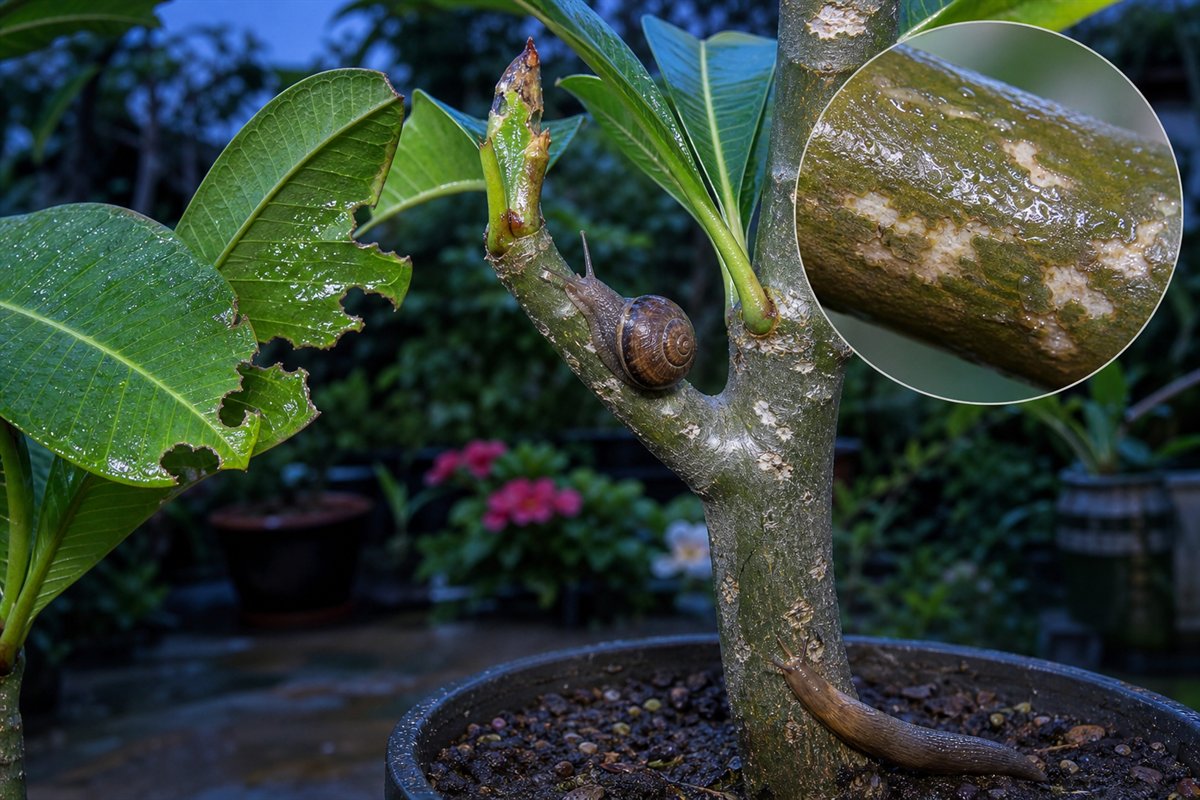 Condition reference
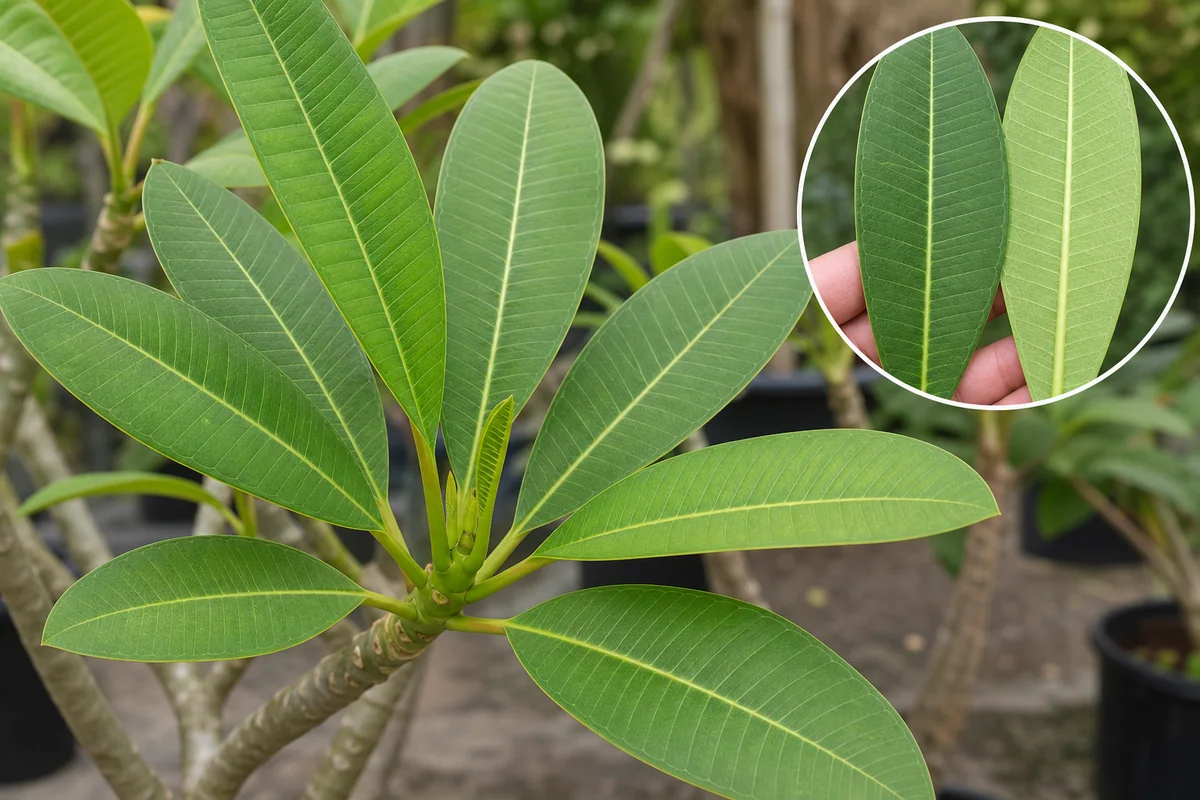 Healthy baseline
- LocationCheck which plant part, age of growth, and exposed or protected side is affected.
- TextureDecide whether the evidence is dry, powdery, sticky, raised, translucent, soft, or intact.
- ProgressionPhotograph the same area so you can tell whether the pattern is stable, improving, or spreading.
Use more than one clue. Confirm the photo with recent conditions, roots, watering history, and the rest of the plant before acting.
Prevention and Control Measures to Keep Snails and Slugs from Damaging Your Plumeria Plants
Snails and slugs are common garden pests that can cause significant harm to plumeria plants. These mollusks feast on young leaves, leaving irregular, ragged holes and trails of silvery slime. Their nocturnal feasting can severely damage the plumerias, reducing their aesthetics and overall health. Here’s a comprehensive guide to preventing and controlling these pests.
1. Identifying Snails and Slugs
Visual Inspection:
- What to Look For: Shiny, slimy trails, and chewed leaves.
- When to Check: Early morning or after rain, as they are most active at night.
2. Preventive Measures
Garden Hygiene:
- What to Do: Remove debris, dead leaves, and any potential hiding spots.
- Why it Works: It makes the garden less attractive to these pests.
Barrier Methods:
- What to Do: Create barriers using crushed eggshells, diatomaceous earth, or copper tape around the base of the plants.
- Why it Works: These materials are uncomfortable or even harmful for snails and slugs to crawl over.
Watering Schedule:
- What to Do: Water the plants early in the day.
- Why it Works: It ensures the soil is dry by evening, making it less appealing for snails and slugs.
Select Resistant Varieties:
- What to Do: Choose plumeria cultivars known for their resistance to snails and slugs if possible.
- Why it Works: Some varieties might be less appealing to these pests.
3. Control Measures
Handpicking:
- What to Do: Handpick snails and slugs during their active hours or set traps with beer or yeast-water solution.
- Why it Works: Physical removal can be an effective way to reduce their population.
Biological Control:
- What to Do: Introduce natural predators such as birds, beetles, or nematodes.
- Why it Works: These predators can help control the snails and slugs population.
Chemical Control:
- What to Do: Use snail and slug baits that contain iron phosphate or other less toxic ingredients.
- Why it Works: These products are designed to attract and kill snails and slugs without harming other organisms.
Conclusion: Integrated Approach to Success
Dealing with snails and slugs in your plumeria garden requires an integrated approach combining preventive and active control measures. You can protect your plumerias from these unwelcome invaders by keeping the garden clean, creating barriers, adjusting the watering schedule, and actively removing or treating the pests. Regular monitoring and early intervention will make your efforts most effective, ensuring your plumerias remain healthy, beautiful, and free from snail and slug damage.
Turn the explanation into an action plan
- Monitor
- Compare whole-plant photographs monthly during active growth and at each seasonal transition.
- Change one thing
- Make the smallest justified correction, record the date, and avoid stacking treatments before you can see which one helped.
- Escalate when needed
- Inspect roots and major stems promptly when decline is sudden, anchorage fails, or several branches soften or die back.