
The Plumeria How-To Guide offers step-by-step instructions for essential tasks like rooting, pruning, fertilizing, and repotting—helping you grow strong, healthy plumeria with proven techniques.
How to Prevent Mealybug Infestations
What to check next
This guide helps you connect growth habit, light, roots, water, nutrition, season, and cultivar traits before trying to correct the whole plant. Read the detailed explanation, then use this sequence to decide what to do.
- 1
- 2
Check the foundation
Inspect anchorage, container size, roots, drainage, and the amount and direction of light.
- 3
Compare season and cultivar
Confirm whether the habit is new, worsening, seasonal, or normal for the variety.
- 4
Correct the strongest limiter
Address the clearest root, light, structural, moisture, or nutrition limitation first.
- 5
Measure new growth
Use dated photos, internode length, branching, and the next leaf flush to judge progress.
How microclimate changes this answer
A sheltered wall, partial canopy, wind, container heat, and winter storage can shape the plant more than its regional Zone.
Compare this insect or pest pattern with healthy growth
Use these references to confirm that this article matches the visible pattern before changing care or applying a treatment.
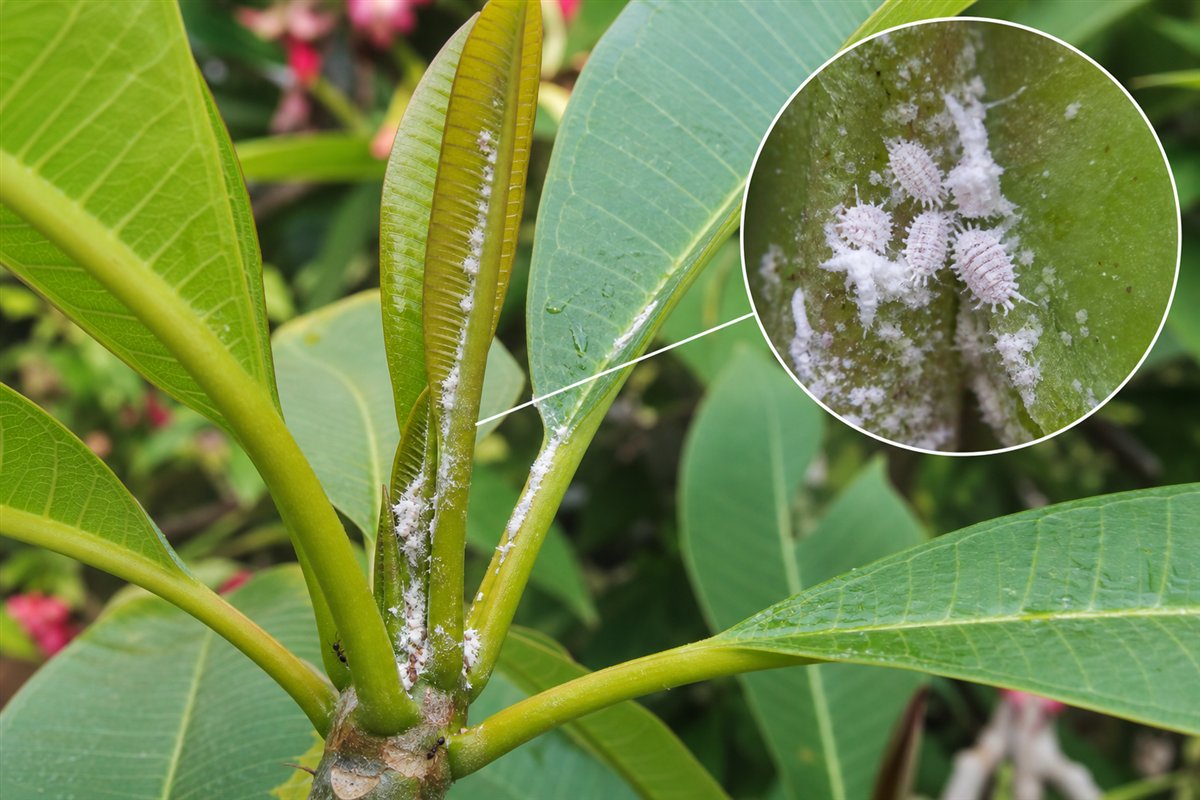 Condition reference
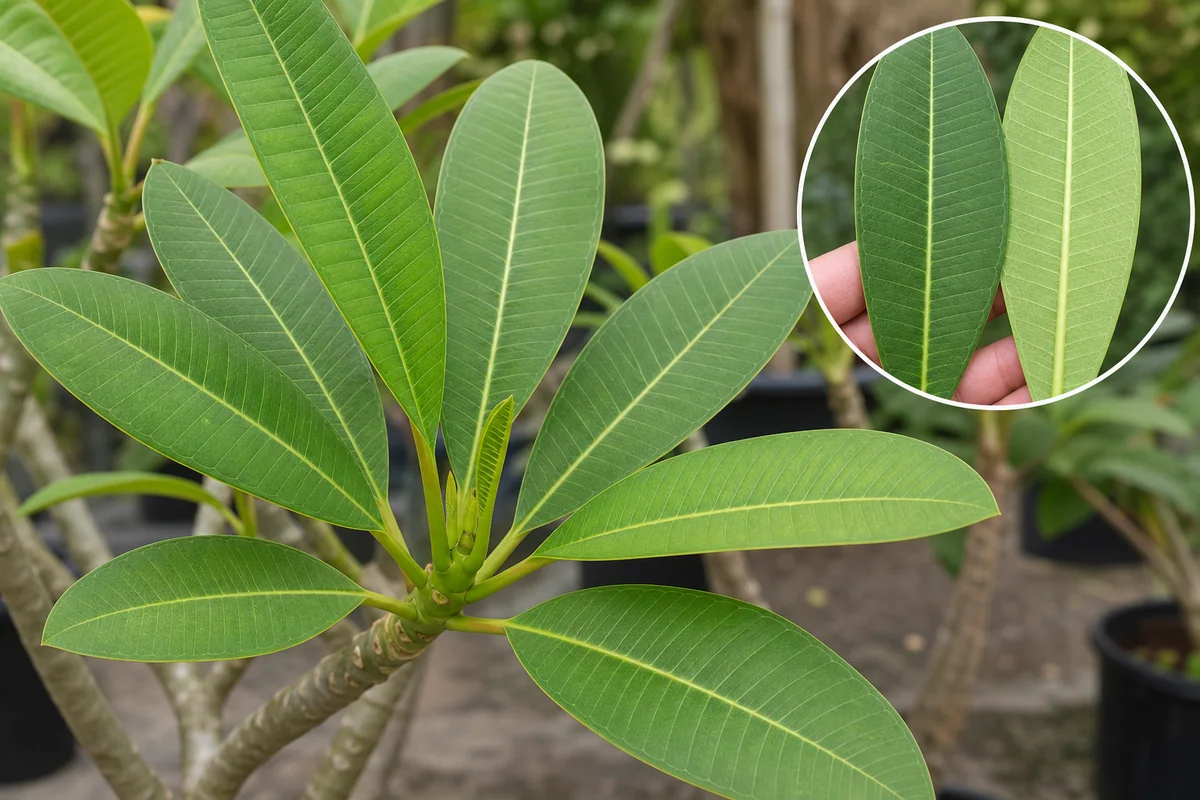 Healthy baseline
- LocationCheck which plant part, age of growth, and exposed or protected side is affected.
- TextureDecide whether the evidence is dry, powdery, sticky, raised, translucent, soft, or intact.
- ProgressionPhotograph the same area so you can tell whether the pattern is stable, improving, or spreading.
Use more than one clue. Confirm the photo with recent conditions, roots, watering history, and the rest of the plant before acting.
Strategies to Detect Early Signs of Mealybugs and Preventive Measures to Keep These Pests at Bay
Mealybugs are small, soft-bodied insects that can infest various plants, including plumerias. These pests feed on the sap of the plants, leading to discolored and wilted leaves, stunted growth, and can even facilitate the growth of sooty mold. Early detection and appropriate preventive measures are key to controlling mealybug infestations. Here’s a guide on how to recognize the early signs of mealybugs and strategies to keep them at bay.
Detecting Early Signs of Mealybugs
1. Visual Inspection
- What to Look For: Tiny, white, cotton-like masses on stems, leaves, or flower buds. You might also notice a sticky substance called honeydew.
- When to Check: Regularly inspect your plumerias, focusing on the undersides of leaves and areas where leaves meet stems.
2. Monitor Plant Health
- What to Look For: Yellowing or wilting leaves, stunted growth.
- Why it Works: Mealybugs suck plant juices, leading to these symptoms.
3. Sticky Traps
- What to Do: Place yellow sticky traps near the plants.
- Why it Works: They can catch adult mealybugs and provide an early warning system.
Preventive Measures to Keep Mealybugs at Bay
1. Maintain Plant Vigor
- How to Do It: Proper watering, fertilization, and sunlight.
- Why it Works: Healthy plants are more resistant to infestations.
2. Natural Predators
- How to Do It: Introduce beneficial insects like ladybugs and lacewings.
- Why it Works: They naturally prey on mealybugs.
3. Prune Infested Parts
- How to Do It: Cut off the heavily infested leaves and stems.
- Why it Works: Helps contain the infestation.
4. Insecticidal Soap Sprays
- How to Do It: Regularly spray with insecticidal soap, especially on the undersides of leaves.
- Why it Works: It can suffocate the mealybugs without harming beneficial insects.
5. Neem Oil
- How to Do It: Apply neem oil as a natural insect repellent.
- Why it Works: Acts as a natural deterrent for mealybugs.
6. Quarantine New Plants
- How to Do It: Isolate new plants for a few weeks and inspect them before planting them near existing plumerias.
- Why it Works: Prevents the introduction of mealybugs from infested new plants.
7. Avoid Over-Fertilizing
- Why it Works: Excess nitrogen can make plants more appealing to mealybugs.
Conclusion: Diligence and Prevention
Mealybugs can cause significant harm to plumerias, but early detection and the right preventive strategies can keep these pests at bay. Regularly inspecting your plants and understanding the symptoms of an infestation will enable you to act quickly if mealybugs appear. By fostering healthy plant growth, employing natural predators, and using eco-friendly sprays and deterrents, you can create an environment where mealybugs are less likely to thrive. When applied with consistency and care, these strategies can ensure that your plumerias remain healthy, vibrant, and free of mealybug infestations.
Turn the explanation into an action plan
- Monitor
- Compare whole-plant photographs monthly during active growth and at each seasonal transition.
- Change one thing
- Make the smallest justified correction, record the date, and avoid stacking treatments before you can see which one helped.
- Escalate when needed
- Inspect roots and major stems promptly when decline is sudden, anchorage fails, or several branches soften or die back.