
The Plumeria How-To Guide offers step-by-step instructions for essential tasks like rooting, pruning, fertilizing, and repotting—helping you grow strong, healthy plumeria with proven techniques.
Stem Rot in Plumeria – Updated Treatment and Prevention Guide
What to check next
This guide helps you connect growth habit, light, roots, water, nutrition, season, and cultivar traits before trying to correct the whole plant. Read the detailed explanation, then use this sequence to decide what to do.
- 1
- 2
Check the foundation
Inspect anchorage, container size, roots, drainage, and the amount and direction of light.
- 3
Compare season and cultivar
Confirm whether the habit is new, worsening, seasonal, or normal for the variety.
- 4
Correct the strongest limiter
Address the clearest root, light, structural, moisture, or nutrition limitation first.
- 5
Measure new growth
Use dated photos, internode length, branching, and the next leaf flush to judge progress.
How microclimate changes this answer
A sheltered wall, partial canopy, wind, container heat, and winter storage can shape the plant more than its regional Zone.
Compare this disease or rot pattern with healthy growth
Use these references to confirm that this article matches the visible pattern before changing care or applying a treatment.
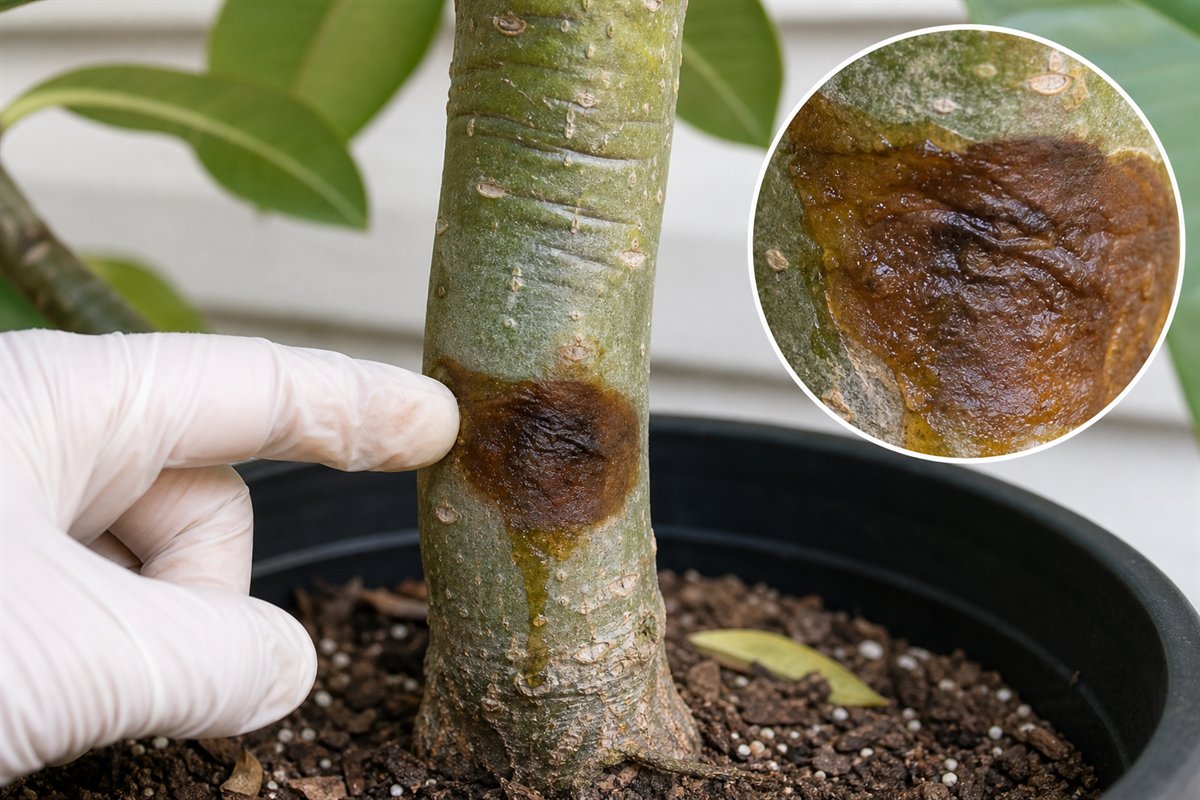 Condition reference
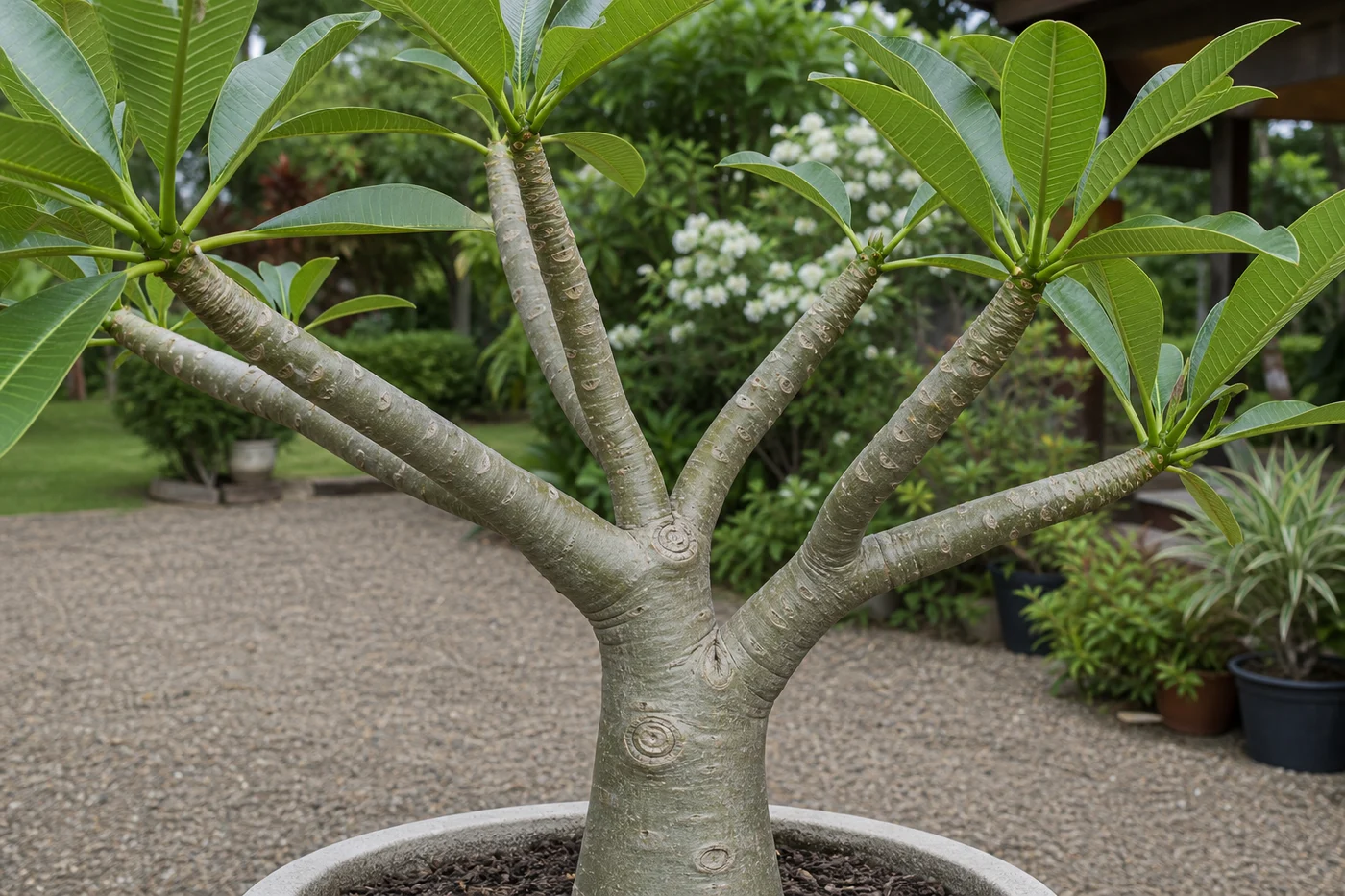 Healthy baseline
- LocationCheck which plant part, age of growth, and exposed or protected side is affected.
- TextureDecide whether the evidence is dry, powdery, sticky, raised, translucent, soft, or intact.
- ProgressionPhotograph the same area so you can tell whether the pattern is stable, improving, or spreading.
Use more than one clue. Confirm the photo with recent conditions, roots, watering history, and the rest of the plant before acting.
START WITH THE COMPLETE GUIDE
Stem Rot on Plumeria
This article covers one focused part of the subject. Begin with the complete Stem Rot guide to confirm the problem, choose the correct treatment path, and reach the related identification and prevention steps.
Updated stem rot guide: This older How-To article has been consolidated into the current Pests and Diseases Guide, where stem rot, soft rot, sanitation, cutback, drying, and prevention are covered in separate steps.
Use How to Identify Bacterial Soft Rot in Plumeria first, then follow How to Treat Bacterial Soft Rot in Plumeria if tissue is soft, wet, collapsing, or foul-smelling.
Why This Page Was Consolidated
Stem rot treatment depends on how far decay has moved and whether the tissue is still firm. The updated pages explain why quick isolation, clean cutting, disinfection, dry-down, and watering control matter more than simply applying a product.
Helpful Next Steps
- Identify soft rot symptoms.
- Treat soft or collapsing tissue.
- Prevent future soft rot.
- Use the disease symptom checklist.
Turn the explanation into an action plan
- Monitor
- Compare whole-plant photographs monthly during active growth and at each seasonal transition.
- Change one thing
- Make the smallest justified correction, record the date, and avoid stacking treatments before you can see which one helped.
- Escalate when needed
- Inspect roots and major stems promptly when decline is sudden, anchorage fails, or several branches soften or die back.