
Welcome to the Plumeria Cultivation & Planting Guide. This is your definitive starting point for turning rooted cuttings, seedlings, or mature specimens into thriving, bloom-laden trees. Inside, you’ll learn how to choose the ideal micro-climate. You will craft well-draining soil mixes. Mastering container-versus-in-ground decisions is also included. You will time each planting task to your growing zone. Step-by-step instructions guide each aspect of planting. Troubleshooting checkpoints help resolve common issues. Nutrition tips based on science ensure your plumeria has strong roots, vigorous growth, and abundant flowers. Whether you garden on a balcony or use raised beds, this guide offers decades of practical experience. It is also helpful if you maintain a full grove. It turns that knowledge into practical, easy-to-follow advice. The guide empowers beginners and seasoned collectors alike to cultivate with confidence.
Spider Mites: Non-Organic Control Strategies
What to check next
This guide helps you connect growth habit, light, roots, water, nutrition, season, and cultivar traits before trying to correct the whole plant. Read the detailed explanation, then use this sequence to decide what to do.
- 1
Describe the whole pattern
Compare height, branching, canopy density, leaf size, flowering, leaning, and vigorous areas.
- 2
Check the foundation
Inspect anchorage, container size, roots, drainage, and the amount and direction of light.
- 3
Compare season and cultivar
Confirm whether the habit is new, worsening, seasonal, or normal for the variety.
- 4
Correct the strongest limiter
Address the clearest root, light, structural, moisture, or nutrition limitation first.
- 5
Measure new growth
Use dated photos, internode length, branching, and the next leaf flush to judge progress.
How microclimate changes this answer
A sheltered wall, partial canopy, wind, container heat, and winter storage can shape the plant more than its regional Zone.
Compare this leaf pattern with healthy growth
Use these references to confirm that this article matches the visible pattern before changing care or applying a treatment.
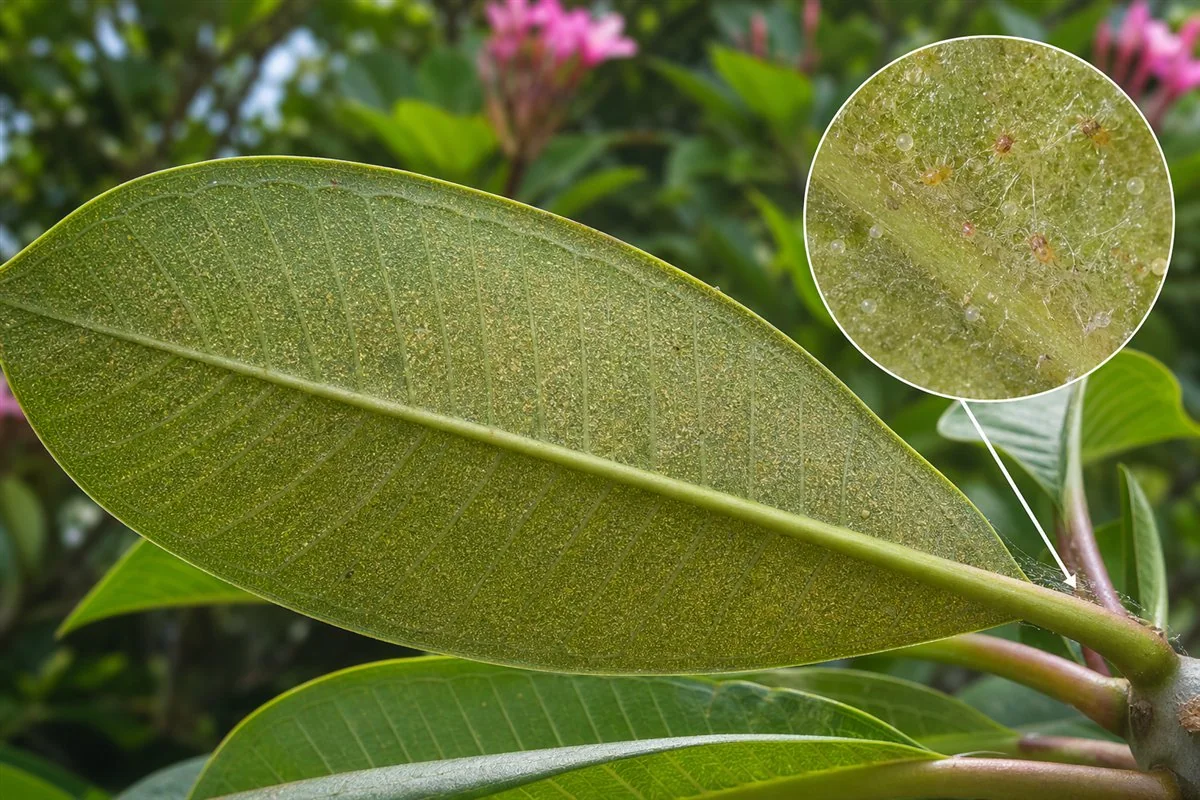 Condition reference
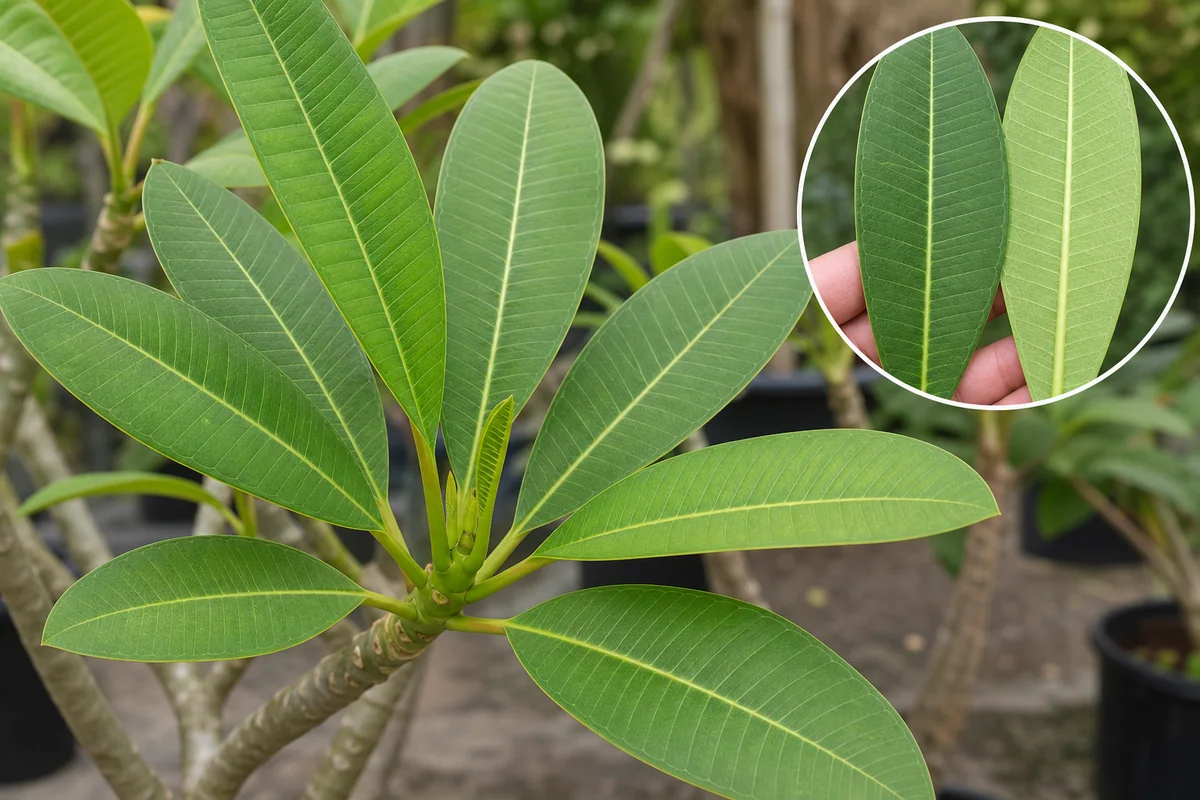 Healthy baseline
- LocationCheck which plant part, age of growth, and exposed or protected side is affected.
- TextureDecide whether the evidence is dry, powdery, sticky, raised, translucent, soft, or intact.
- ProgressionPhotograph the same area so you can tell whether the pattern is stable, improving, or spreading.
Use more than one clue. Confirm the photo with recent conditions, roots, watering history, and the rest of the plant before acting.
Spider Mites: Non-Organic Control Strategies
Targeted Treatments for Severe Infestations in Plumeria
While many plumeria growers prefer organic options, severe or persistent spider mite infestations sometimes require more aggressive treatment. Spider mites can multiply rapidly in hot, dry conditions and hide deep in leaf joints and undersides, making them difficult to eliminate once established. In such cases, non-organic miticides or systemic insecticides can be highly effective when used properly and safely.
This guide focuses on non-organic strategies for controlling spider mites in plumeria, including miticide selection, systemic controls, application tips, and long-term resistance management.
🕷️ When to Use Non-Organic Treatments
| Situation | Action Justification |
|---|---|
| Repeated infestations despite organic treatment | Organic contact sprays may not reach all mite stages |
| Large-scale or nursery infestations | Prevent economic or stock loss |
| Visible leaf bronzing and webbing | Indicates advanced population buildup |
| Plants under stress or recovering poorly | Mites may prevent recovery and bloom |
| Spider mites + other pests (e.g., mealybugs) | May require combination control |
Always begin with the least toxic effective option, but be prepared to escalate when organic methods are insufficient.
✅ Effective Non-Organic Treatments for Spider Mites
1. Abamectin (Avid, Quali-Pro Abamectin 0.15 EC)
- A translaminar miticide with strong activity against mites
- Effective against eggs, nymphs, and adults
- Apply as foliar spray every 7–10 days for 2–3 cycles
- Combine with a spreader-sticker for better coverage
Caution: Highly toxic to aquatic life and bees. Apply early morning or late evening.
2. Bifenthrin (Talstar, Ortho MAX)
- Broad-spectrum insecticide/miticide
- Effective against mites, aphids, whiteflies, and ants
- Long residual effect on leaves and soil
- Often used in nursery and landscape settings
Tip: Rotate with other miticides to prevent resistance buildup.
3. Spiromesifen (Forbid 4F)
- Targets immature and adult mites
- Low odor, long-lasting translaminar activity
- Safe on plumeria when applied per label
- Effective in low-use volumes, ideal for large collections
4. Hexythiazox (Hexygon)
- Ovicidal miticide—stops eggs from hatching
- Best used as part of a rotation with contact miticides
- Not effective on adult mites—combine with abamectin or bifenthrin
5. Fenpyroximate (Akari)
- Contact miticide with rapid knockdown
- Short residual; best used in rotation
- Great for breaking a population explosion quickly
🚫 Products That May Work but Require Caution
| Product | Notes |
|---|---|
| Malathion | Works, but has high odor and bee toxicity |
| Carbaryl (Sevin) | Not miticidal—may worsen infestations |
| Imidacloprid (systemic) | Limited effect on mites; better for scale or aphids |
Always check product labels to ensure mite control is listed—many insecticides do not kill spider mites.
Application Best Practices
Coverage
- Thoroughly spray leaf undersides, tips, and stem joints
- Mites hide in crevices—missed spots = survival
Rotation
- Use at least two different miticide classes (MOAs) in rotation
- Prevents resistance buildup in mite populations
- Example: Abamectin → Hexythiazox → Spiromesifen
Timing
- Apply in the early morning or evening to avoid heat stress and protect pollinators
- Repeat application every 7–10 days, depending on the product
Environmental Precautions
- Avoid application near open water
- Use dripline protection or move potted plants to avoid runoff
- Never spray during bloom when bees are active
Resistance Management Tips
| Strategy | Benefit |
|---|---|
| Rotate chemical classes | Prevents resistance mutations |
| Combine with cultural controls (airflow, pruning) | Reduces pressure on chemical use |
| Spot-treat affected areas | Limits broad application |
| Track application dates and product names | Improves response planning |
Final Thoughts
When organic strategies aren’t enough, non-organic miticides offer powerful tools to protect your plumeria. By selecting the right miticide, applying with precision, and rotating active ingredients, you can eliminate infestations effectively and safely. Always combine chemical use with cultural practices, such as pruning, washing, and humidity control, for long-term success. Remember that chemical control should always be part of an integrated pest management plan, not the only line of defense.
Turn the explanation into an action plan
- Monitor
- Compare whole-plant photographs monthly during active growth and at each seasonal transition.
- Change one thing
- Make the smallest justified correction, record the date, and avoid stacking treatments before you can see which one helped.
- Escalate when needed
- Inspect roots and major stems promptly when decline is sudden, anchorage fails, or several branches soften or die back.