
The Plumeria Pests and Diseases Guide is an essential resource for identifying, preventing, and treating the most common threats to plumeria plants, including pests, fungi, and environmental stressors. This guide offers detailed information on how to recognize early signs of trouble, from insect infestations to fungal infections, and provides practical solutions to address these issues. It also covers strategies for managing environmental factors such as excessive humidity, temperature fluctuations, and poor soil conditions, which can weaken plumeria. With expert tips on natural and chemical treatments, as well as proactive care practices, this guide ensures your plumeria remains healthy, resilient, and free from common ailments, allowing it to thrive season after season.
How to Identify Leaf Miners on Plumeria
What to check next
This guide helps you confirm that a living pest is present, identify where it is feeding, and choose a measured response without treating inactive damage. Read the detailed explanation, then use this sequence to decide what to do.
Confirm the evidence for leaf miners
- Look for
- Serpentine tunnels or expanding blotches within the leaf, often with a dark waste line or larva protected between surfaces.
- Compare with
- Fungal spots, physical scratches, edema, and surface-feeding insects do not create a continuous tunnel inside the leaf.
- Safest first response
- Remove a limited number of occupied leaves, inspect new growth, and target only the vulnerable stage if damage continues.
Microclimate clue: Warm periods can shorten generations; old mines remain visible after the insect has already left.
- 1
Inspect before treating
Use bright light and magnification on leaf undersides, tips, petioles, stems, and the soil line.
- 2
- 3
Identify the feeding pattern
Separate sucking, chewing, mining, boring, and root-zone damage.
- 4
Start with the least disruptive action
Isolate, wash, and use only a treatment labeled for the confirmed pest and plant.
- 5
Repeat the inspection
Eggs or protected life stages can survive the first response, so follow-up checks matter.
How microclimate changes this answer
Dry heat favors mites, protected humid growth favors some scale and mealybugs, and wet shade increases snail and slug activity.
Compare this leaf pattern with healthy growth
Use these references to confirm that this article matches the visible pattern before changing care or applying a treatment.
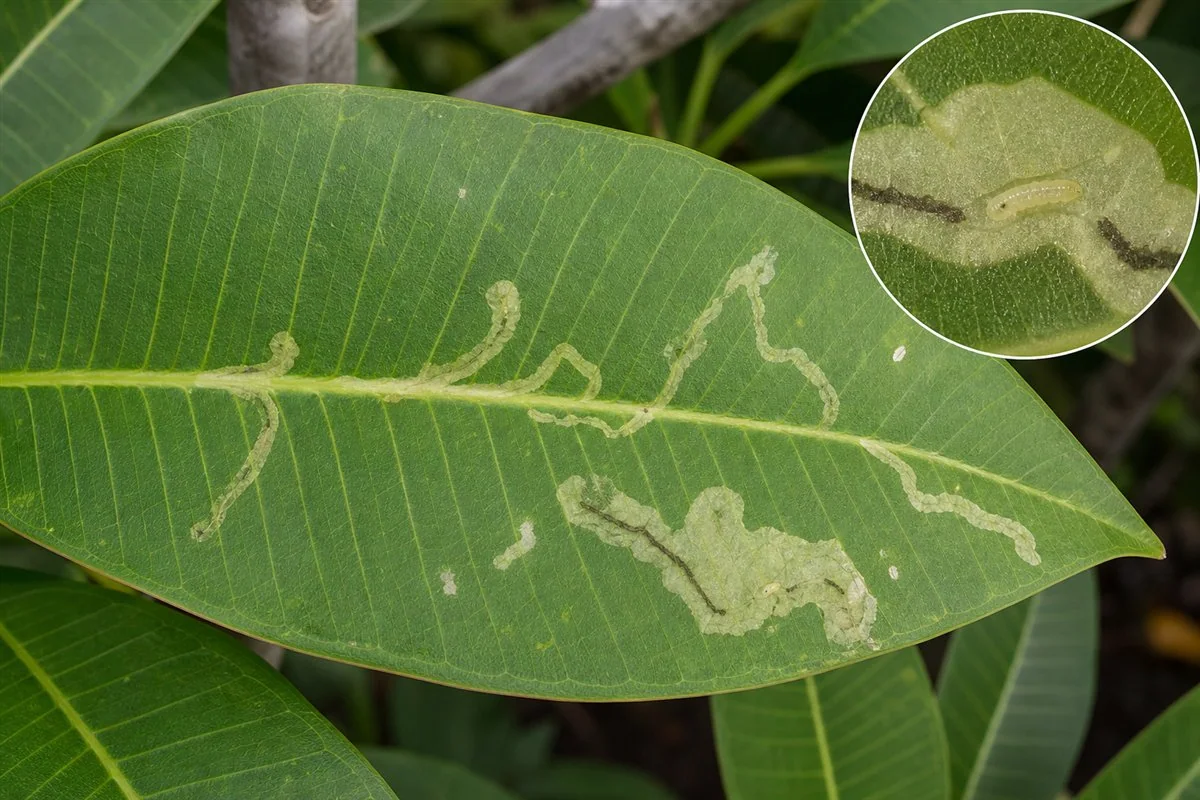 Condition reference
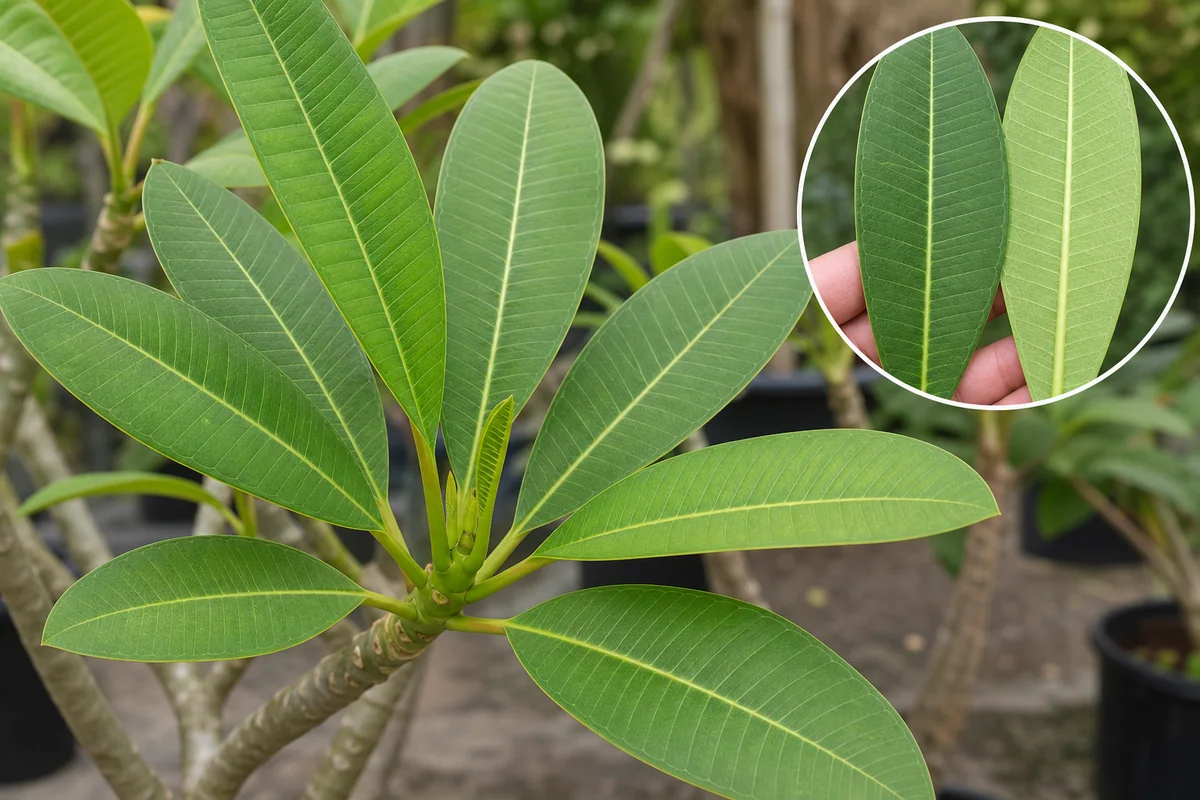 Healthy baseline
- LocationCheck which plant part, age of growth, and exposed or protected side is affected.
- TextureDecide whether the evidence is dry, powdery, sticky, raised, translucent, soft, or intact.
- ProgressionPhotograph the same area so you can tell whether the pattern is stable, improving, or spreading.
Use more than one clue. Confirm the photo with recent conditions, roots, watering history, and the rest of the plant before acting.
Leaf miners decision path: Confirm the defining evidence before treating.
- Confirm: Confirm winding tunnels or expanding blotches within the leaf, sometimes with a thin dark line of frass. Surface scars, chewing holes, and fungal spots are not mines.
- Start conservatively: Remove only heavily mined leaves when the plant has enough healthy foliage, seal discarded material, and monitor the next flush. Avoid removing large amounts of foliage from a stressed plant.
- Escalate only when justified: Use only a product labeled for the confirmed pest and treatment site. Follow the label for interval, coverage, temperature, protective equipment, and maximum applications.
- Protect flowers and beneficial insects: Avoid treating open blooms or applying while pollinators are active.
- Monitor: Inspect young leaves twice weekly during an active flush and distinguish old mines from fresh expanding trails.
Microclimate check: Consider recent weather, plant stage, container or in-ground culture, airflow, and saved growing-area conditions. This is a logical response based on evidence, not a guaranteed diagnosis.
Chewing and Leaf-Mining Pest Diagnostic Path
Use this path when plumeria leaves have holes, missing edges, skeletonized tissue, tunneling trails, blotches, frass, or overnight chewing. The bite pattern usually tells you which pest is active.
- Start with the pest and disease identification guide when symptoms are mixed or you are unsure whether the problem is insect, disease, or stress.
- Check caterpillars and frangipani worm when leaves disappear quickly, frass collects below leaves, or large larvae are visible.
- Check beetles when damage appears as night chewing, flower chewing, or irregular holes without tunnels.
- Check grasshoppers when large edge chunks, ragged missing sections, or jumping insects are present.
- Check snails and slugs when chewing appears overnight with slime trails, especially in damp or shaded areas.
- Check leaf miners when damage stays inside the leaf as pale winding trails, blotches, or tunnels.
Why it matters: Caterpillars, grasshoppers, beetles, slugs, and leaf miners all remove leaf tissue, but the best response is different for each one. Correct identification prevents wasted treatment and protects helpful insects.
Leaf miners are insects whose larvae feed between the upper and lower surfaces of a leaf. Instead of chewing open holes, they create pale trails, tunnels, blotches, or winding mines inside the leaf tissue.
Leaf Miners Article Path
Use this group in order when possible: identify the problem, treat only when needed, then prevent repeat outbreaks or recurrence.
- Identify leaf miners
How to Identify Leaf Miners on Plumeria - Treat leaf miners
How to Treat Leaf Miners on Plumeria - Prevent leaf miners
How to Prevent Leaf Miners on Plumeria
Safety and diagnostics: before applying products, review the Treatment Safety Checklist. If symptoms do not match this group, return to the Pest & Disease Identification Guide.
On plumeria, leaf miner damage is usually more cosmetic than fatal, but it can still reduce useful leaf area when many leaves are affected. The key is to separate leaf miner trails from fungal spots, mite stippling, sunburn, nutrient issues, and chewing pests.
Identity note: “Leaf miner” describes a feeding habit, not one single insect. Leaf miners may be larvae of small flies, moths, beetles, or sawflies. Exact identification often requires seeing the adult or larva, so diagnosis usually starts with the mine pattern.
Photo and Confirmation Checklist
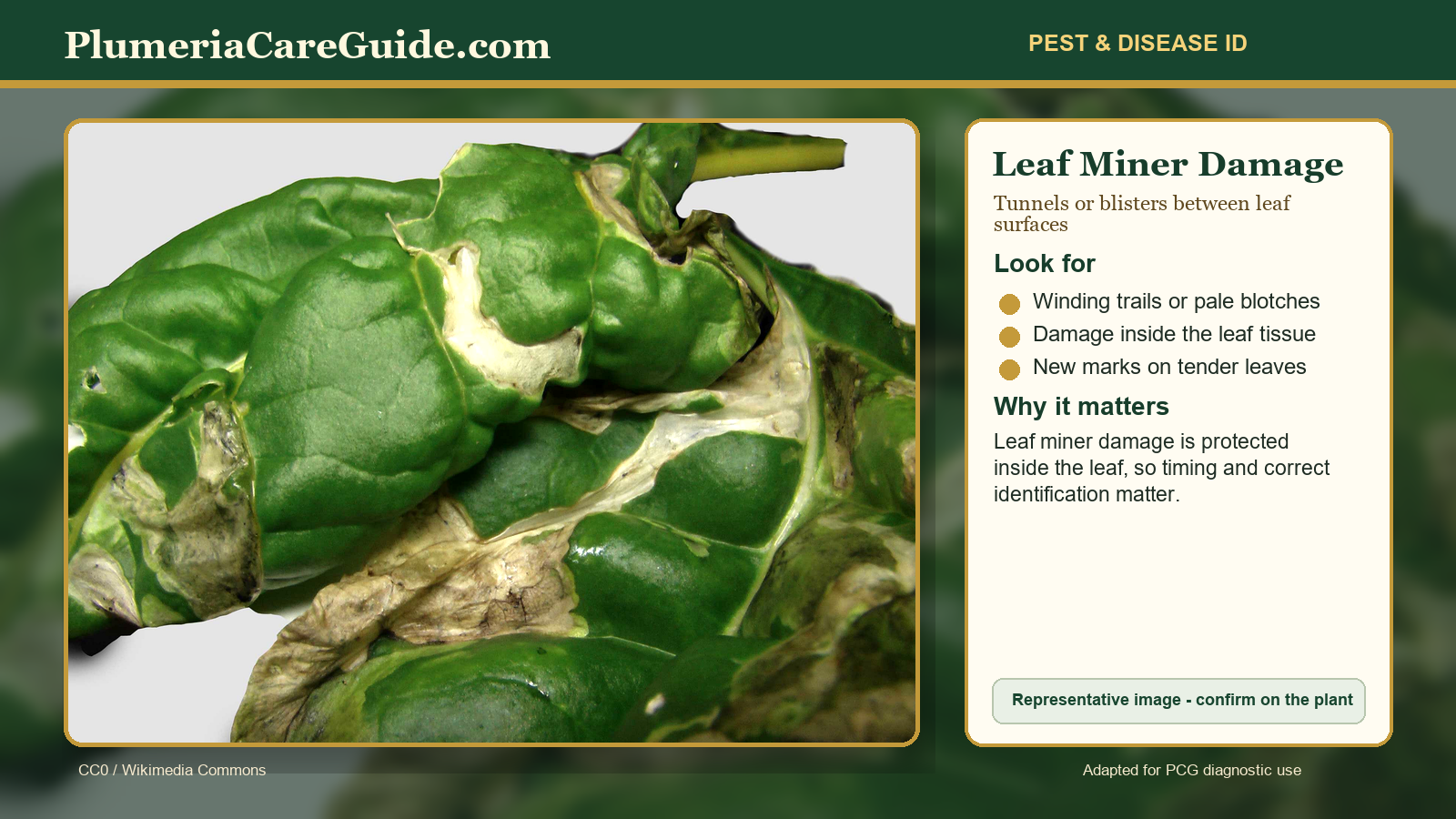
- Look for winding trails, pale tunnels, or blotches inside the leaf.
- Check whether the surface is intact instead of chewed open.
- Look for a dark frass line within the mine.
- Photograph the full leaf plus a close-up of the mine pattern.
Leaf Miner Guide Path
- Identify leaf miners when damage appears as winding trails, pale tunnels, blotches, or dark frass lines inside the leaf.
- Treat leaf miners when new mines are spreading on important young plants or heavy damage is reducing useful leaf area.
- Prevent leaf miners by monitoring new flushes, removing badly mined leaves when practical, and protecting beneficial insects that attack miner larvae.
Quick ID
- Primary sign: Pale, tan, or whitish trails inside the leaf.
- Trail shape: Winding, serpentine, blotchy, or tunnel-like.
- Surface clue: Leaf surface often remains mostly intact rather than having open holes.
- Frass clue: A dark line or specks may appear inside the tunnel.
- Plant impact: Usually cosmetic unless damage is widespread on young or stressed plants.
Leaf Miners vs. Look-Alikes
- Caterpillars: Remove open leaf tissue and often leave visible larvae or frass outside the leaf.
- Grasshoppers: Remove ragged chunks from leaf edges.
- Mites: Cause fine stippling, bronzing, dusty leaves, or webbing rather than tunnels.
- Rust: Produces orange or yellow powdery pustules, usually on leaf undersides.
- Sunburn: Creates larger bleached or scorched areas without a winding tunnel pattern.
How to Confirm
- Hold the leaf up to light and check whether the trail is inside the tissue.
- Look for a widening tunnel, which can show the larva grew as it fed.
- Check whether new mines are appearing or whether the damage is old and inactive.
- Inspect young leaves and recently flushed growth, where new mining may be easier to see.
- Compare several leaves before deciding whether treatment is needed.
What Not to Do
- Do not treat leaf miners like surface chewing pests. The why: larvae are protected inside the leaf, so many contact sprays will not reach them.
- Do not overreact to a few old mines. The why: minor mining is often cosmetic and may not affect plant health.
- Do not confuse mines with disease spots. The why: diseases spread and behave differently, and the wrong treatment wastes time.
Continue with the Complete Leaf Miner Guide
Use the complete guide to move from identification to treatment, prevention, and rechecking without losing your place.
Leaf miner confirmation checks
Leaf miner injury forms inside the leaf surface. That is the key difference from chewing insects, fungal spots, and spray burn.
- Look for winding trails, pale tunnels, blotches, or serpentine paths between the upper and lower leaf surface.
- Fresh mines may widen as the larva feeds; older mines turn dry or brown.
- Leaf miners do not usually cause clean edge chewing or round holes through the leaf.
- Remove heavily mined leaves when practical and monitor new growth for fresh activity.
Related Guides
- How to Treat Leaf Miners on Plumeria
- How to Prevent Leaf Miners on Plumeria
- Disease Symptom Checklist
- Pest and Disease Inspection Checklist
- Treatment Safety Checklist
Turn the explanation into an action plan
- Monitor
- Check the same marked leaves and nearby plants every three to seven days until no active pests or fresh damage remain.
- Change one thing
- Make the smallest justified correction, record the date, and avoid stacking treatments before you can see which one helped.
- Escalate when needed
- Seek local diagnostic help when damage accelerates despite treatment, borers enter major stems, or the pest cannot be identified.