
The Plumeria Pests and Diseases Guide is an essential resource for identifying, preventing, and treating the most common threats to plumeria plants, including pests, fungi, and environmental stressors. This guide offers detailed information on how to recognize early signs of trouble, from insect infestations to fungal infections, and provides practical solutions to address these issues. It also covers strategies for managing environmental factors such as excessive humidity, temperature fluctuations, and poor soil conditions, which can weaken plumeria. With expert tips on natural and chemical treatments, as well as proactive care practices, this guide ensures your plumeria remains healthy, resilient, and free from common ailments, allowing it to thrive season after season.
How to Identify Caterpillars on Plumeria (Including Frangipani Worm)
What to check next
This guide helps you confirm that a living pest is present, identify where it is feeding, and choose a measured response without treating inactive damage. Read the detailed explanation, then use this sequence to decide what to do.
Confirm the evidence for plumeria-feeding caterpillars
- Look for
- Large irregular chewing, missing leaves, dark pellets of frass, and caterpillars on stems, leaf undersides, or nearby surfaces.
- Compare with
- Grasshoppers, beetles, snails, slugs, and storm damage leave different edge patterns, trails, or feeding times.
Microclimate clue: Warm growing weather supports rapid feeding; daily inspection is more useful than waiting for extensive defoliation.
- 1
Inspect before treating
Use bright light and magnification on leaf undersides, tips, petioles, stems, and the soil line.
- 2
- 3
Identify the feeding pattern
Separate sucking, chewing, mining, boring, and root-zone damage.
- 4
Start with the least disruptive action
Isolate, wash, and use only a treatment labeled for the confirmed pest and plant.
- 5
Repeat the inspection
Eggs or protected life stages can survive the first response, so follow-up checks matter.
How microclimate changes this answer
Dry heat favors mites, protected humid growth favors some scale and mealybugs, and wet shade increases snail and slug activity.
Compare this leaf pattern with healthy growth
Use these references to confirm that this article matches the visible pattern before changing care or applying a treatment.
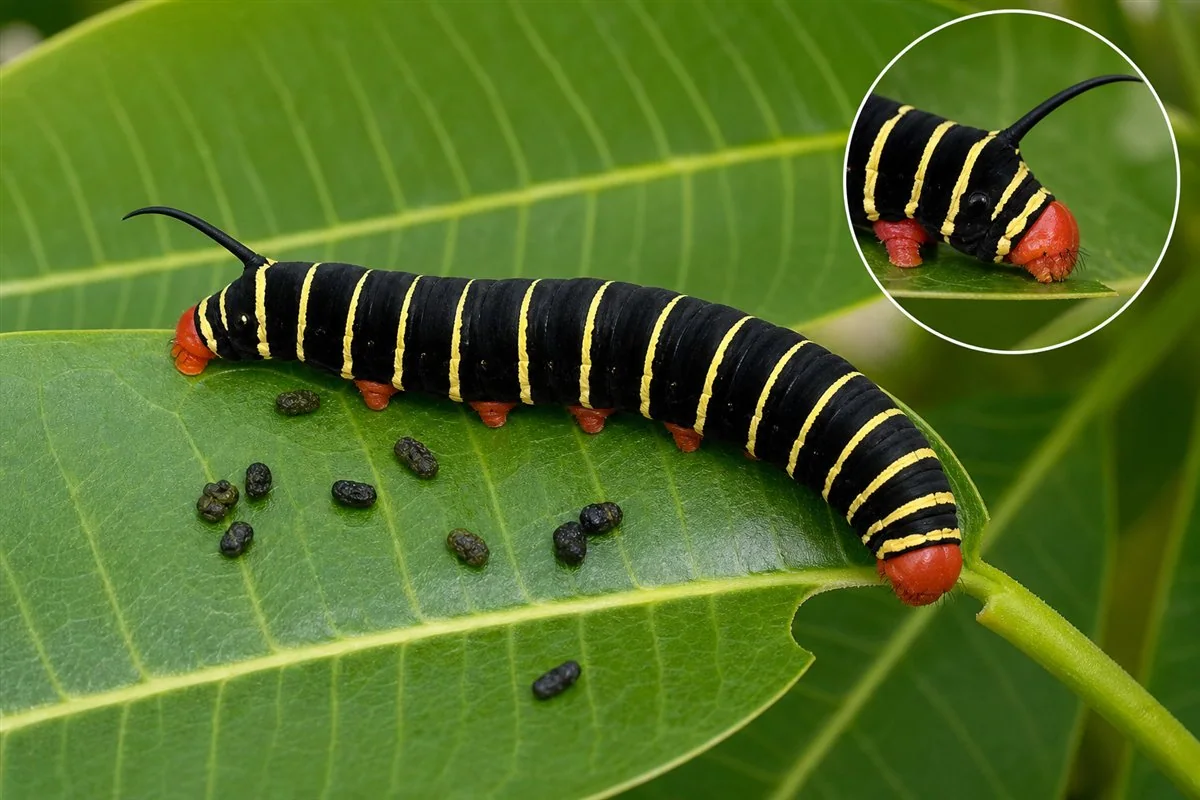 Condition reference
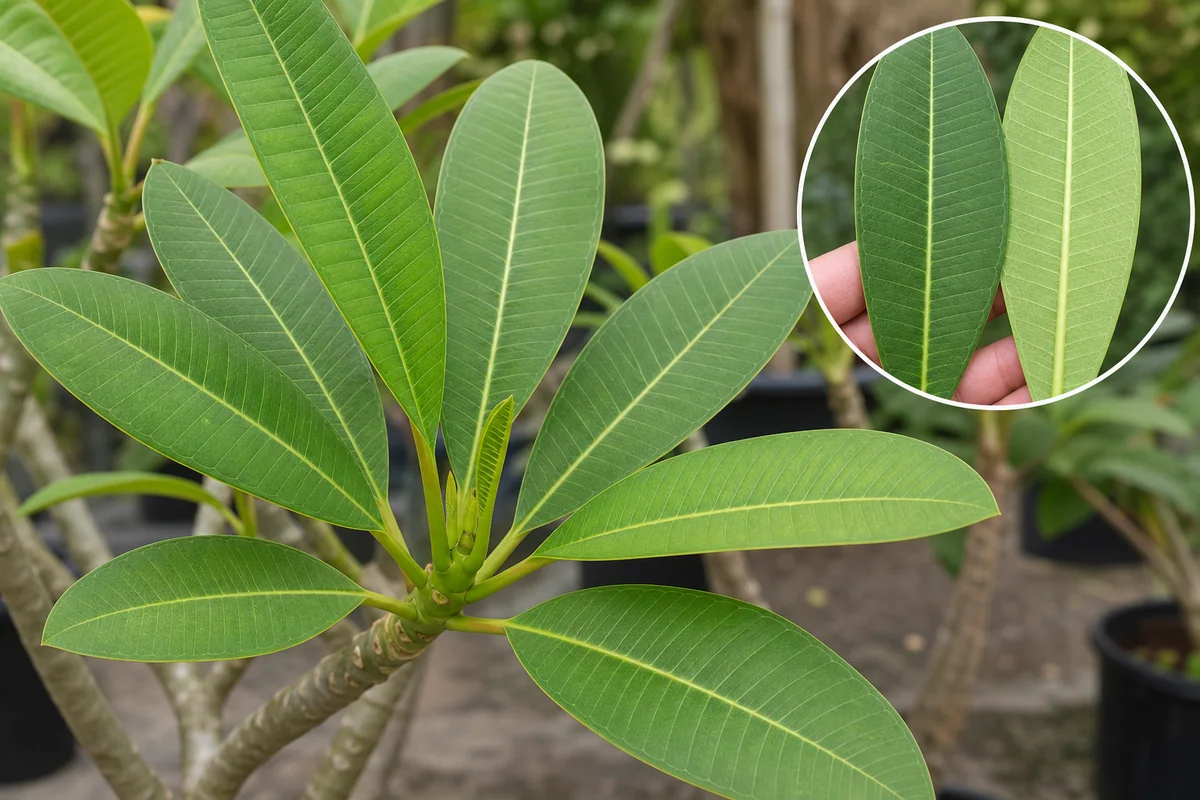 Healthy baseline
- LocationCheck which plant part, age of growth, and exposed or protected side is affected.
- TextureDecide whether the evidence is dry, powdery, sticky, raised, translucent, soft, or intact.
- ProgressionPhotograph the same area so you can tell whether the pattern is stable, improving, or spreading.
Use more than one clue. Confirm the photo with recent conditions, roots, watering history, and the rest of the plant before acting.
Caterpillars and frangipani worms decision path: Confirm the defining evidence before changing care or applying a product.
- Confirm: Look for fresh chewing, missing leaf tissue, dark pellet-like droppings, and the caterpillar itself. Frangipani caterpillars are large, black with yellow bands, and have a red-orange head and tail horn.
- Start conservatively: Hand-pick when practical using gloves or tongs and inspect nearby leaves for additional larvae. A labeled Bacillus thuringiensis kurstaki product works best on small, actively feeding caterpillars, not mature larvae.
- Escalate carefully: Use a pesticide, bait, biological control, or root treatment only when it is labeled for the pest and treatment site. Follow every dilution, timing, temperature, protective-equipment, and maximum-application direction.
- Protect the plant and garden: Avoid open blooms and pollinator activity, test foliar products on a small area, and never combine treatments unless both labels allow it.
- Monitor: Inspect new leaves every 2 to 3 days during active feeding and after fresh chewing appears.
Growing-condition check: Use recent rain, heat, humidity, wind, plant stage, pot or in-ground status, and the saved microclimate as supporting evidence. This is a logical response based on the observations, not a guaranteed diagnosis.
Chewing and Leaf-Mining Pest Diagnostic Path
Use this path when plumeria leaves have holes, missing edges, skeletonized tissue, tunneling trails, blotches, frass, or overnight chewing. The bite pattern usually tells you which pest is active.
- Start with the pest and disease identification guide when symptoms are mixed or you are unsure whether the problem is insect, disease, or stress.
- Check caterpillars and frangipani worm when leaves disappear quickly, frass collects below leaves, or large larvae are visible.
- Check beetles when damage appears as night chewing, flower chewing, or irregular holes without tunnels.
- Check grasshoppers when large edge chunks, ragged missing sections, or jumping insects are present.
- Check snails and slugs when chewing appears overnight with slime trails, especially in damp or shaded areas.
- Check leaf miners when damage stays inside the leaf as pale winding trails, blotches, or tunnels.
Why it matters: Caterpillars, grasshoppers, beetles, slugs, and leaf miners all remove leaf tissue, but the best response is different for each one. Correct identification prevents wasted treatment and protects helpful insects.
Caterpillars are chewing larvae. On plumeria, they can remove leaf tissue quickly, especially when several larvae are feeding at the same time. The best-known plumeria caterpillar is the frangipani worm or frangipani hornworm, commonly associated with Pseudosphinx tetrio, but not every caterpillar found on plumeria should automatically be assumed to be that species.
Caterpillars Article Path
Use this group in order when possible: identify the problem, treat only when needed, then prevent repeat outbreaks or recurrence.
- Identify caterpillars
How to Identify Caterpillars on Plumeria (Including Frangipani Worm) - Treat caterpillars
How to Treat Caterpillars on Plumeria - Prevent caterpillars
How to Prevent Caterpillars on Plumeria
Safety and diagnostics: before applying products, review the Treatment Safety Checklist. If symptoms do not match this group, return to the Pest & Disease Identification Guide.
The diagnosis should combine the damage pattern, the presence of larvae, and the timing of new injury. Caterpillar damage is usually more obvious than mite or disease damage because leaf tissue is actually missing.
Identity note: Caterpillars are the larval stage of moths and butterflies in the order Lepidoptera. Frangipani worms are dramatic, fast-feeding larvae that may strip plumeria foliage, but accurate identification is still useful before choosing a control method.
Photo and Confirmation Checklist
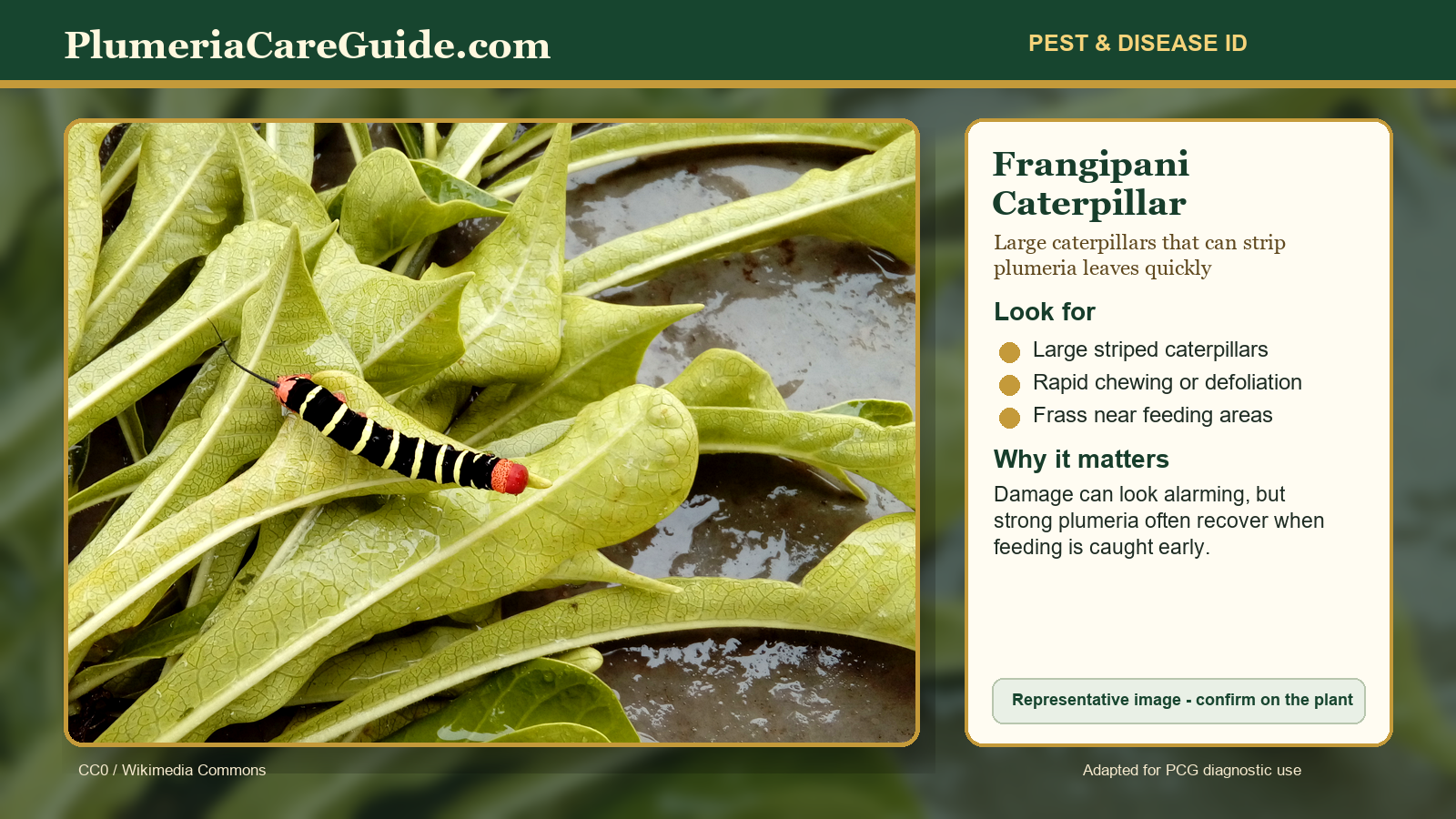
- Look for actual larvae on leaf undersides, stems, leaf tips, and nearby pot rims.
- Check below damaged leaves for dark droppings, called frass.
- Compare the damage with beetles, grasshoppers, snails, and slugs before treating.
- Photograph the pest and the damage together when possible.
Caterpillar and Frangipani Worm Guide Path
- Identify caterpillars when leaves are being consumed, frass is present, or larvae are visible on leaves, stems, or leaf undersides.
- Treat caterpillars when active feeding is present and damage is spreading faster than the plant can replace foliage.
- Prevent caterpillar outbreaks by scouting early, removing eggs or young larvae, and protecting small plants during active seasons.
Confirm the Caterpillar Before Naming the Species
Fresh chewing and frass can support a caterpillar diagnosis, but the caterpillar itself is needed for a confident species identification.
| Evidence | Closest interpretation | How to confirm |
|---|---|---|
| Large black caterpillar with bright yellow bands, a red-orange head and legs, and a rear horn | Strong match for the frangipani caterpillar, Pseudosphinx tetrio | Photograph the full caterpillar from the side and above without handling it. The rear horn is not a stinger. |
| Fresh ragged leaf loss and dark frass but no larva visible | A caterpillar is possible, but the species is unconfirmed | Inspect leaf undersides, branch forks, pot rims, nearby surfaces, and the plant at dawn, dusk, or night. |
| Scraped or eaten surface on a plumeria seed pod | Chewing damage is confirmed; a caterpillar or another chewing pest may be responsible | Use the seed-pod photograph as a damage comparison, then look for the pest, fresh frass, and new feeding before treating. |
| Round entry hole with sawdust-like frass or decline above the hole | Internal borer damage is more likely | Use the plumeria borer identification guide promptly. |
| Ragged holes with slime or overnight damage near the ground | Slug or snail feeding may be more likely | Inspect after dark and beneath pots, trays, boards, and debris. |
| Leaf notches or chewing with adult beetles active at night | Beetles may be responsible | Inspect with a flashlight and compare with the May/June beetle guide. |
Quick ID
- Primary sign: Missing leaf tissue, holes, skeletonized leaves, or leaves eaten from the edge inward.
- Strong confirmation: Visible caterpillars or frass near the damaged leaf.
- Frangipani worm clue: Large, colorful, horned larvae that can feed heavily on plumeria foliage.
- Timing: Damage can appear quickly during warm active growth, especially after moths lay eggs.
- Plant impact: Healthy established plumeria can often replace leaves, but small plants, rooted cuttings, and stressed plants can be set back.
Caterpillars vs. Look-Alikes
- Grasshoppers: Usually leave large ragged edge chunks and may jump away when disturbed.
- Beetles: Often chew at night or damage flowers and leaves without leaving large soft larvae behind.
- Snails and slugs: Leave chewing plus slime trails, especially in damp spots.
- Leaf miners: Damage remains inside the leaf as pale tunnels rather than open holes.
- Disease: Causes spots, pustules, or rot rather than missing leaf tissue.
How to Confirm
- Inspect early morning and evening when larvae may be easier to find.
- Look along the midrib, leaf undersides, stem tips, and the shaded side of the plant.
- Check the ground or bench below the plant for frass.
- Look for eggs or very small larvae if new damage appears in several places at once.
- Confirm active feeding before treating. Old damage will not heal, so treatment should be based on new injury or live pests.
What Not to Do
- Do not treat every chewed leaf as caterpillar damage. The why: beetles, grasshoppers, snails, and slugs require different timing and tactics.
- Do not spray just because old leaves have holes. The why: old chewing remains visible after the pest is gone.
- Do not ignore heavy feeding on small plants. The why: young or newly rooted plumeria have less stored energy and fewer leaves to spare.
Related Guides
- How to Treat Caterpillars on Plumeria
- How to Prevent Caterpillars on Plumeria
- Pest and Disease Inspection Checklist
- When to Treat vs. Monitor Plumeria Pests
- Treatment Safety Checklist
Also Inspect Plumeria Seed Pods
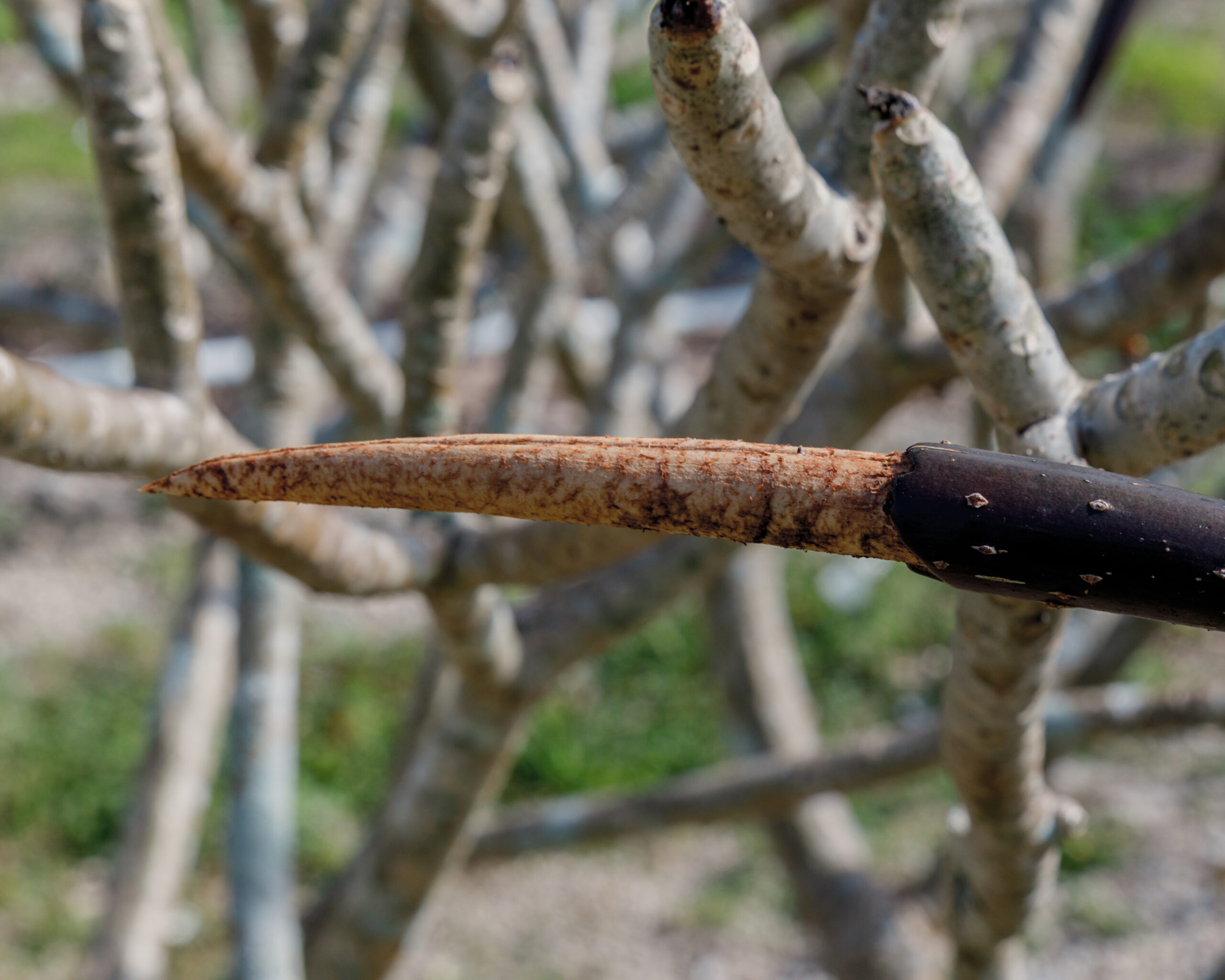
Caterpillars and other chewing pests may damage more than leaves. Inspect seed pods, tender tips, flowers, and nearby foliage for fresh feeding, droppings, larvae, slime, or another clue that identifies the cause. This photograph records the damage accurately, but the damage alone does not prove which pest made it.
Turn the explanation into an action plan
- Monitor
- Check the same marked leaves and nearby plants every three to seven days until no active pests or fresh damage remain.
- Change one thing
- Make the smallest justified correction, record the date, and avoid stacking treatments before you can see which one helped.
- Escalate when needed
- Seek local diagnostic help when damage accelerates despite treatment, borers enter major stems, or the pest cannot be identified.