
The Plumeria Pests and Diseases Guide is an essential resource for identifying, preventing, and treating the most common threats to plumeria plants, including pests, fungi, and environmental stressors. This guide offers detailed information on how to recognize early signs of trouble, from insect infestations to fungal infections, and provides practical solutions to address these issues. It also covers strategies for managing environmental factors such as excessive humidity, temperature fluctuations, and poor soil conditions, which can weaken plumeria. With expert tips on natural and chemical treatments, as well as proactive care practices, this guide ensures your plumeria remains healthy, resilient, and free from common ailments, allowing it to thrive season after season.
Frangipani Caterpillar on Plumeria: Identification, Treatment and Prevention
What to check next
This guide helps you confirm that a living pest is present, identify where it is feeding, and choose a measured response without treating inactive damage. Read the detailed explanation, then use this sequence to decide what to do.
Confirm the evidence for plumeria-feeding caterpillars
- Look for
- Large irregular chewing, missing leaves, dark pellets of frass, and caterpillars on stems, leaf undersides, or nearby surfaces.
- Compare with
- Grasshoppers, beetles, snails, slugs, and storm damage leave different edge patterns, trails, or feeding times.
Microclimate clue: Warm growing weather supports rapid feeding; daily inspection is more useful than waiting for extensive defoliation.
- 1
Inspect before treating
Use bright light and magnification on leaf undersides, tips, petioles, stems, and the soil line.
- 2
- 3
Identify the feeding pattern
Separate sucking, chewing, mining, boring, and root-zone damage.
- 4
Start with the least disruptive action
Isolate, wash, and use only a treatment labeled for the confirmed pest and plant.
- 5
Repeat the inspection
Eggs or protected life stages can survive the first response, so follow-up checks matter.
How microclimate changes this answer
Dry heat favors mites, protected humid growth favors some scale and mealybugs, and wet shade increases snail and slug activity.
Compare this leaf pattern with healthy growth
Use these references to confirm that this article matches the visible pattern before changing care or applying a treatment.
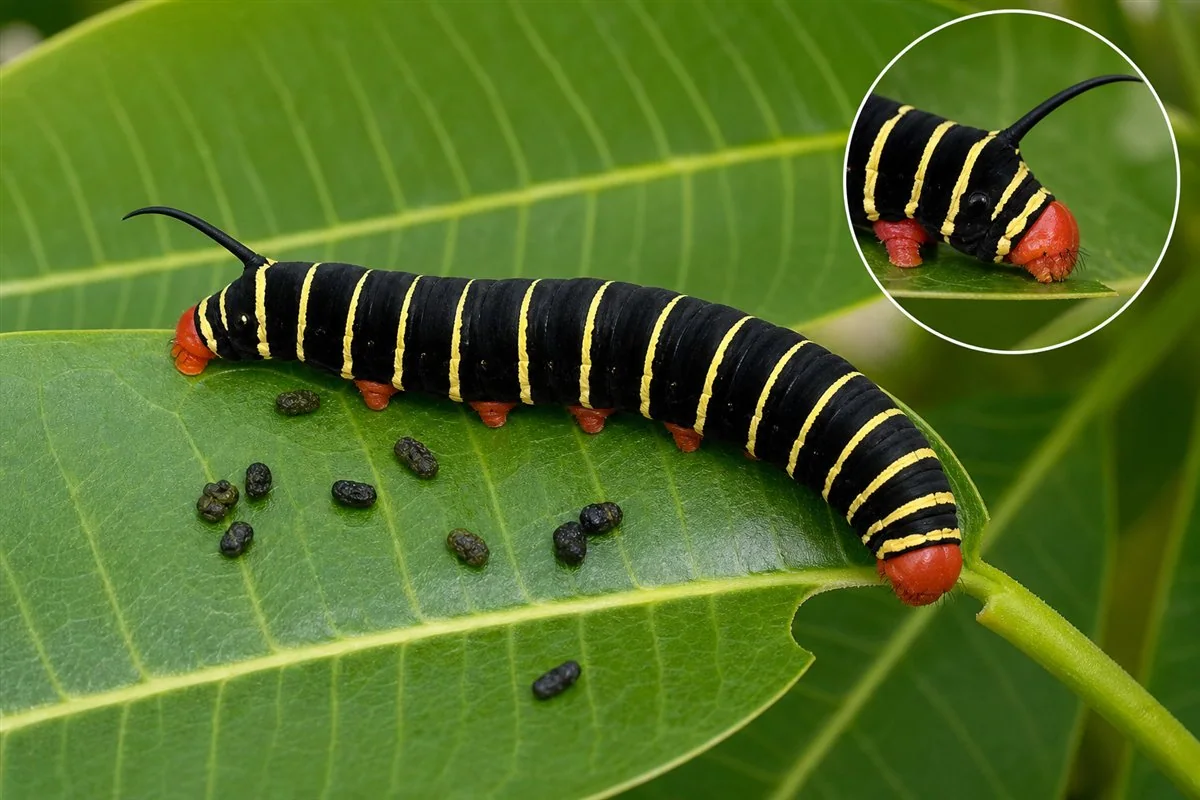 Condition reference
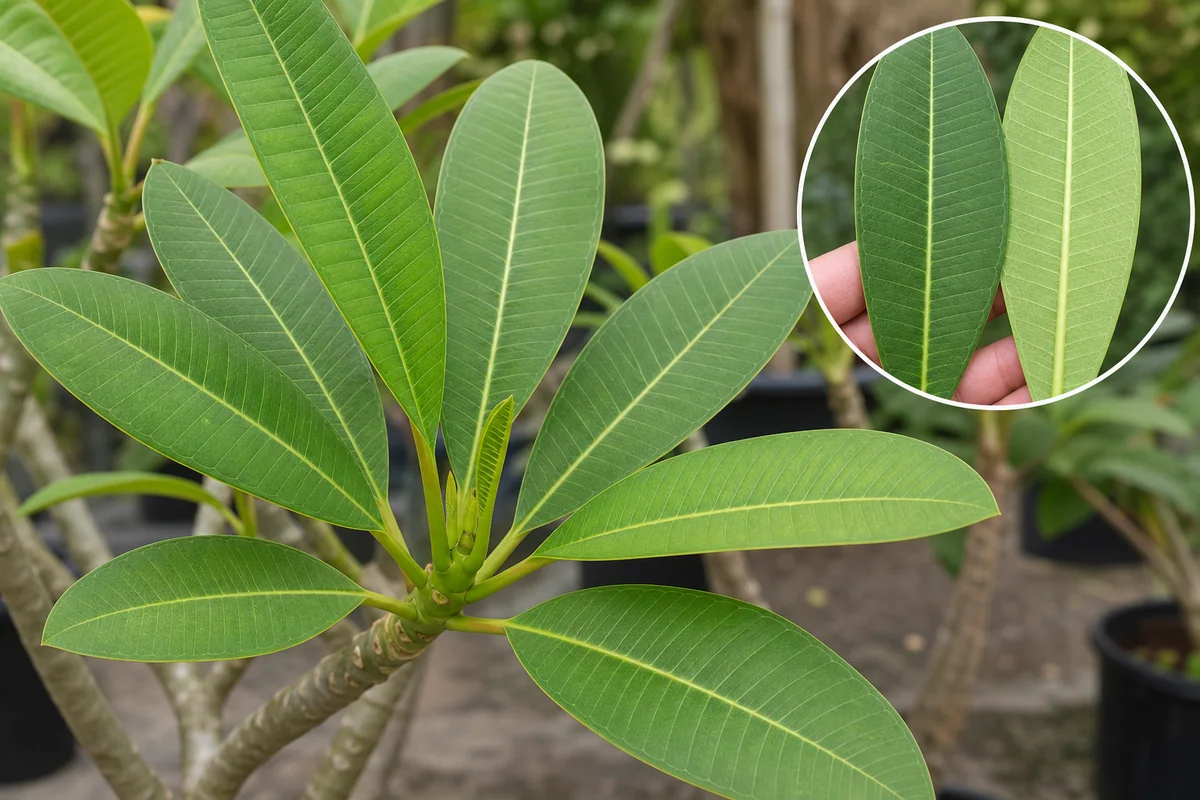 Healthy baseline
- LocationCheck which plant part, age of growth, and exposed or protected side is affected.
- TextureDecide whether the evidence is dry, powdery, sticky, raised, translucent, soft, or intact.
- ProgressionPhotograph the same area so you can tell whether the pattern is stable, improving, or spreading.
Use more than one clue. Confirm the photo with recent conditions, roots, watering history, and the rest of the plant before acting.
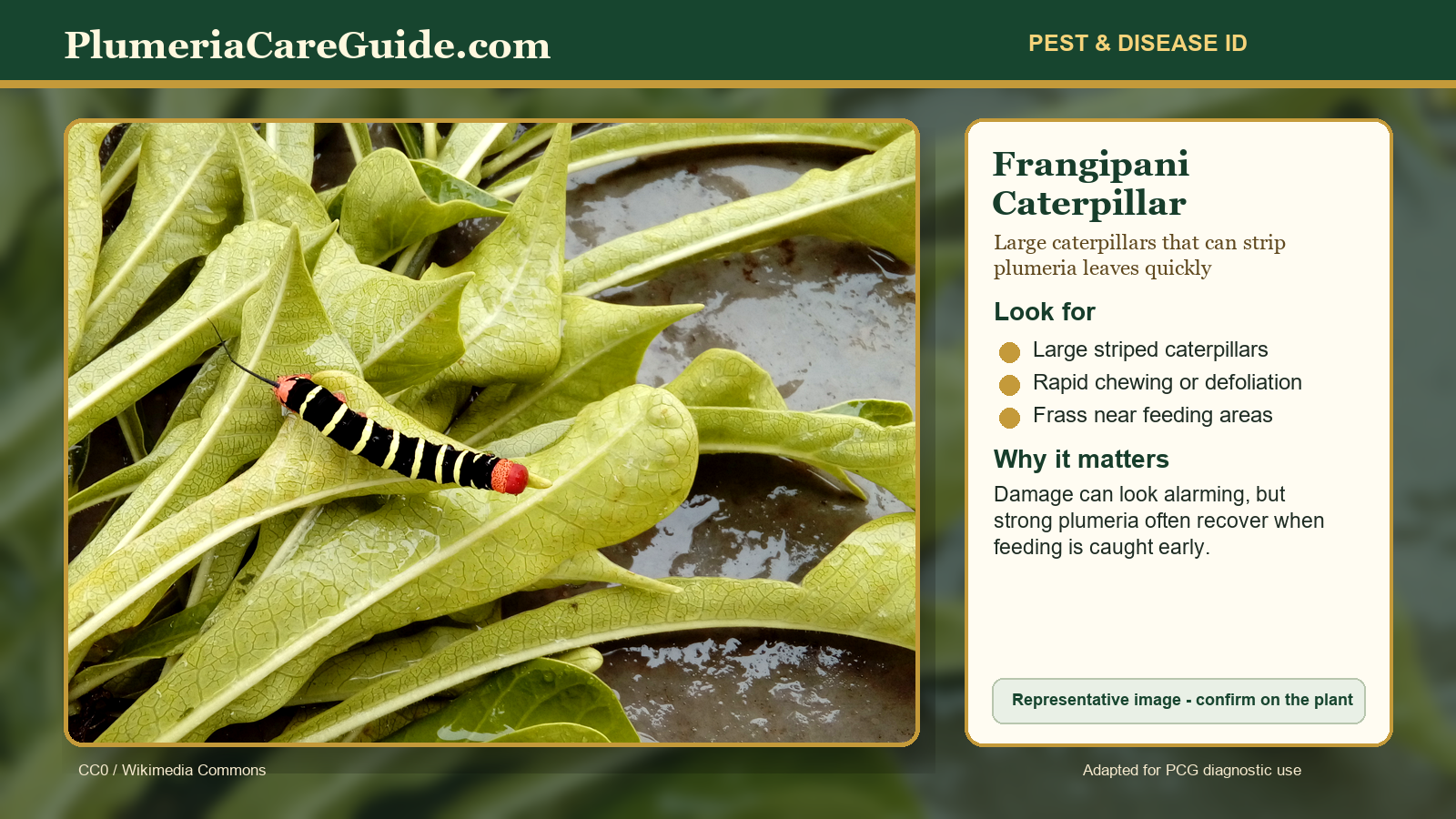
The frangipani caterpillar, also called the plumeria hornworm or frangipani worm, is the large larva of the tetrio sphinx moth (Pseudosphinx tetrio). It can remove leaves quickly and look alarming, yet a healthy mature plumeria often recovers. Seedlings, cuttings, newly rooted plants, and stressed plants need more protection because they have less foliage and stored energy.
Quick Identification
How Urgent Is It?
| Situation | Risk | Practical response |
|---|---|---|
| One or two caterpillars on a healthy mature outdoor plumeria | Visible damage may be dramatic, but recovery is often good. | Choose whether to tolerate them or hand-remove them; keep monitoring. |
| Several caterpillars with continuing defoliation | Leaf loss can become substantial within days. | Remove caterpillars promptly and recheck the entire plant. |
| Seedling, cutting, newly rooted plant, small container plant, or stressed plant | Loss of limited foliage can slow establishment and recovery. | Protect the plant early; do not wait for complete defoliation. |
| Chewing damage without a caterpillar | Beetles, grasshoppers, snails, slugs, and other larvae can overlap. | Inspect at different times of day and confirm the cause before applying a product. |
Safest Response Order
- Photograph and confirm: record the caterpillar, fresh damage, droppings, and the plant stage.
- Protect vulnerable plants first: seedlings, cuttings, newly rooted plants, and stressed plants have less foliage to spare.
- Hand-remove a few: wear gloves and place caterpillars in a container. Do not handle plumeria latex near the eyes.
- Recheck the whole plant: inspect leaf tips, undersides, branches, nearby ground, flowers, and seed pods.
- Consider Bt only for small larvae: a product containing Bacillus thuringiensis var. kurstaki can work when young caterpillars eat treated foliage. It is much less useful against large mature larvae. Use only when the current label permits the plant and site.
- Reserve broader insecticides: do not use a broad-spectrum chemical as the first response. It can affect pollinators and beneficial insects and may add risk without improving hand-removal results.
Tolerance Is a Valid Choice
The adult tetrio sphinx is a pollinating moth, and the caterpillar is part of the local food web even though its warning colors and plant-derived compounds deter some predators. On a vigorous mature outdoor plumeria, a grower may choose to leave a limited number and accept some leaf loss. That is different from ignoring rapid feeding on a seedling, cutting, or weakened plant.
Seed Pod Damage
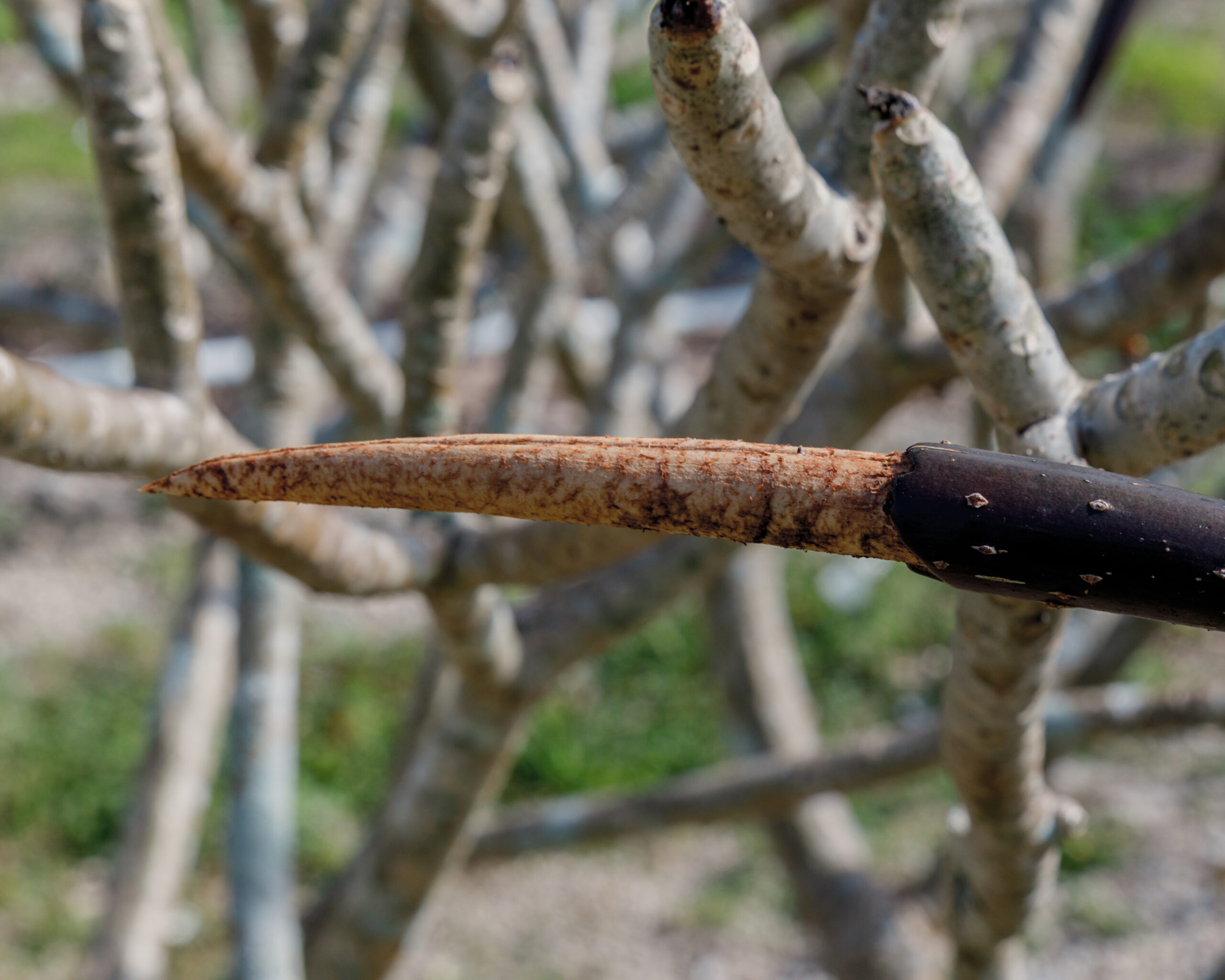
Do not limit the inspection to leaves. Check seed pods, flowers, tender tips, and nearby branches. This is a useful example of physical feeding damage, but the pattern alone cannot confirm a frangipani caterpillar because other chewing or rasping pests may overlap.
Follow-Up Schedule
- Immediately: confirm the pest, protect vulnerable plants, and remove as many caterpillars as the chosen plan requires.
- Next morning: inspect again for missed larvae and fresh droppings.
- Days 3-5: compare new feeding with the original photographs and repeat only label-permitted treatment when needed.
- Weeks 1-3: check new leaves and nearby plumerias weekly because another hatch may appear.
Detailed Caterpillar Guides
- How to Identify Caterpillars on Plumeria – insect features, feeding patterns, droppings, seed pod clues, and look-alikes.
- How to Treat Caterpillars on Plumeria – tolerance, hand removal, Bt timing, and last-resort choices.
- How to Prevent Severe Caterpillar Damage – inspection timing, vulnerable plant protection, and monitoring.
Reference basis: University of Florida IFAS tetrio sphinx guidance.
Turn the explanation into an action plan
- Monitor
- Check the same marked leaves and nearby plants every three to seven days until no active pests or fresh damage remain.
- Change one thing
- Make the smallest justified correction, record the date, and avoid stacking treatments before you can see which one helped.
- Escalate when needed
- Seek local diagnostic help when damage accelerates despite treatment, borers enter major stems, or the pest cannot be identified.