
The Plumeria Pests and Diseases Guide is an essential resource for identifying, preventing, and treating the most common threats to plumeria plants, including pests, fungi, and environmental stressors. This guide offers detailed information on how to recognize early signs of trouble, from insect infestations to fungal infections, and provides practical solutions to address these issues. It also covers strategies for managing environmental factors such as excessive humidity, temperature fluctuations, and poor soil conditions, which can weaken plumeria. With expert tips on natural and chemical treatments, as well as proactive care practices, this guide ensures your plumeria remains healthy, resilient, and free from common ailments, allowing it to thrive season after season.
Snails and Slugs on Plumeria: Identification, Treatment and Prevention
What to check next
This guide helps you confirm that a living pest is present, identify where it is feeding, and choose a measured response without treating inactive damage. Read the detailed explanation, then use this sequence to decide what to do.
Confirm the evidence for snails and slugs
- Look for
- Irregular nighttime chewing, rasped bark on trunks or branches, slime trails, and animals hiding under pots, debris, or dense growth.
- Compare with
- Caterpillars, beetles, rodents, sunscald, and mechanical scraping can damage leaves or bark without slime and nighttime activity.
- Safest first response
- Inspect after dark or early morning, remove hiding places and animals, protect bark, and use a labeled bait only with pet and wildlife safety in mind.
Microclimate clue: Rain, irrigation, humid shade, mulch, and objects touching containers can greatly increase snail and slug activity.
- 1
Inspect before treating
Use bright light and magnification on leaf undersides, tips, petioles, stems, and the soil line.
- 2
- 3
Identify the feeding pattern
Separate sucking, chewing, mining, boring, and root-zone damage.
- 4
Start with the least disruptive action
Isolate, wash, and use only a treatment labeled for the confirmed pest and plant.
- 5
Repeat the inspection
Eggs or protected life stages can survive the first response, so follow-up checks matter.
How microclimate changes this answer
Dry heat favors mites, protected humid growth favors some scale and mealybugs, and wet shade increases snail and slug activity.
Compare this insect or pest pattern with healthy growth
Use these references to confirm that this article matches the visible pattern before changing care or applying a treatment.
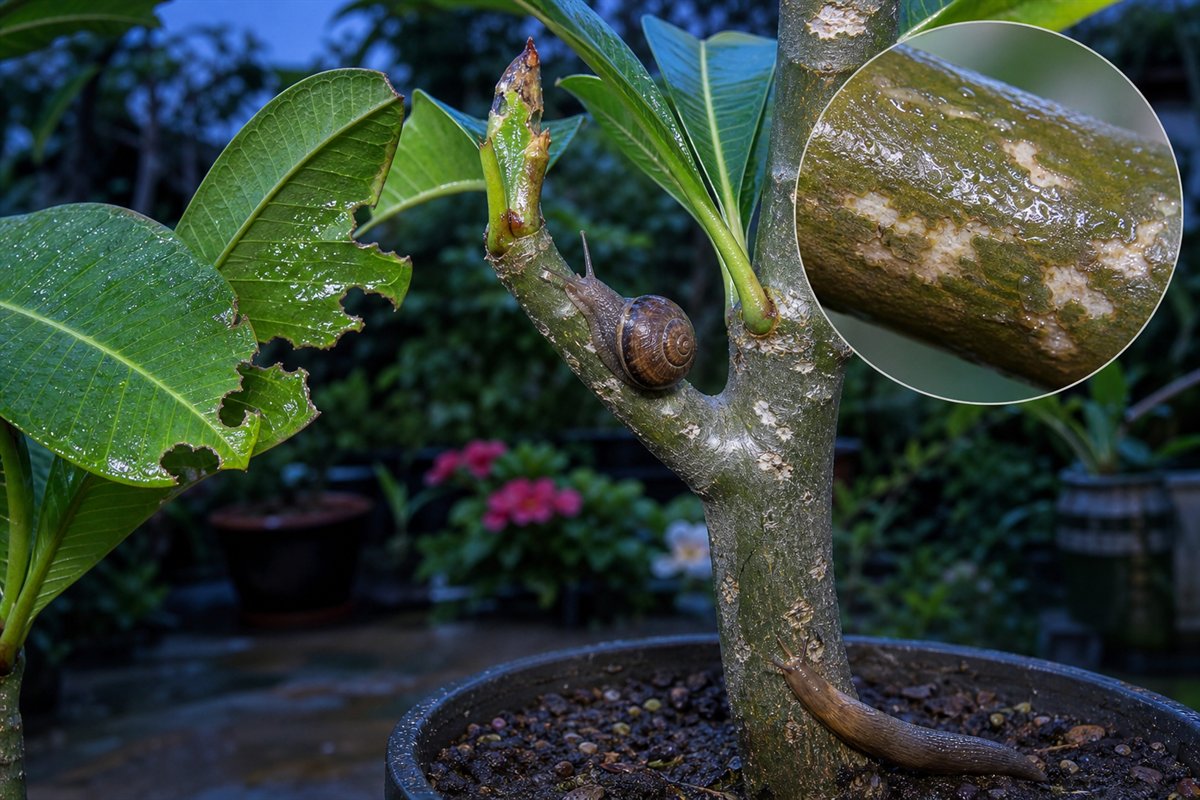 Condition reference
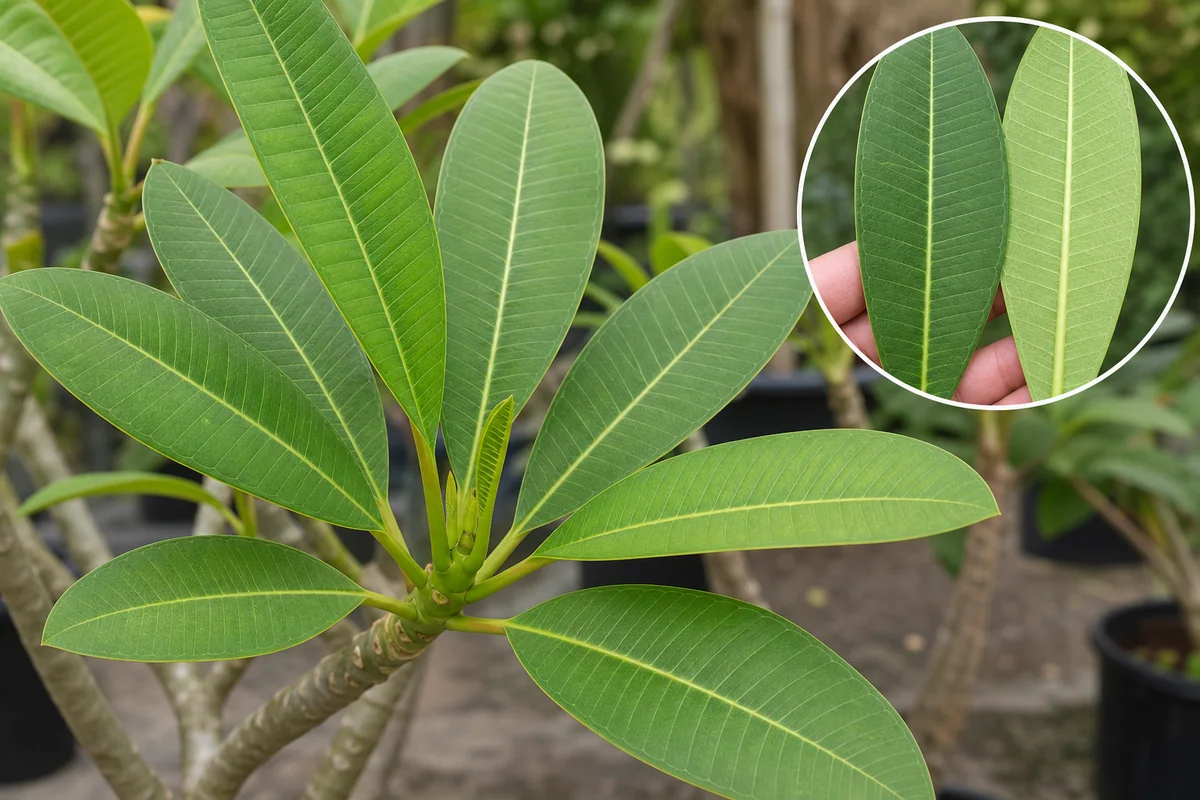 Healthy baseline
- LocationCheck which plant part, age of growth, and exposed or protected side is affected.
- TextureDecide whether the evidence is dry, powdery, sticky, raised, translucent, soft, or intact.
- ProgressionPhotograph the same area so you can tell whether the pattern is stable, improving, or spreading.
Use more than one clue. Confirm the photo with recent conditions, roots, watering history, and the rest of the plant before acting.
Snails and slugs are night-active mollusks that thrive where moisture and shelter overlap. On plumeria they can chew or rasp leaves, tender tips, flowers, seed pods, trunks, and branches. A clear diagnosis depends on finding the pest, a fresh slime trail, or repeated nighttime evidence because several insects and physical injuries can create similar damage.
Fast confirmation checklist
| What you find | What it suggests | Next step |
|---|---|---|
| Snail or slug plus fresh damage | Strong evidence of active feeding. | Hand-remove it and inspect the entire plant and nearby shelter. |
| Shiny slime across pot rims, soil, stems, or leaves | Recent mollusk movement. | Return after dark to confirm and locate the daytime hiding place. |
| Irregular holes or scalloped leaf edges without slime | Snails or slugs are possible, but caterpillars, beetles, and grasshoppers overlap. | Inspect at several times before treating. |
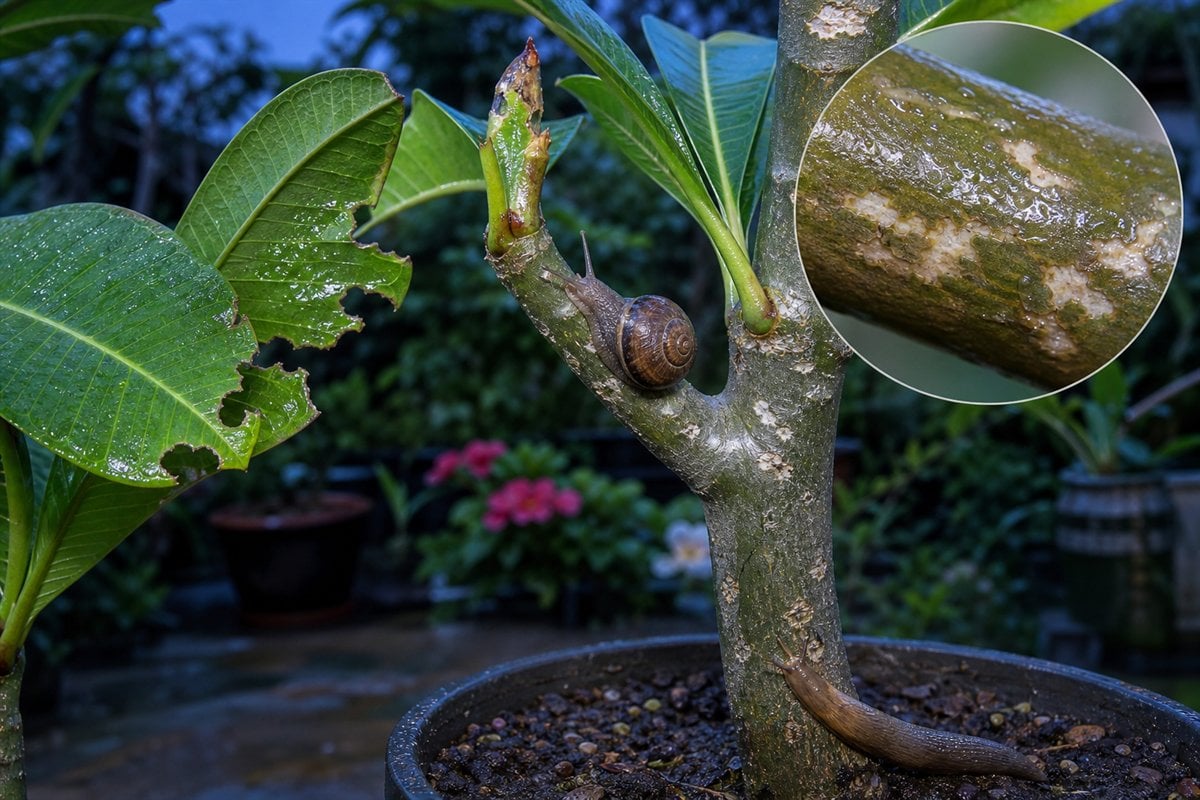
| Pale scraped patches on trunks or branches | Possible rasping damage, especially when moisture, slime, and nighttime pests are present. | Confirm activity and protect the wound from continued feeding. |
| Seedling leaf area disappearing overnight | A small plant can be harmed quickly. | Use the seedling protection guide immediately. |
Do not overlook trunk and branch damage
Snails and slugs can climb plumeria trunks and branches and rasp the outer tissue. Fresh damage may look pale, scraped, shallowly pitted, or irregularly scarred. Repeated feeding can enlarge the affected area, especially on tender growth, seedlings, cuttings, and plants kept in humid or sheltered locations.
Step-by-step treatment decision
- Confirm and record: photograph fresh damage, note rain or irrigation, and inspect at night or early morning.
- Remove active pests: wear gloves, hand-pick snails and slugs, and check the undersides of pots, saucers, benches, boards, stones, dense mulch, and weeds.
- Reduce shelter: remove unnecessary debris and dense hiding places while preserving suitable habitat for beneficial wildlife away from vulnerable plants.
- Adjust surface moisture: water early enough for exposed surfaces to dry before night. Do not withhold needed root-zone water from the plumeria solely to control slugs.
- Add physical protection: use clean pot stands, barriers, or a properly installed copper band where practical. Keep leaves and branches from bridging over the barrier.
- Use bait only if damage continues: choose a product labeled for the site and follow its current directions. Iron phosphate is generally a lower-risk first bait choice, but every product still requires careful placement and storage.
Treatment options from lowest to highest intervention
| Option | Best use | Important caution |
|---|---|---|
| Night inspection and hand removal | A few visible pests, containers, and small collections. | Repeat because new mollusks may arrive from nearby shelter. |
| Trap boards and shelter checks | Finding daytime hiding places and monitoring activity. | Check and empty them regularly or they become shelter. |
| Habitat and irrigation changes | Long-term reduction of cool, damp hiding sites. | Keep the plumeria properly watered; target unnecessary surface moisture. |
| Copper or physical barriers | Protecting individual pots, benches, or defined beds. | A leaf, stake, wall, or debris bridge can bypass the barrier. |
| Iron phosphate bait | Confirmed activity that continues after physical controls. | Scatter only as the label directs; store away from children, pets, and wildlife. |
| Ferric sodium EDTA bait | A labeled alternative when a faster iron-based bait is appropriate. | It is not the same as iron phosphate and may not qualify for organic systems. |
| Metaldehyde bait | A last-resort choice only where the current label permits safe use. | It can poison dogs and other animals. Do not use it where children or pets can reach it. |
Never apply salt to plumeria soil or planting areas. Salt can damage roots and increase soil salinity. Do not place bait in piles, on plant tissue, or where runoff can move it. The product label controls the legal site, rate, placement, protective equipment, and reapplication interval.
Organic and natural-enemy considerations
Hand removal, sanitation, trap boards, irrigation timing, and exclusion are the foundation of an organic approach. Some iron phosphate formulations are accepted for organic systems; verify the exact product rather than assuming every iron-based bait qualifies. Ground beetles, rove beetles, firefly larvae, birds, toads, and other animals may feed on slugs or snails. Protecting natural enemies can help, but do not introduce a nonnative predator snail or other animal without checking local rules and ecological risks.
Follow-up schedule
- Tonight or early tomorrow: confirm active pests and remove those found.
- For the next 7 days: inspect after rain, irrigation, or humid nights; check traps and hiding places daily.
- After 7 to 14 days: compare new damage with the original photographs and continue only the controls still needed.
- After future rain or irrigation changes: resume spot checks before damage becomes extensive.
Continue with the focused guides
- How to Identify Snails and Slugs on Plumeria – confirmation, damage patterns, hiding places, and look-alikes.
- How to Treat Snails and Slugs on Plumeria – physical, organic, barrier, and bait decisions.
- How to Prevent Snails and Slugs on Plumeria – cleanup, irrigation timing, exclusion, and monitoring.
- Protecting Plumeria Seedlings – a higher-protection plan for young plants.
Reference basis: UC Statewide IPM snail and slug guidance and University of Minnesota Extension slug guidance.
Turn the explanation into an action plan
- Monitor
- Check the same marked leaves and nearby plants every three to seven days until no active pests or fresh damage remain.
- Change one thing
- Make the smallest justified correction, record the date, and avoid stacking treatments before you can see which one helped.
- Escalate when needed
- Seek local diagnostic help when damage accelerates despite treatment, borers enter major stems, or the pest cannot be identified.