
The Plumeria Pests and Diseases Guide is an essential resource for identifying, preventing, and treating the most common threats to plumeria plants, including pests, fungi, and environmental stressors. This guide offers detailed information on how to recognize early signs of trouble, from insect infestations to fungal infections, and provides practical solutions to address these issues. It also covers strategies for managing environmental factors such as excessive humidity, temperature fluctuations, and poor soil conditions, which can weaken plumeria. With expert tips on natural and chemical treatments, as well as proactive care practices, this guide ensures your plumeria remains healthy, resilient, and free from common ailments, allowing it to thrive season after season.
Scale Insects on Plumeria: Identification, Treatment and Prevention
What to check next
This guide helps you confirm that a living pest is present, identify where it is feeding, and choose a measured response without treating inactive damage. Read the detailed explanation, then use this sequence to decide what to do.
Confirm the evidence for scale insects
- Look for
- Firm or soft attached bumps on stems, petioles, and leaf undersides; crawlers, honeydew, ants, or sooty mold may also be present.
- Compare with
- Normal lenticels, healed scars, dried sap, edema, and stem texture should not be treated as scale without a lift or crush test.
- Safest first response
- Isolate, remove manageable colonies, inspect nearby plants, and time any labeled treatment to the vulnerable crawler stage.
Microclimate clue: Dense sheltered canopies and protected winter storage can allow scale to persist unnoticed between growing seasons.
- 1
Inspect before treating
Use bright light and magnification on leaf undersides, tips, petioles, stems, and the soil line.
- 2
- 3
Identify the feeding pattern
Separate sucking, chewing, mining, boring, and root-zone damage.
- 4
Start with the least disruptive action
Isolate, wash, and use only a treatment labeled for the confirmed pest and plant.
- 5
Repeat the inspection
Eggs or protected life stages can survive the first response, so follow-up checks matter.
How microclimate changes this answer
Dry heat favors mites, protected humid growth favors some scale and mealybugs, and wet shade increases snail and slug activity.
Compare this insect or pest pattern with healthy growth
Use these references to confirm that this article matches the visible pattern before changing care or applying a treatment.
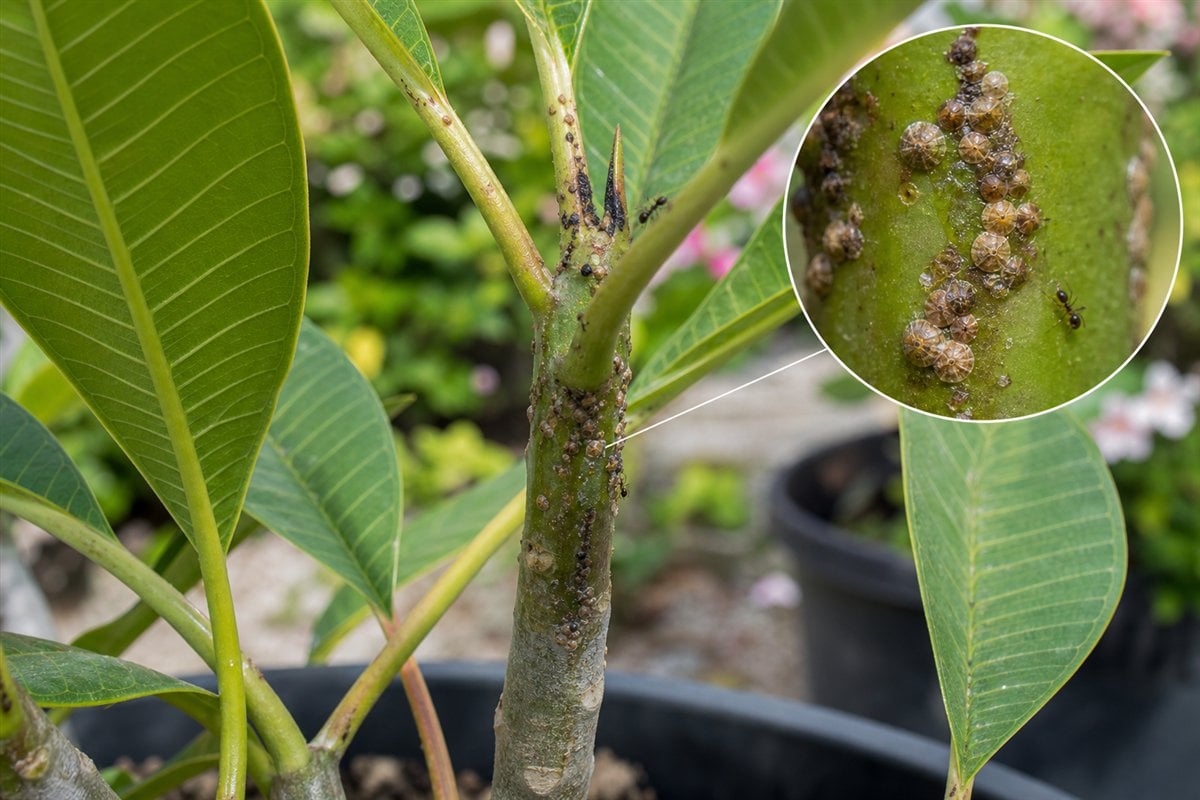 Condition reference
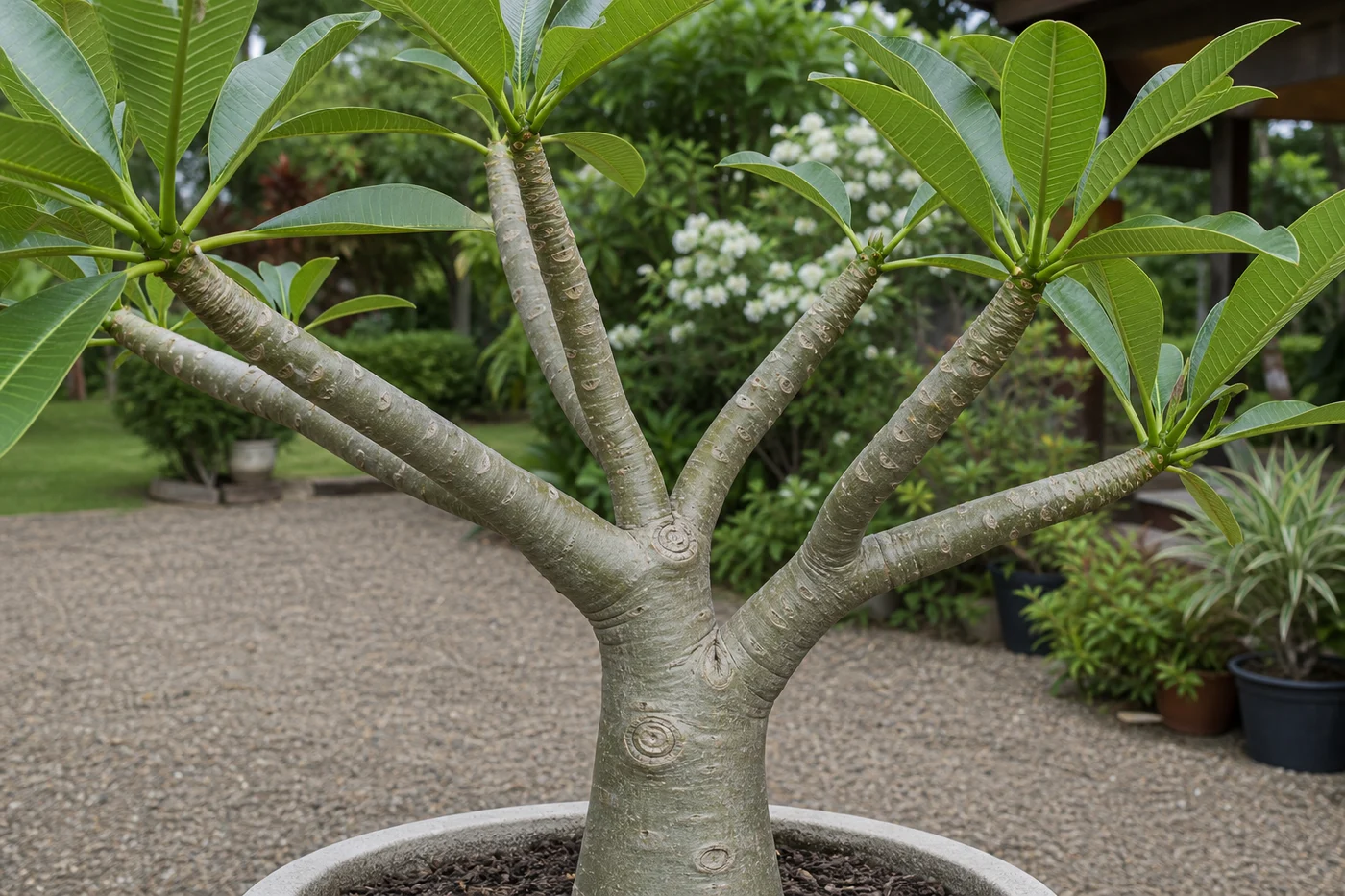 Healthy baseline
- LocationCheck which plant part, age of growth, and exposed or protected side is affected.
- TextureDecide whether the evidence is dry, powdery, sticky, raised, translucent, soft, or intact.
- ProgressionPhotograph the same area so you can tell whether the pattern is stable, improving, or spreading.
Use more than one clue. Confirm the photo with recent conditions, roots, watering history, and the rest of the plant before acting.
Scale insects are sap-feeding pests that often resemble ordinary bumps, scars, or bark texture on plumeria stems and leaves. This overview helps you confirm active scale, choose the least disruptive response, and move into the detailed identification, treatment, or prevention guide.
Quick Answer
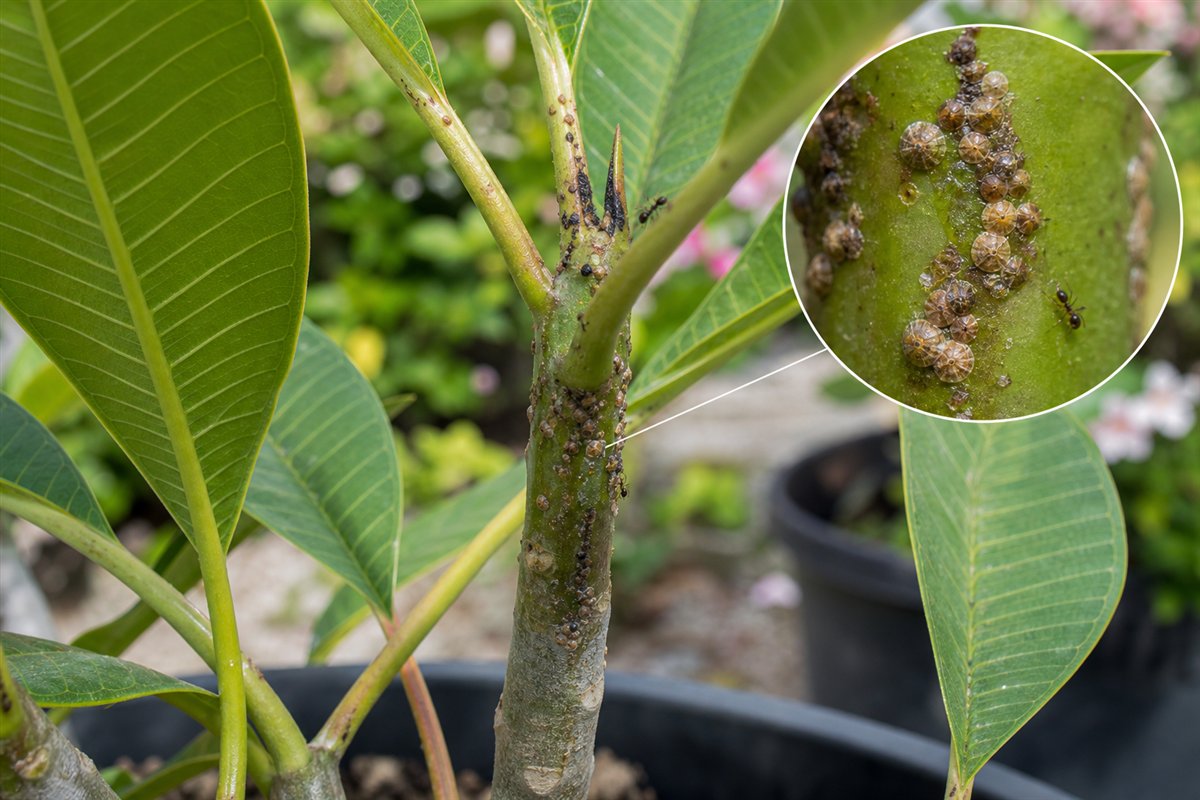
Confirm Scale Before Treating
| Evidence | What it suggests | What to do next |
|---|---|---|
| Fixed shell-like or flattened bumps that lift or scrape away | Scale is a strong match, especially when insects or moist tissue are found beneath the cover. | Open the detailed identification guide and check for active crawlers. |
| Sticky honeydew, ants, or sooty mold | Soft scale or another honeydew-producing pest may be active. | Inspect leaf undersides, petioles, veins, and protected stem joints. |
| Hard covers without honeydew | Armored scale is possible; old dead covers may remain attached. | Check several samples for living tissue and new crawlers before treating. |
| Bumps that are continuous with the stem tissue | Normal lenticels, leaf scars, corking, or healed injury may be more likely. | Do not spray. Compare with healthy stems and photograph changes over time. |
| White cottony or fuzzy colonies | Mealybugs are a closer match than typical scale covers. | Use the mealybug identification path. |
Soft Scale and Armored Scale Are Not Identical
Soft scale commonly produces honeydew that attracts ants and supports sooty mold. Armored scale develops a protective cover and usually does not produce honeydew. Mature covers can protect both groups from contact products, which is why the mobile crawler stage is often the most useful treatment target.
Choose the Least Disruptive Treatment Level
- Physical and cultural control: Isolate movable plants, gently remove exposed colonies, clean protected joints, reduce crowding, and control ants.
- Predators and biological control: Protect lady beetles, lacewings, predatory mites where appropriate, and scale parasitoids. Avoid broad treatments that remove these helpers.
- Contact products: Compare a currently labeled insecticidal soap or horticultural oil when active crawlers or exposed young scale can be covered thoroughly. Heat, drought stress, tender growth, and incomplete coverage can change the result.
- Conventional or systemic treatment: Reserve labeled ornamental insecticides or insect growth regulators for a confirmed damaging infestation that remains active after safer measures. Protect flowers, pollinators, beneficial insects, cuttings, seedlings, and stressed plants.
Simple Follow-Up Schedule
| Timing | Action |
|---|---|
| Day 0 | Confirm active scale, photograph the affected areas, isolate if practical, remove manageable colonies, and record ant or honeydew activity. |
| Day 7 | Inspect for crawlers, new occupied tissue, fresh honeydew, and live scale beneath several covers. |
| Day 14 | Compare photographs and repeat only the action permitted by the product label or treatment plan. |
| Days 21-30 | Continue weekly checks until two consecutive inspections show no live scale, crawlers, fresh honeydew, or expanding colonies. |
Prevent Scale From Returning
- Quarantine and inspect new plants, cuttings, pots, and shared materials.
- Check leaf undersides, veins, petioles, branch joints, stems, pot rims, and protected winter-storage plants.
- Manage ants that protect honeydew-producing pests.
- Preserve beneficial insects and avoid unnecessary broad-spectrum treatments.
- Avoid crowding and excessive soft growth from unnecessary high-nitrogen feeding.
- Keep dated photographs and treatment records so old covers are not mistaken for a new outbreak.
Detailed Scale Insect Guides
- How to Identify Scale Insects on Plumeria – photographs, attachment tests, activity clues, and look-alikes.
- How to Treat Scale Insects on Plumeria – the complete treatment sequence, safety checks, product categories, and follow-up timing.
- How to Prevent Scale Insects on Plumeria – quarantine, seasonal monitoring, ant management, and recurrence prevention.
- Sap-Sucking Pest Checklist – compare scale with mealybugs, aphids, whiteflies, mites, and related pests.
Frequently Asked Questions
Are all attached bumps scale insects?
No. Normal lenticels, healed scars, dried latex, edema, and corking can resemble scale. Confirm that the material is separate from the plant tissue and look for living insects or crawlers.
Will one treatment eliminate scale?
Usually not. Protective covers and staggered egg hatch can allow some stages to survive. Inspect weekly and follow the product label or treatment schedule.
Should dead scale covers be removed?
Old covers may remain after the insect dies. Remove a sample gently when practical so you can check for living tissue beneath it and avoid confusing old evidence with active spread.
When should I use a systemic product?
Only after scale is confirmed, safer measures are insufficient, and the current label permits the target pest, ornamental plant or site, and application method. Avoid treating open blooms or exposing pollinators and beneficial insects.
Turn the explanation into an action plan
- Monitor
- Check the same marked leaves and nearby plants every three to seven days until no active pests or fresh damage remain.
- Change one thing
- Make the smallest justified correction, record the date, and avoid stacking treatments before you can see which one helped.
- Escalate when needed
- Seek local diagnostic help when damage accelerates despite treatment, borers enter major stems, or the pest cannot be identified.