
The Plumeria Climate and Environment Guide delves into how various environmental factors, such as temperature, humidity, sunlight, wind, and microclimates, influence plumeria growth. This comprehensive guide offers practical tips on how to create the ideal conditions for your plumeria, ensuring strong, healthy plants and vibrant blooms. By understanding how these factors affect your plumeria, you can make informed decisions about planting locations, seasonal adjustments, and protective measures against extreme weather conditions. Whether you’re growing plumeria in a tropical, subtropical, or temperate zone, this guide provides strategies to optimize your environment for year-round success and enhance the beauty of your plants.
What causes Plumeria leaves to sunburn?
What to check next
This guide helps you connect visible injury to the timing of sun, heat, cold, wind, drought, flooding, salt, smoke, hail, or product exposure. Read the detailed explanation, then use this sequence to decide what to do.
Confirm the evidence for sunburn or sunscald
- Look for
- Bleached, tan, yellow, or corky injury concentrated on the sun-facing side after a sudden increase in light or reflected heat.
- Compare with
- Fungal spots, mites, chemical burn, cold injury, and bark damage may cross shaded and exposed surfaces or continue spreading without new sun exposure.
- Safest first response
- Stop further exposure increase, provide temporary filtered light, protect damaged bark, and resume acclimation only after the plant stabilizes.
Microclimate clue: Reflected heat, low humidity, hot walls, dark containers, elevation, and abrupt indoor-to-outdoor moves greatly increase sunburn risk.
- 1
Stop the active exposure
Move or shield the plant only enough to prevent more injury without creating another abrupt change.
- 2
Match damage to timing
Compare the affected side, height, leaf age, and first appearance with the recent event.
- 3
Check protected tissue
Look beneath the canopy and opposite side to separate directional exposure from systemic problems.
- 4
Support recovery
Stabilize moisture, airflow, and temperature; avoid fertilizer or heavy pruning while stressed.
- 5
Judge new growth
Old burned or frozen tissue may not recover, so use healthy new growth as the progress measure.
How microclimate changes this answer
Walls, pavement, reflections, wind corridors, low pockets, shade cloth, and container placement can overpower the regional forecast.
Compare this leaf pattern with healthy growth
Use these references to confirm that this article matches the visible pattern before changing care or applying a treatment.
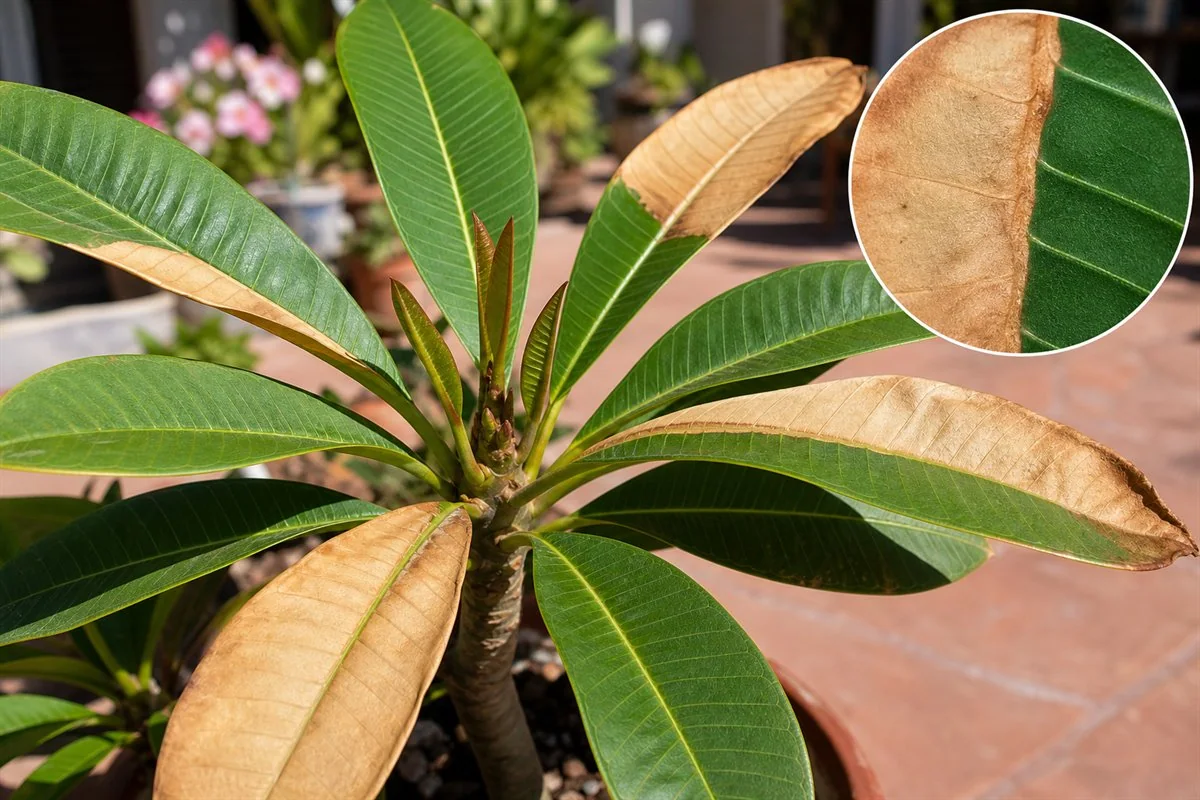 Condition reference
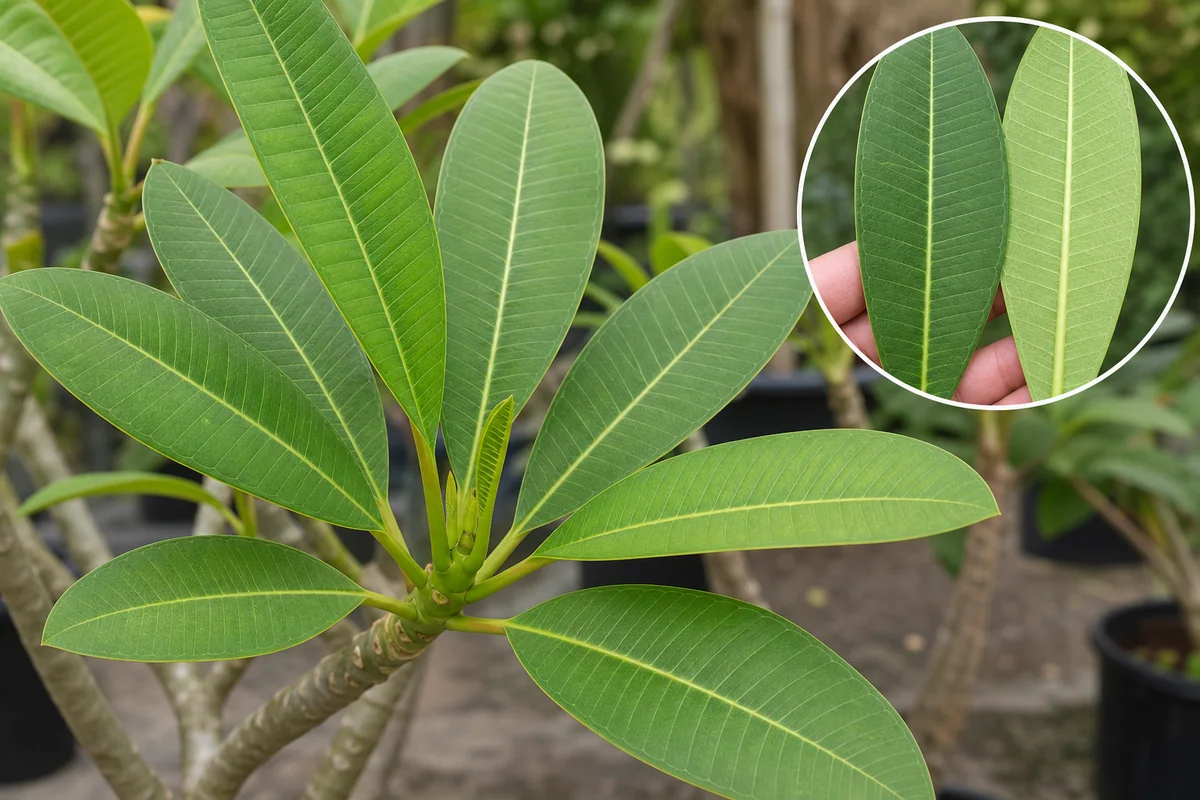 Healthy baseline
- LocationCheck which plant part, age of growth, and exposed or protected side is affected.
- TextureDecide whether the evidence is dry, powdery, sticky, raised, translucent, soft, or intact.
- ProgressionPhotograph the same area so you can tell whether the pattern is stable, improving, or spreading.
Use more than one clue. Confirm the photo with recent conditions, roots, watering history, and the rest of the plant before acting.
What Causes Plumeria Leaves to Sunburn: A Comprehensive Guide
Sunburn in Plumeria leaves is a common but often overlooked issue that can significantly affect the plant’s health and aesthetics. This comprehensive guide aims to shed light on the reasons behind leaf sunburn in Plumeria plants and provide effective solutions.
How to check it: Use the Sun Exposure and Acclimation Checklist before increasing sun, adding shade, or diagnosing sunburn. Open the detailed checklist: Sun Exposure and Acclimation Checklist: How to Read Light, Shade, and Sunburn Risk.
Understanding the Causes
Sunburn in Plumeria leaves can occur for several reasons:
- Direct Exposure: Too much direct sunlight, especially in the peak hours of the day, can lead to sunburn.
- Insufficient Acclimatization: If your Plumeria has been in a shaded area and is suddenly exposed to intense sunlight, it can easily get sunburned.
- Water Stress: Lack of adequate water can make the leaves more susceptible to sunburn.
- Magnification: Water droplets on the leaves can act like tiny magnifying glasses, intensifying the sunlight and causing burn spots.
Identifying Sunburn
Sunburned Plumeria leaves will show:
- Brown or white discoloration
- Dry, brittle texture
- In severe cases, leaf curling or wilting
Preventive Measures
Proper Positioning:
- Location: Choose a location where the plant will receive adequate but not excessive sunlight. Early morning and late afternoon sun is generally milder.
- Shading: Consider providing temporary shade using cloth or umbrellas during extreme heat or intense sun exposure.
Water Management:
- Regular Watering: Ensure the plant is well-hydrated, especially in hot conditions, but avoid overwatering.
- Morning Watering: Watering in the morning allows the leaves and soil to dry off before the intense heat of midday.
Leaf Care:
- Leaf Cleaning: If you must clean the leaves, do it during cooler parts of the day to prevent water droplet magnification.
- Fertilizing: Use a balanced fertilizer that supports overall plant health, making it less susceptible to sunburn.
Advanced Keys to Success
- Reflective Mulches: Using reflective mulches can help reduce heat stress and sunburn risk.
- Hydrogels: Some advanced gardeners use hydrogels to maintain soil moisture, reducing water stress and sunburn risk.
- UV Protective Screens: Specialty screens can be used to diffuse intense sunlight, reducing the risk of sunburn but still providing adequate light for growth.
Conclusion
Sunburn is a common issue that can affect Plumeria leaves, particularly during hot, sunny conditions. However, with proper preventive measures and attention to the plant’s positioning and water needs, you can greatly reduce the risk of sunburn affecting your Plumeria.
For further reading and FAQs, visit PlumeriaCareGuide.com.
Turn the explanation into an action plan
- Monitor
- Photograph the damage boundary and watch new leaves and tips for seven to fourteen days after exposure ends.
- Change one thing
- Make the smallest justified correction, record the date, and avoid stacking treatments before you can see which one helped.
- Escalate when needed
- Inspect stems and roots when tissue keeps softening, the trunk splits, or decline progresses after conditions stabilize.