
The Plumeria Climate and Environment Guide delves into how various environmental factors, such as temperature, humidity, sunlight, wind, and microclimates, influence plumeria growth. This comprehensive guide offers practical tips on how to create the ideal conditions for your plumeria, ensuring strong, healthy plants and vibrant blooms. By understanding how these factors affect your plumeria, you can make informed decisions about planting locations, seasonal adjustments, and protective measures against extreme weather conditions. Whether you’re growing plumeria in a tropical, subtropical, or temperate zone, this guide provides strategies to optimize your environment for year-round success and enhance the beauty of your plants.
Hail and Severe-Storm Impact Damage on Plumeria
What to check next
This guide helps you connect visible injury to the timing of sun, heat, cold, wind, drought, flooding, salt, smoke, hail, or product exposure. Read the detailed explanation, then use this sequence to decide what to do.
Confirm the evidence for wind or storm exposure
- Look for
- Fresh tears, edge burn, leaning containers, branch movement, broken roots or stems, abrasion, and rapid moisture loss after a windy event.
- Compare with
- Chewing pests, sunburn, drought, salt spray, and physical handling can create similar damage without the wind-facing pattern or event timing.
- Safest first response
- Stabilize the container or plant, inspect roots and branch unions, make clean cuts only where necessary, protect wounds, and improve shelter without blocking all airflow.
Microclimate clue: Gusts, wind direction, building corners, open fetch, salt exposure, wet soil, plant height, and top-heavy containers determine actual damage risk.
- 1
Stop the active exposure
Move or shield the plant only enough to prevent more injury without creating another abrupt change.
- 2
Match damage to timing
Compare the affected side, height, leaf age, and first appearance with the recent event.
- 3
Check protected tissue
Look beneath the canopy and opposite side to separate directional exposure from systemic problems.
- 4
Support recovery
Stabilize moisture, airflow, and temperature; avoid fertilizer or heavy pruning while stressed.
- 5
Judge new growth
Old burned or frozen tissue may not recover, so use healthy new growth as the progress measure.
How microclimate changes this answer
Walls, pavement, reflections, wind corridors, low pockets, shade cloth, and container placement can overpower the regional forecast.
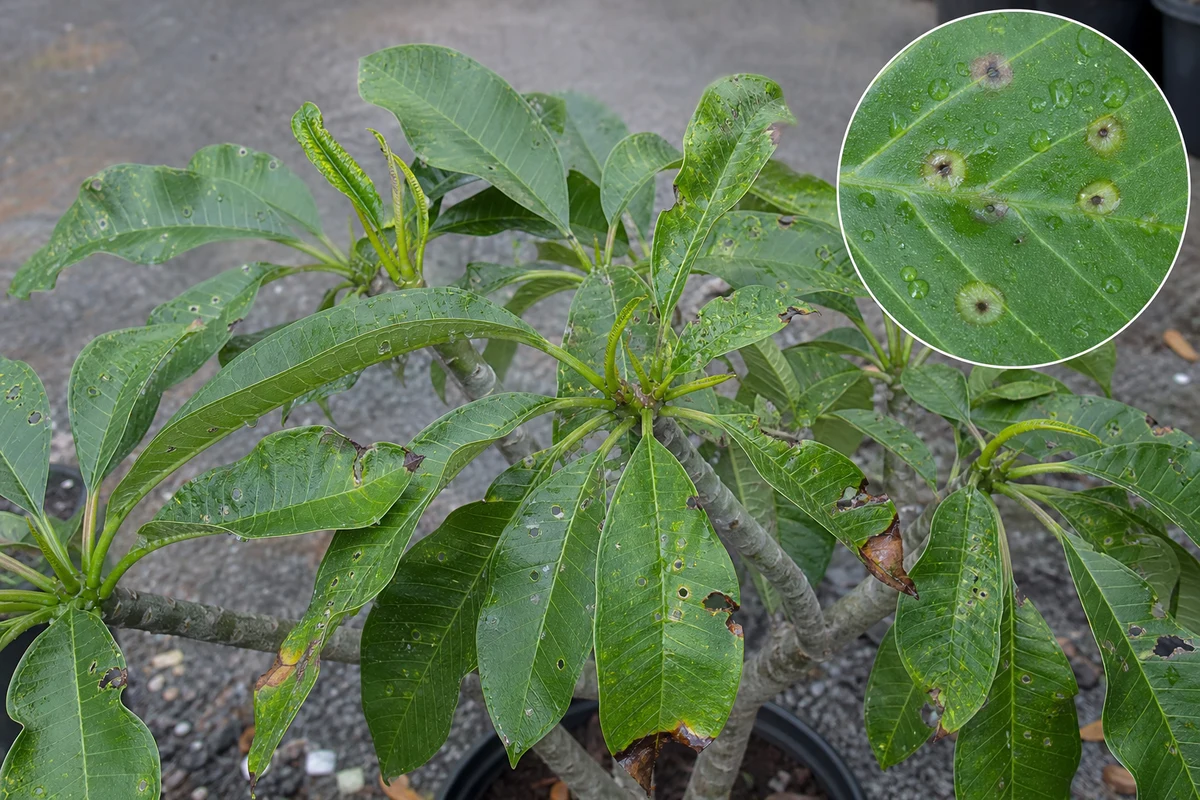
Checker support guide. Hail creates many injuries at the same time: round pits, bruises, punched holes, torn leaves, and damaged tender tips. The event pattern is often more useful than any single mark.
Important: This is a logical course of action based on the evidence provided, not a guaranteed diagnosis. Confirm the event, tissue condition, roots, recent weather, and progression before treating.
Evidence that supports this match
- Many fresh round pits or bruises appeared after one storm
- Damage occurs on several exposed leaves and surfaces at once
- Holes have impact-shaped margins rather than feeding trails
- Tender tips may be bruised while older stems remain firm
How to separate common look-alikes
- Fungal leaf spots continue appearing after the storm and may develop halos or spores
- Chewing insects create fresh feeding at different times and may leave frass
- Mechanical branch breaks are larger structural failures without scattered pits
- Bacterial spots can look water-soaked and spread beyond the original impacts
Step-by-step first response
- Move or stabilize containers and remove debris resting on the plant
- Photograph the original pattern before damaged tissue changes
- Leave useful green leaf area in place even when cosmetically marked
- Remove only hanging, crushed, or dangerously split tissue with sanitized tools
- Keep wounds dry, avoid overhead irrigation, and inspect for secondary rot for two weeks
What to watch during recovery
- Impact marks dry and stop enlarging
- New growth opens without new pits or lesions
- No wound develops softness, seepage, odor, or advancing darkness
Seven-day observation plan
- Day 1: Photograph the full plant and a close view. Record firmness, moisture, weather, and the suspected event.
- Days 2-3: Check whether the boundary is stable, drying, softening, or spreading. Avoid adding products simply to do something.
- Days 4-7: Compare new growth and tissue beyond the injury. Continue the current plan when stable; move to the Disease and Rot Checker if softness, odor, seepage, or advancing darkness appears.
Save this with the growing area
For a saved care plan, record the plant or group, growing area, date, recent move or weather event, container or in-ground status, photographs, and the response taken. Growing conditions can change the safest next step.
Open the Environmental Damage Checker | Open the Physical Damage Checker | Check for Disease or Rot
Turn the explanation into an action plan
- Monitor
- Photograph the damage boundary and watch new leaves and tips for seven to fourteen days after exposure ends.
- Change one thing
- Make the smallest justified correction, record the date, and avoid stacking treatments before you can see which one helped.
- Escalate when needed
- Inspect stems and roots when tissue keeps softening, the trunk splits, or decline progresses after conditions stabilize.