
The Plumeria Climate and Environment Guide delves into how various environmental factors, such as temperature, humidity, sunlight, wind, and microclimates, influence plumeria growth. This comprehensive guide offers practical tips on how to create the ideal conditions for your plumeria, ensuring strong, healthy plants and vibrant blooms. By understanding how these factors affect your plumeria, you can make informed decisions about planting locations, seasonal adjustments, and protective measures against extreme weather conditions. Whether you’re growing plumeria in a tropical, subtropical, or temperate zone, this guide provides strategies to optimize your environment for year-round success and enhance the beauty of your plants.
Cold, Frost, and Freeze Injury on Plumeria: What to Check Before Cutting
What to check next
This guide helps you connect visible injury to the timing of sun, heat, cold, wind, drought, flooding, salt, smoke, hail, or product exposure. Read the detailed explanation, then use this sequence to decide what to do.
Confirm the evidence for cold, frost, or freeze exposure
- Look for
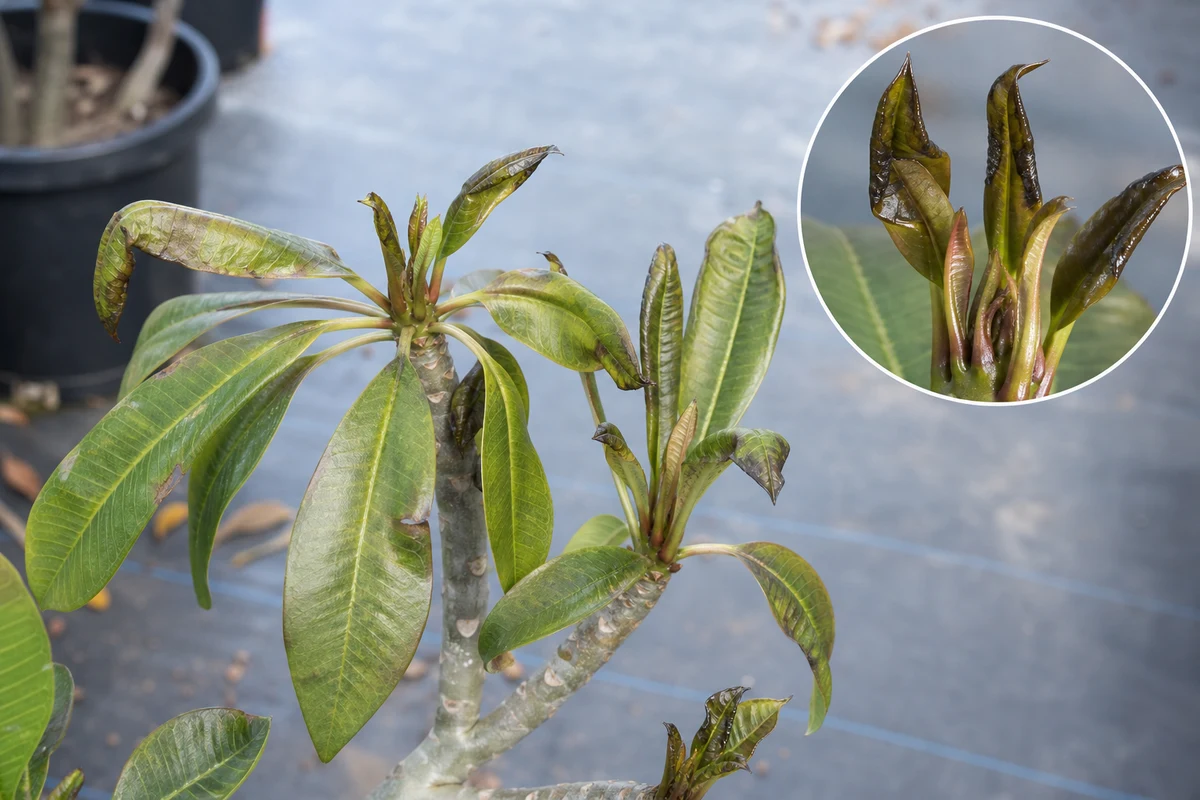
- Recent low temperatures followed by limp, glassy, blackened, split, or collapsing leaves and tips, with damage appearing after the cold event.
- Compare with
- Bacterial rot, sunburn, drought, chemical injury, and dry dieback can darken tissue without a matching cold-weather timeline.
- Safest first response
- Move containers to protection when possible, keep damaged tissue dry, delay pruning until the injury boundary is clear, and monitor stems for advancing softness.
Microclimate clue: Radiational cooling, wind, duration below critical temperatures, wet tissue, elevation, walls, canopy cover, and container exposure change actual plant temperature.
- 1
Stop the active exposure
Move or shield the plant only enough to prevent more injury without creating another abrupt change.
- 2
Match damage to timing
Compare the affected side, height, leaf age, and first appearance with the recent event.
- 3
Check protected tissue
Look beneath the canopy and opposite side to separate directional exposure from systemic problems.
- 4
Support recovery
Stabilize moisture, airflow, and temperature; avoid fertilizer or heavy pruning while stressed.
- 5
Judge new growth
Old burned or frozen tissue may not recover, so use healthy new growth as the progress measure.
How microclimate changes this answer
Walls, pavement, reflections, wind corridors, low pockets, shade cloth, and container placement can overpower the regional forecast.
Checker support guide. Fresh cold injury can look translucent, olive, dark, limp, or water-soaked before the final boundary is visible. The full extent may take several warm days to declare itself.
Important: This is a logical course of action based on the evidence provided, not a guaranteed diagnosis. Confirm the event, tissue condition, roots, recent weather, and progression before treating.
Evidence that supports this match
- Tender tips and newest leaves are affected before older protected tissue
- Damage follows a documented cold night, frost, or freeze
- Tissue may be dark and water-soaked at first, then dry or soften
- The exposed upper or outer portions show more injury than sheltered areas
How to separate common look-alikes
- Black tip rot may continue spreading without a single cold event
- Sunburn is dry, bleached, and concentrated on the high-light side
- Dehydration causes firm wrinkling rather than translucent cold injury
- Bacterial soft rot develops rapid watery collapse and odor
Step-by-step first response
- Move a container to a dry protected place above freezing without forcing rapid hot growth
- Do not water cold wet media merely because leaves are limp
- Wait for damaged tissue to show a stable boundary before pruning unless active soft rot is advancing
- Test firmness daily with clean hands and mark the edge of any softening
- When pruning is necessary, cut into clean firm tissue with a sanitized tool and keep the wound dry
Frost versus freeze
Frost can injure exposed plumeria tissue even when a nearby air-temperature reading is close to freezing. A longer or harder freeze can damage deeper stem tissue, roots, growing tips, and graft unions.
Before cold weather
- Move containers under cover or into protected storage when possible.
- Keep the root zone on the dry side before a cold night; do not saturate cold media.
- Protect tender tips and graft unions, and keep covers from crushing the plant.
- Stop fertilizing early enough to avoid forcing tender growth before cold weather.
- Remove wet covers after the event when conditions permit so condensation does not remain against tissue.
Sprinkler and irrigation caution
Continuous irrigation can protect some crops during frost only when it is designed and managed correctly for the entire event. Improvised sprinkling can add ice weight, soak roots, create electrical hazards, and worsen damage if water stops too soon. Most container growers should use dry physical protection and sheltered placement instead.
What to watch during recovery
- The dark boundary stops moving
- Stem tissue below the injury remains firm
- Healthy buds or shoots appear below a lost tip after warm weather returns
Seven-day observation plan
- Day 1: Photograph the full plant and a close view. Record firmness, moisture, weather, and the suspected event.
- Days 2-3: Check whether the boundary is stable, drying, softening, or spreading. Avoid adding products simply to do something.
- Days 4-7: Compare new growth and tissue beyond the injury. Continue the current plan when stable; move to the Disease and Rot Checker if softness, odor, seepage, or advancing darkness appears.
Save this with the growing area
For a saved care plan, record the plant or group, growing area, date, recent move or weather event, container or in-ground status, photographs, and the response taken. Growing conditions can change the safest next step.
Open the Environmental Damage Checker | Open the Physical Damage Checker | Check for Disease or Rot
Turn the explanation into an action plan
- Monitor
- Photograph the damage boundary and watch new leaves and tips for seven to fourteen days after exposure ends.
- Change one thing
- Make the smallest justified correction, record the date, and avoid stacking treatments before you can see which one helped.
- Escalate when needed
- Inspect stems and roots when tissue keeps softening, the trunk splits, or decline progresses after conditions stabilize.