
The Plumeria Climate and Environment Guide delves into how various environmental factors, such as temperature, humidity, sunlight, wind, and microclimates, influence plumeria growth. This comprehensive guide offers practical tips on how to create the ideal conditions for your plumeria, ensuring strong, healthy plants and vibrant blooms. By understanding how these factors affect your plumeria, you can make informed decisions about planting locations, seasonal adjustments, and protective measures against extreme weather conditions. Whether you’re growing plumeria in a tropical, subtropical, or temperate zone, this guide provides strategies to optimize your environment for year-round success and enhance the beauty of your plants.
How to Monitor Sunburn Signs in Plumerias
What to check next
This guide helps you connect visible injury to the timing of sun, heat, cold, wind, drought, flooding, salt, smoke, hail, or product exposure. Read the detailed explanation, then use this sequence to decide what to do.
Confirm the evidence for sunburn or sunscald
- Look for
- Bleached, tan, yellow, or corky injury concentrated on the sun-facing side after a sudden increase in light or reflected heat.
- Compare with
- Fungal spots, mites, chemical burn, cold injury, and bark damage may cross shaded and exposed surfaces or continue spreading without new sun exposure.
- Safest first response
- Stop further exposure increase, provide temporary filtered light, protect damaged bark, and resume acclimation only after the plant stabilizes.
Microclimate clue: Reflected heat, low humidity, hot walls, dark containers, elevation, and abrupt indoor-to-outdoor moves greatly increase sunburn risk.
- 1
Stop the active exposure
Move or shield the plant only enough to prevent more injury without creating another abrupt change.
- 2
Match damage to timing
Compare the affected side, height, leaf age, and first appearance with the recent event.
- 3
Check protected tissue
Look beneath the canopy and opposite side to separate directional exposure from systemic problems.
- 4
Support recovery
Stabilize moisture, airflow, and temperature; avoid fertilizer or heavy pruning while stressed.
- 5
Judge new growth
Old burned or frozen tissue may not recover, so use healthy new growth as the progress measure.
How microclimate changes this answer
Walls, pavement, reflections, wind corridors, low pockets, shade cloth, and container placement can overpower the regional forecast.
Compare this leaf pattern with healthy growth
Use these references to confirm that this article matches the visible pattern before changing care or applying a treatment.
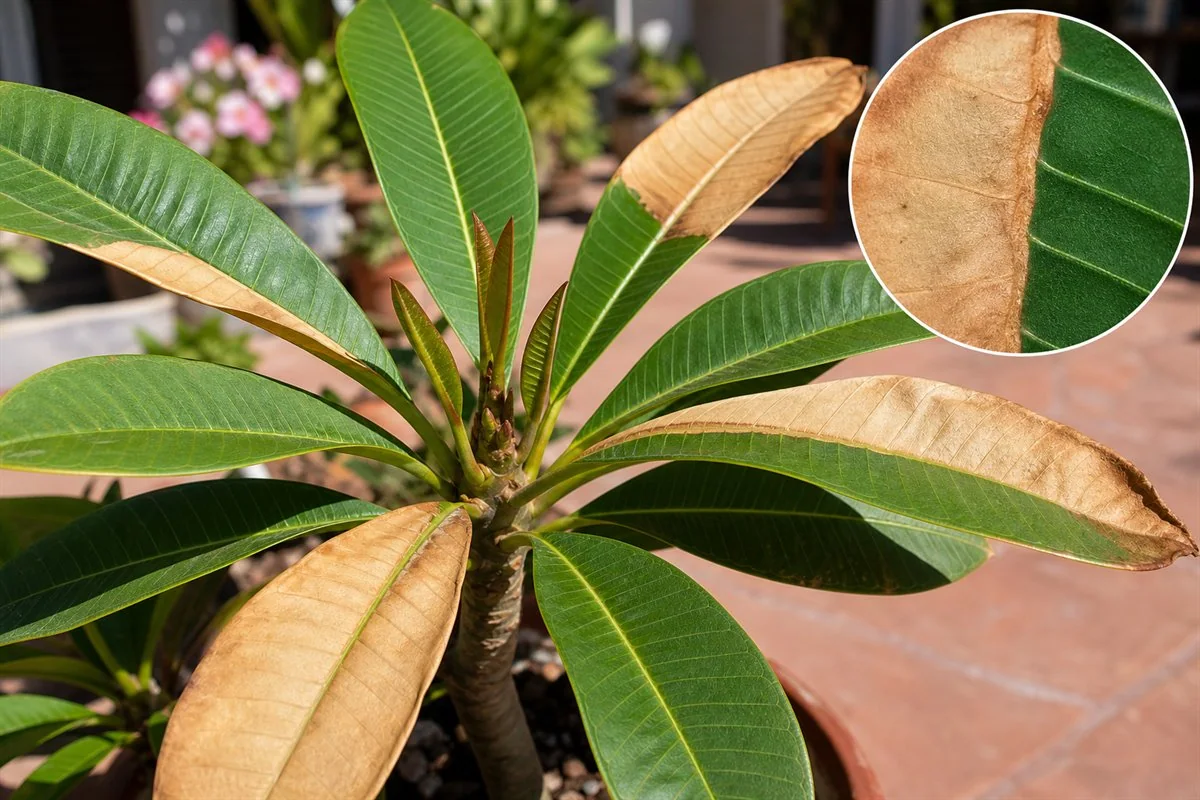 Condition reference
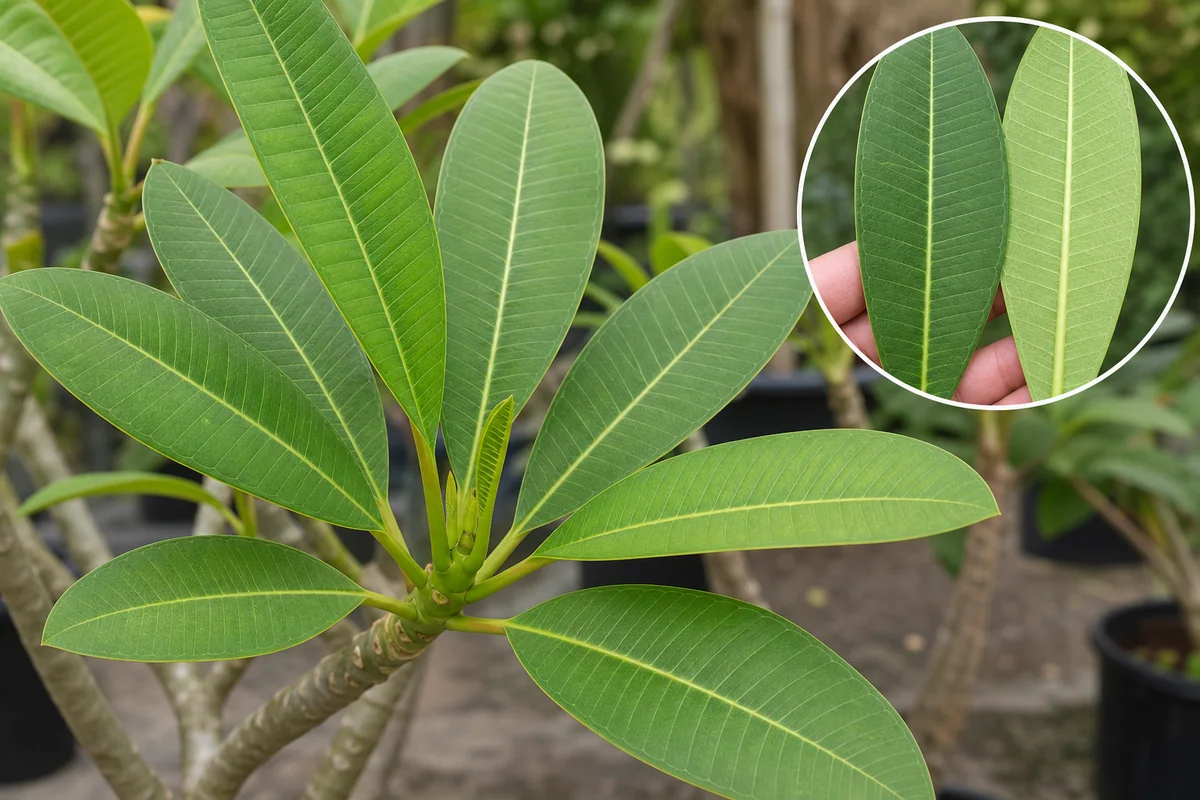 Healthy baseline
- LocationCheck which plant part, age of growth, and exposed or protected side is affected.
- TextureDecide whether the evidence is dry, powdery, sticky, raised, translucent, soft, or intact.
- ProgressionPhotograph the same area so you can tell whether the pattern is stable, improving, or spreading.
Use more than one clue. Confirm the photo with recent conditions, roots, watering history, and the rest of the plant before acting.
Identifying Early Indications of Sunburn on Plumeria Leaves and Steps to Provide Relief and Protection
How to check it: Use the Sun Exposure and Acclimation Checklist before increasing sun, adding shade, or diagnosing sunburn. Open the detailed checklist: Sun Exposure and Acclimation Checklist: How to Read Light, Shade, and Sunburn Risk.
Plumerias are sun-loving plants, but even they can suffer from sunburn if exposed to intense sunlight without proper acclimatization. Identifying early signs and taking corrective actions can prevent long-term damage. Here’s a comprehensive guide:
I. Early Indications of Sunburn
1. Color Change:
- Whitening or Bleaching: Affected areas may appear bleached or pale white.
- Yellowing: Margins or entire leaves may turn yellow.
2. Spotting:
- Brown or Black Spots: These may appear on the leaves, signifying dead tissues.
3. Wilting:
- Leaves may wilt or appear dry and crispy.
4. Surface Damage:
- The leaf’s surface may look blistered or have a wrinkled appearance.
II. Steps to Provide Relief and Protection
1. Gradual Exposure:
- Gradually acclimate the plant to full sunlight, starting with shade or indirect sunlight.
2. Adequate Watering:
- Keep the soil consistently moist but not soggy to prevent additional stress.
3. Provide Shade:
- Use shade cloth or other barriers to diffuse intense sunlight during peak hours.
4. Relocate if Necessary:
- Move the plant to a location with more appropriate sunlight if it is in a pot.
5. Assess Nutrient Needs:
- Ensure proper nutrition, as nutrient deficiencies can exacerbate sunburn symptoms.
6. Prune Damaged Leaves:
- Gently prune the damaged areas to prevent diseases and encourage new growth.
7. Use Anti-Transpirants:
- Products that form a thin, protective coating on leaves may reduce sunburn.
8. Monitor the Weather:
- Keep an eye on the weather forecast and provide protection during extremely hot days.
III. Long-Term Strategies
1. Appropriate Planting Location:
- Plant or place plumerias in an area that receives the appropriate amount of sunlight for the variety.
2. Regular Observation:
- Keep a close eye on the plants, especially during the hot season, to detect early signs of sunburn.
3. Utilize Companion Planting:
- Planting other flora around plumerias can provide natural shade and protection.
IV. Conclusion
Early detection of sunburn is key to minimizing damage and promoting recovery. Implementing immediate relief measures and long-term strategies will ensure your plumerias thrive even in the most challenging weather conditions.
Remember, each plumeria variety may have different sunlight requirements, and what might be an optimal amount of sunlight for one variety may cause sunburn in another. Thus, understanding your specific plumeria’s needs and acting accordingly will pave the way for healthy and flourishing plants.
Turn the explanation into an action plan
- Monitor
- Photograph the damage boundary and watch new leaves and tips for seven to fourteen days after exposure ends.
- Change one thing
- Make the smallest justified correction, record the date, and avoid stacking treatments before you can see which one helped.
- Escalate when needed
- Inspect stems and roots when tissue keeps softening, the trunk splits, or decline progresses after conditions stabilize.