
The Plumeria Beginners Guide provides essential guidance on how to properly hydrate your plumeria throughout its various stages of growth. Understanding the delicate balance between overwatering and underwatering is crucial for preventing common issues like root rot and drought stress. This guide offers practical tips on determining the right watering schedule based on the plant’s needs, seasonal changes, and environmental factors. By following these expert recommendations, you’ll promote healthier, more resilient plumeria plants that thrive year-round, ensuring they stay vibrant and strong at every stage of their growth.
Beginner Mistakes That Cause Root Rot
What to check next
This guide helps you connect growth habit, light, roots, water, nutrition, season, and cultivar traits before trying to correct the whole plant. Read the detailed explanation, then use this sequence to decide what to do.
- 1
Describe the whole pattern
Compare height, branching, canopy density, leaf size, flowering, leaning, and vigorous areas.
- 2
Check the foundation
Inspect anchorage, container size, roots, drainage, and the amount and direction of light.
- 3
Compare season and cultivar
Confirm whether the habit is new, worsening, seasonal, or normal for the variety.
- 4
Correct the strongest limiter
Address the clearest root, light, structural, moisture, or nutrition limitation first.
- 5
Measure new growth
Use dated photos, internode length, branching, and the next leaf flush to judge progress.
How microclimate changes this answer
A sheltered wall, partial canopy, wind, container heat, and winter storage can shape the plant more than its regional Zone.
Compare this disease or rot pattern with healthy growth
Use these references to confirm that this article matches the visible pattern before changing care or applying a treatment.
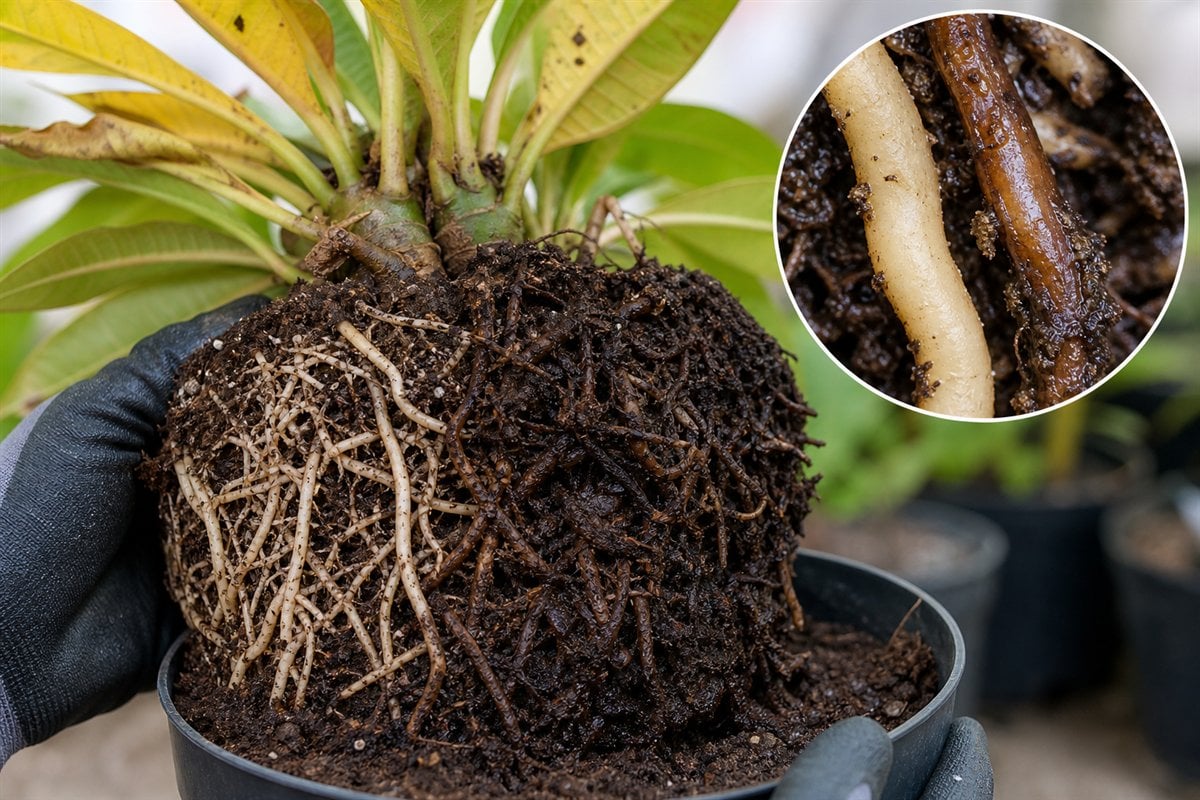 Condition reference
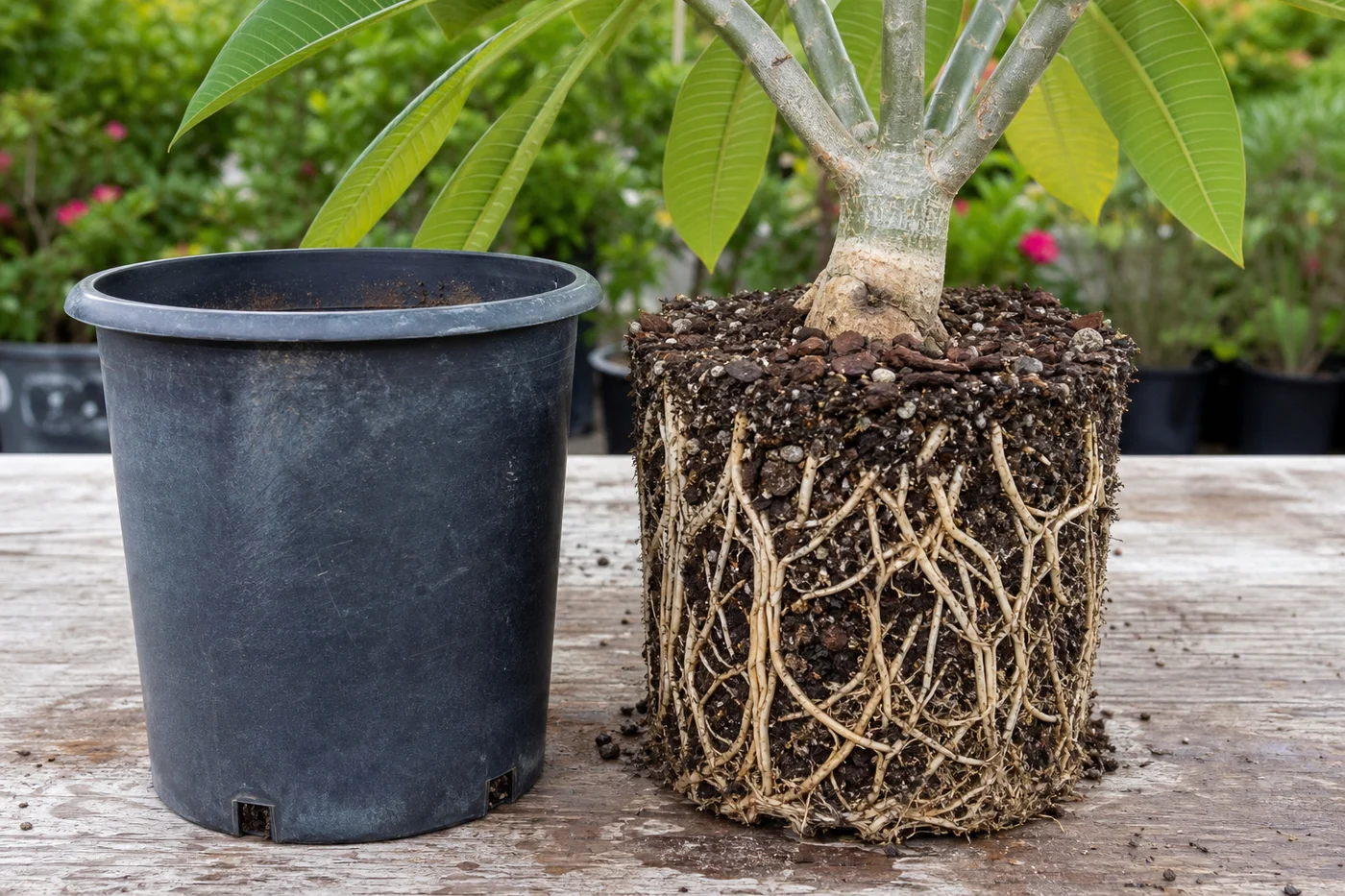 Healthy baseline
- LocationCheck which plant part, age of growth, and exposed or protected side is affected.
- TextureDecide whether the evidence is dry, powdery, sticky, raised, translucent, soft, or intact.
- ProgressionPhotograph the same area so you can tell whether the pattern is stable, improving, or spreading.
Use more than one clue. Confirm the photo with recent conditions, roots, watering history, and the rest of the plant before acting.
START WITH THE COMPLETE GUIDE
Root Rot on Plumeria
This article covers one focused part of the subject. Begin with the complete Root Rot guide to confirm the problem, choose the correct treatment path, and reach the related identification and prevention steps.
Purpose: Root rot is one of the most common beginner problems because the early signs can look like thirst. The safest beginner habit is to check the root zone before adding more water.
First Identify the Plant Stage
Rooting cuttings, newly rooted cuttings, seedlings, and mature plants cannot share one watering rule. A rooting cutting is watered once when rooting begins and not watered again until two or three full-sized leaves have grown; misting is allowed if it looks dehydrated. Newly rooted cuttings are watered sparingly and allowed to dry before watering again.
Open the Root and Soil Checker Read the Root-Rot Diagnosis and Treatment Guide
Why beginners accidentally cause root rot
Plumeria roots need moisture and oxygen. When the mix stays wet too long, oxygen drops and roots weaken. A plant with damaged roots may wilt, yellow, or drop leaves even though the soil is wet, which can lead to even more watering.
Mistake 1: Watering by the calendar
A schedule is only a reminder to check the plant. It is not proof the plant needs water. Pot size, temperature, humidity, soil mix, roots, and season all change drying speed.
Mistake 2: Using a heavy mix
Dense soil, garden soil, fine compost, or peat-heavy mixes can hold too much water around the roots. Plumeria usually performs better in a fast-draining mix that still holds enough moisture for the climate.
Mistake 3: Potting too large too soon
A small root system in a large pot cannot use water quickly. The outer soil can stay wet long after the plant has taken what it needs. This is especially risky for cuttings, newly rooted plants, and stressed plants.
Mistake 4: Treating wilt as thirst
Wilt can mean underwatering, but it can also mean root stress. Before watering a wilting plumeria, check whether the soil is wet deeper down and whether the stem or roots are soft.
Beginner root rot prevention checklist
- Check moisture below the surface before watering.
- Use a pot with open drainage holes.
- Match pot size to root size.
- Use a fast-draining soil mix.
- Reduce watering during cool, cloudy, dormant, or low-light periods.
- Avoid fertilizer while roots are weak or recovering.
Helpful next reading
- Overwatering vs. Underwatering
- Best Soil for Actively Growing Plumeria
- Waterlogged Roots and Root Rot Troubleshooting
Turn the explanation into an action plan
- Monitor
- Compare whole-plant photographs monthly during active growth and at each seasonal transition.
- Change one thing
- Make the smallest justified correction, record the date, and avoid stacking treatments before you can see which one helped.
- Escalate when needed
- Inspect roots and major stems promptly when decline is sudden, anchorage fails, or several branches soften or die back.