
The Plumeria Pests and Diseases Guide is an essential resource for identifying, preventing, and treating the most common threats to plumeria plants, including pests, fungi, and environmental stressors. This guide offers detailed information on how to recognize early signs of trouble, from insect infestations to fungal infections, and provides practical solutions to address these issues. It also covers strategies for managing environmental factors such as excessive humidity, temperature fluctuations, and poor soil conditions, which can weaken plumeria. With expert tips on natural and chemical treatments, as well as proactive care practices, this guide ensures your plumeria remains healthy, resilient, and free from common ailments, allowing it to thrive season after season.
Whiteflies on Plumeria: Identification, Treatment and Prevention
What to check next
This guide helps you confirm that a living pest is present, identify where it is feeding, and choose a measured response without treating inactive damage. Read the detailed explanation, then use this sequence to decide what to do.
Confirm the evidence for whiteflies
- Look for
- Small white adults that lift from leaf undersides, flat immature stages attached below leaves, honeydew, and sooty mold.
- Compare with
- Harmless flying insects, scale crawlers, residue, and old empty pupal cases should be separated from an active whitefly population.
- Safest first response
- Inspect leaf undersides and life stages, remove badly occupied leaves when practical, and repeat a labeled control at the correct interval.
Microclimate clue: Warm protected conditions and dense foliage favor overlapping generations, so one treatment rarely completes control.
- 1
Inspect before treating
Use bright light and magnification on leaf undersides, tips, petioles, stems, and the soil line.
- 2
- 3
Identify the feeding pattern
Separate sucking, chewing, mining, boring, and root-zone damage.
- 4
Start with the least disruptive action
Isolate, wash, and use only a treatment labeled for the confirmed pest and plant.
- 5
Repeat the inspection
Eggs or protected life stages can survive the first response, so follow-up checks matter.
How microclimate changes this answer
Dry heat favors mites, protected humid growth favors some scale and mealybugs, and wet shade increases snail and slug activity.
Compare this insect or pest pattern with healthy growth
Use these references to confirm that this article matches the visible pattern before changing care or applying a treatment.
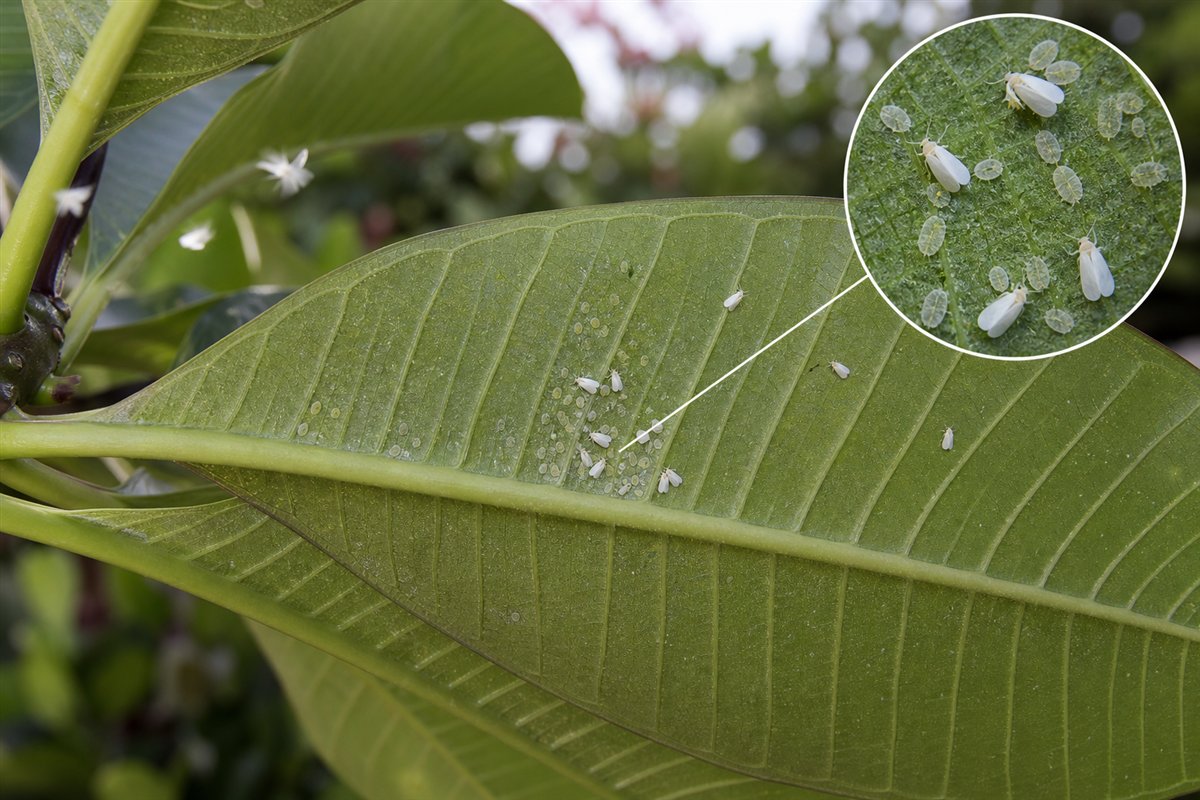 Condition reference
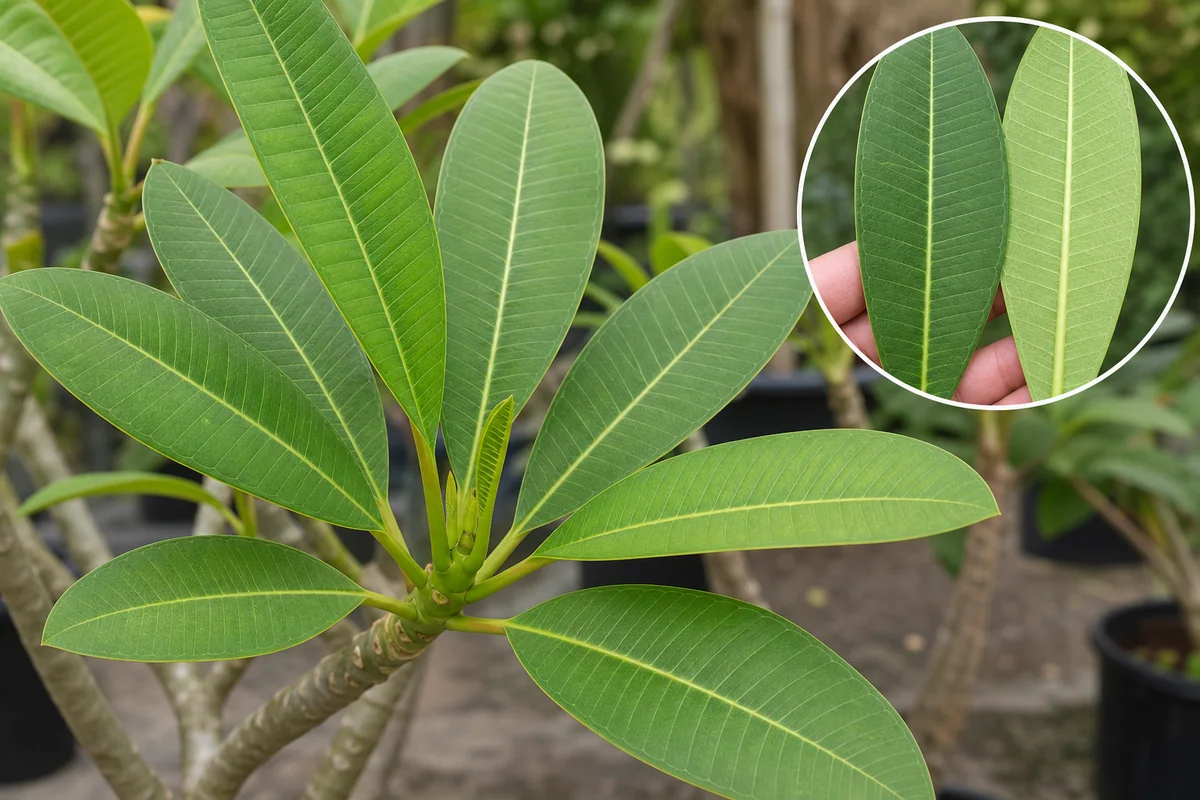 Healthy baseline
- LocationCheck which plant part, age of growth, and exposed or protected side is affected.
- TextureDecide whether the evidence is dry, powdery, sticky, raised, translucent, soft, or intact.
- ProgressionPhotograph the same area so you can tell whether the pattern is stable, improving, or spreading.
Use more than one clue. Confirm the photo with recent conditions, roots, watering history, and the rest of the plant before acting.
Whiteflies are small sap-feeding insects that live mainly beneath plumeria leaves. Adults may rise in a white cloud when foliage is disturbed, while eggs and flat immature stages remain attached below. This overview connects identification, integrated treatment, beneficial insects, follow-up, and prevention.
Quick Answer
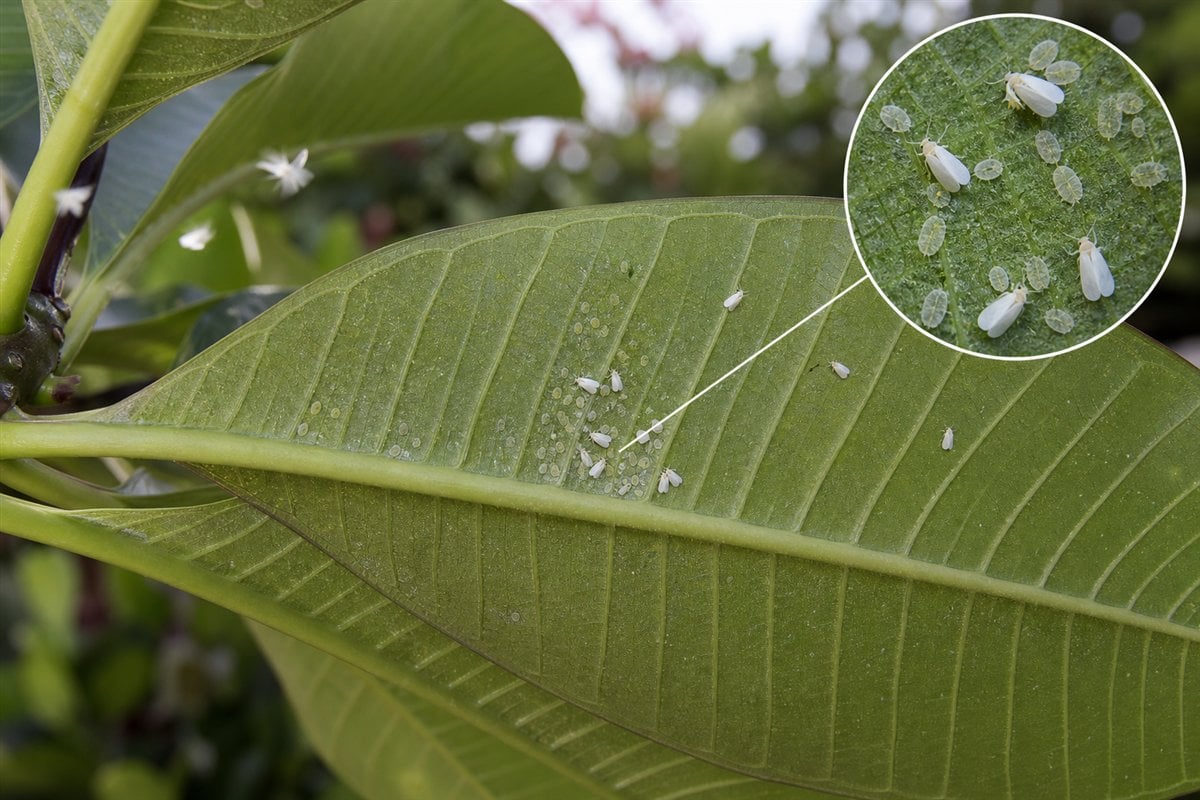
Confirm Whiteflies
| Evidence | What it suggests | Next step |
|---|---|---|
| Tiny white winged insects rise when leaves are disturbed | Adult whiteflies are likely. | Turn over several leaves and look for attached immature stages. |
| Flat oval scales or nymph-like stages beneath leaves | Whiteflies are reproducing on the plant. | Photograph the underside and inspect nearby plants. |
| Honeydew, ants, or sooty mold | A honeydew-producing pest is active. | Compare whiteflies with aphids, mealybugs, and soft scale. |
| Fine stippling or webbing without white adults | Spider mites are a closer match. | Use the mite identification guide. |
| Wedge-shaped insects jump or move sideways | Leafhoppers are a closer match. | Inspect young leaves and use the Leafhopper guide. |
| White waxy clusters in nodes or along veins | Mealybugs are a closer match. | Look for segmented insects and cottony wax. |
Prevention by growing conditions
- Quarantine incoming plants and inspect several leaf undersides before placing them in the collection.
- Remove heavily occupied leaves only when the plant can spare them, and contain the debris before moving it.
- Control ants when they protect honeydew-producing pests from predators.
- Avoid excessive nitrogen and plant stress that encourage vulnerable soft growth.
- Use yellow sticky cards to monitor adults, not as proof that eggs and immature stages are controlled.
- Preserve parasitoid wasps, lacewings, lady beetles, and predatory bugs by avoiding routine broad-spectrum sprays.
Microclimate: warm protected foliage, dense canopies, greenhouses, limited airflow, nearby host plants, and repeated introduction of new plants can increase whitefly pressure. Rain or canopy rinsing may reduce adults temporarily but may not remove attached immature stages.
Integrated Treatment Sequence
- Reduce the population: isolate movable plants, remove heavily occupied leaves only when the plant can spare them, clean leaf undersides with water, and remove weeds or nearby hosts where practical.
- Monitor adults: yellow sticky cards can show whether adult pressure is rising or falling, but they do not eliminate eggs and immature stages on the leaves.
- Protect biological control: preserve lacewings, lady beetles, predatory bugs, predatory mites where appropriate, and whitefly parasitoid wasps. Avoid unnecessary broad-spectrum sprays.
- Use contact products carefully: compare a currently labeled insecticidal soap or horticultural oil when thorough leaf-underside coverage is possible. Test first and avoid heat, midday sun, drought stress, tender tissue, and other label restrictions.
- Reserve conventional products: use a labeled ornamental insecticide only for a confirmed damaging infestation that persists after safer measures. Rotate modes of action only as the current label and local guidance permit.
Follow-Up Schedule
| Timing | Action |
|---|---|
| Day 0 | Confirm whiteflies, photograph leaf undersides, isolate if practical, reduce the population, and place monitoring cards if useful. |
| Days 3-5 | Recheck adults, eggs, immature stages, fresh honeydew, and beneficial-insect activity. |
| Day 7 | Compare photographs and monitoring counts; repeat only what the treatment plan or product label permits. |
| Weeks 2-4 | Inspect weekly until two consecutive checks show no expanding immature population or new honeydew. |
Detailed Whitefly Guides
- How to Identify Whiteflies on Plumeria – adult and immature stages, photographs, damage patterns, and look-alikes.
- How to Treat Whiteflies on Plumeria – physical, biological, organic contact, and last-resort options.
- How to Prevent Whiteflies on Plumeria – quarantine, monitoring, plant management, and recurrence prevention.
- Sap-Sucking Pest Checklist – compare whiteflies with mites, mealybugs, scale, and aphids.
Reference basis: UC Statewide IPM whitefly guidance, UC IPM ornamental nursery whitefly guidance, and the EPA introduction to pesticide labels.
Turn the explanation into an action plan
- Monitor
- Check the same marked leaves and nearby plants every three to seven days until no active pests or fresh damage remain.
- Change one thing
- Make the smallest justified correction, record the date, and avoid stacking treatments before you can see which one helped.
- Escalate when needed
- Seek local diagnostic help when damage accelerates despite treatment, borers enter major stems, or the pest cannot be identified.