
The Plumeria Pests and Diseases Guide is an essential resource for identifying, preventing, and treating the most common threats to plumeria plants, including pests, fungi, and environmental stressors. This guide offers detailed information on how to recognize early signs of trouble, from insect infestations to fungal infections, and provides practical solutions to address these issues. It also covers strategies for managing environmental factors such as excessive humidity, temperature fluctuations, and poor soil conditions, which can weaken plumeria. With expert tips on natural and chemical treatments, as well as proactive care practices, this guide ensures your plumeria remains healthy, resilient, and free from common ailments, allowing it to thrive season after season.
Thrips on Plumeria: Identification, Treatment and Prevention
What to check next
This guide helps you confirm that a living pest is present, identify where it is feeding, and choose a measured response without treating inactive damage. Read the detailed explanation, then use this sequence to decide what to do.
Confirm the evidence for thrips
- Look for
- Slender fast-moving insects, dark specks of waste, silvery scraping, streaked petals, scarred buds, or distorted tender growth.
- Compare with
- Mites, wind abrasion, heat injury, poor pollination, and normal flower aging can create similar scarring.
- Safest first response
- Tap flowers or tips over white paper to confirm insects, remove spent blooms and debris, then use a labeled targeted control if needed.
Microclimate clue: Hot, dry weather and protected flowers can intensify thrips activity; rain may hide or suppress visible populations temporarily.
- 1
Inspect before treating
Use bright light and magnification on leaf undersides, tips, petioles, stems, and the soil line.
- 2
- 3
Identify the feeding pattern
Separate sucking, chewing, mining, boring, and root-zone damage.
- 4
Start with the least disruptive action
Isolate, wash, and use only a treatment labeled for the confirmed pest and plant.
- 5
Repeat the inspection
Eggs or protected life stages can survive the first response, so follow-up checks matter.
How microclimate changes this answer
Dry heat favors mites, protected humid growth favors some scale and mealybugs, and wet shade increases snail and slug activity.
Thrips are tiny, slender insects that rasp plumeria flowers, buds, and tender growth before feeding on the damaged cells. This overview helps you confirm active thrips, separate their damage from mites and environmental injury, choose an integrated treatment, and prevent recurrence.
Quick Answer
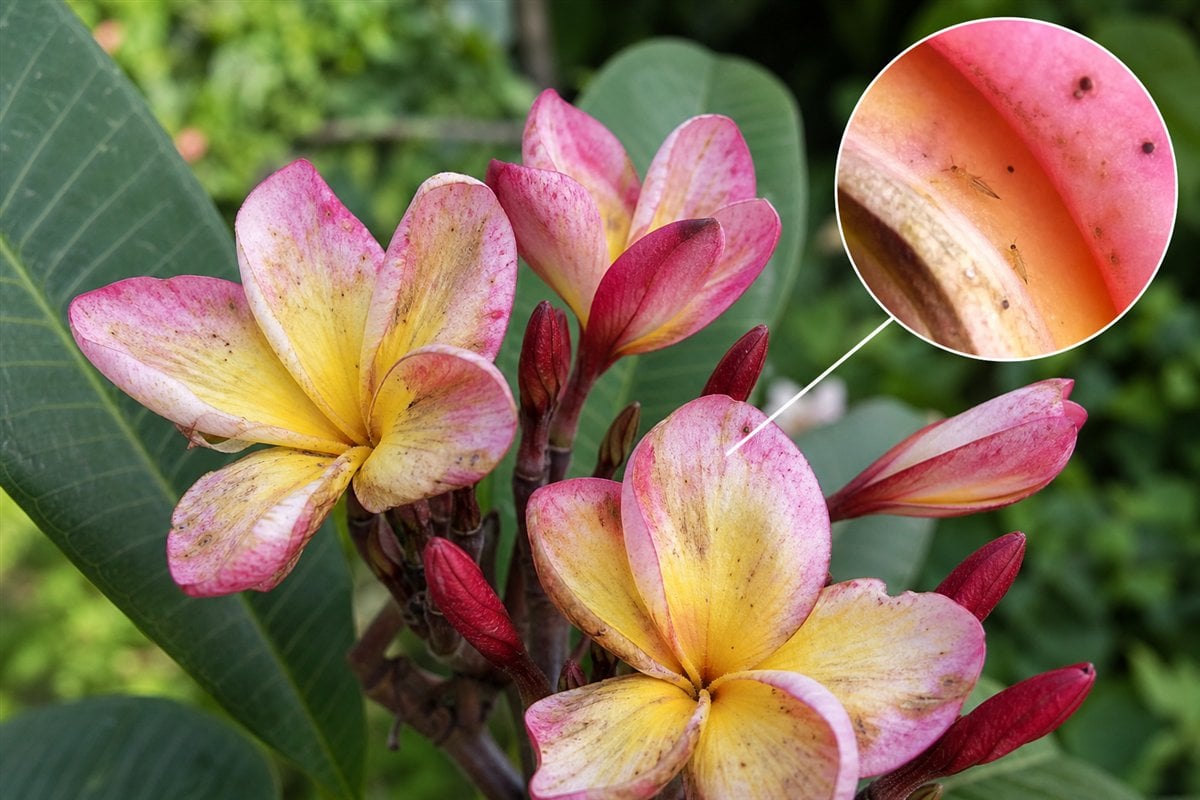
Thrips or a Look-Alike?
| Pattern | Closer match | What to check |
|---|---|---|
| Silvery scars, black specks, damaged pollen, and slender insects inside flowers | Thrips | Tap test several flowers and inspect buds and tender tips. |
| Fine stippling, bronzing, or webbing mainly beneath leaves | Spider mites | Inspect leaf undersides for mites, eggs, cast skins, and webbing. |
| Distorted new growth without visible insects | Broad mites, herbicide exposure, nutrition, or environmental stress may overlap | Use magnification and review recent treatments and weather. |
| Petal browning after rain, heat, or aging without insects | Environmental or normal flower aging | Compare newly opened flowers and sheltered blooms. |
| Unopened buds discolor, deform, or drop with larvae feeding inside | Blossom midge may fit better | Open a fresh damaged bud and use the Blossom Midge guide. |
| Small jumping or sideways-moving insects with marginal leaf discoloration | Leafhoppers | Inspect leaf undersides and use the Leafhopper guide. |
Integrated Treatment Sequence
- Reduce protected habitat: remove spent flowers and badly infested blooms, collect debris, isolate movable plants, and avoid carrying insects between plants.
- Monitor correctly: use white-paper tap tests and blue or yellow sticky cards as trend indicators. Traps do not replace plant inspection or control hidden larvae.
- Protect natural enemies: preserve minute pirate bugs, lacewings, predatory mites where appropriate, and other thrips predators. Avoid broad sprays that remove them.
- Use contact options carefully: compare a currently labeled insecticidal soap, horticultural oil, or other permitted contact product when coverage can reach the feeding sites. Test first and avoid heat, direct sun, stressed plants, and open flowers when restricted.
- Reserve conventional insecticides: use only a current label that permits the ornamental plant, thrips, site, and application method. Rotate modes of action only as the label and local guidance permit because resistance can develop quickly.
Important for blooming plumeria: many products, including some naturally derived products, can harm bees, predators, or flowers. Do not spray open blooms visited by pollinators unless the current label specifically permits the use and timing.
Follow-Up Schedule
| Timing | Action |
|---|---|
| Day 0 | Confirm thrips, photograph the damage, remove spent or badly occupied flowers, and begin the lowest appropriate treatment level. |
| Days 3-5 | Repeat tap tests on several flowers and tips; note live insects, new black specks, and predator activity. |
| Day 7 | Compare new flowers and growth with the original photographs; repeat only what the plan or label permits. |
| Weeks 2-4 | Continue weekly checks until newly opening flowers and fresh growth remain free of active evidence. |
Prevention by growing conditions
- Quarantine incoming plants and inspect buds, flowers, leaf undersides, and tender tips.
- Remove spent blooms and heavily infested debris without shaking insects through the collection.
- Avoid excessive nitrogen and overwatering that produce abundant soft growth attractive to some thrips.
- Preserve minute pirate bugs, lacewings, predatory mites, and other natural enemies by avoiding routine persistent broad-spectrum sprays.
- Use blue or yellow sticky cards to follow adult movement, but confirm damaging stages on the plant before treating.
Microclimate: warm sheltered flowers, dense canopies, protected greenhouse conditions, nearby flowering hosts, and drying weeds can increase pressure. Rain and wind can reduce exposed insects temporarily, while thrips hidden inside buds and flowers may survive.
Detailed Thrips Guides
- How to Identify Thrips on Plumeria – confirmation tests, photographs, damage patterns, and look-alikes.
- How to Treat Thrips on Plumeria – physical, biological, organic contact, and last-resort choices.
- How to Prevent Thrips on Plumeria – quarantine, cleanup, seasonal monitoring, and recurrence prevention.
- Sap-Sucking Pest Checklist – compare thrips with similar insects and non-insect damage.
Reference basis: UC Statewide IPM home and landscape thrips guidance, UC IPM ornamental nursery thrips guidance, and the EPA introduction to pesticide labels.
Turn the explanation into an action plan
- Monitor
- Check the same marked leaves and nearby plants every three to seven days until no active pests or fresh damage remain.
- Change one thing
- Make the smallest justified correction, record the date, and avoid stacking treatments before you can see which one helped.
- Escalate when needed
- Seek local diagnostic help when damage accelerates despite treatment, borers enter major stems, or the pest cannot be identified.