
Welcome to the Plumeria Cultivation & Planting Guide. This is your definitive starting point for turning rooted cuttings, seedlings, or mature specimens into thriving, bloom-laden trees. Inside, you’ll learn how to choose the ideal micro-climate. You will craft well-draining soil mixes. Mastering container-versus-in-ground decisions is also included. You will time each planting task to your growing zone. Step-by-step instructions guide each aspect of planting. Troubleshooting checkpoints help resolve common issues. Nutrition tips based on science ensure your plumeria has strong roots, vigorous growth, and abundant flowers. Whether you garden on a balcony or use raised beds, this guide offers decades of practical experience. It is also helpful if you maintain a full grove. It turns that knowledge into practical, easy-to-follow advice. The guide empowers beginners and seasoned collectors alike to cultivate with confidence.
Shade vs. Sunburn Solutions for Plumeria
What to check next
This guide helps you connect visible injury to the timing of sun, heat, cold, wind, drought, flooding, salt, smoke, hail, or product exposure. Read the detailed explanation, then use this sequence to decide what to do.
- 1
Stop the active exposure
Move or shield the plant only enough to prevent more injury without creating another abrupt change.
- 2
Match damage to timing
Compare the affected side, height, leaf age, and first appearance with the recent event.
- 3
Check protected tissue
Look beneath the canopy and opposite side to separate directional exposure from systemic problems.
- 4
Support recovery
Stabilize moisture, airflow, and temperature; avoid fertilizer or heavy pruning while stressed.
- 5
Judge new growth
Old burned or frozen tissue may not recover, so use healthy new growth as the progress measure.
How microclimate changes this answer
Walls, pavement, reflections, wind corridors, low pockets, shade cloth, and container placement can overpower the regional forecast.
Compare this leaf pattern with healthy growth
Use these references to confirm that this article matches the visible pattern before changing care or applying a treatment.
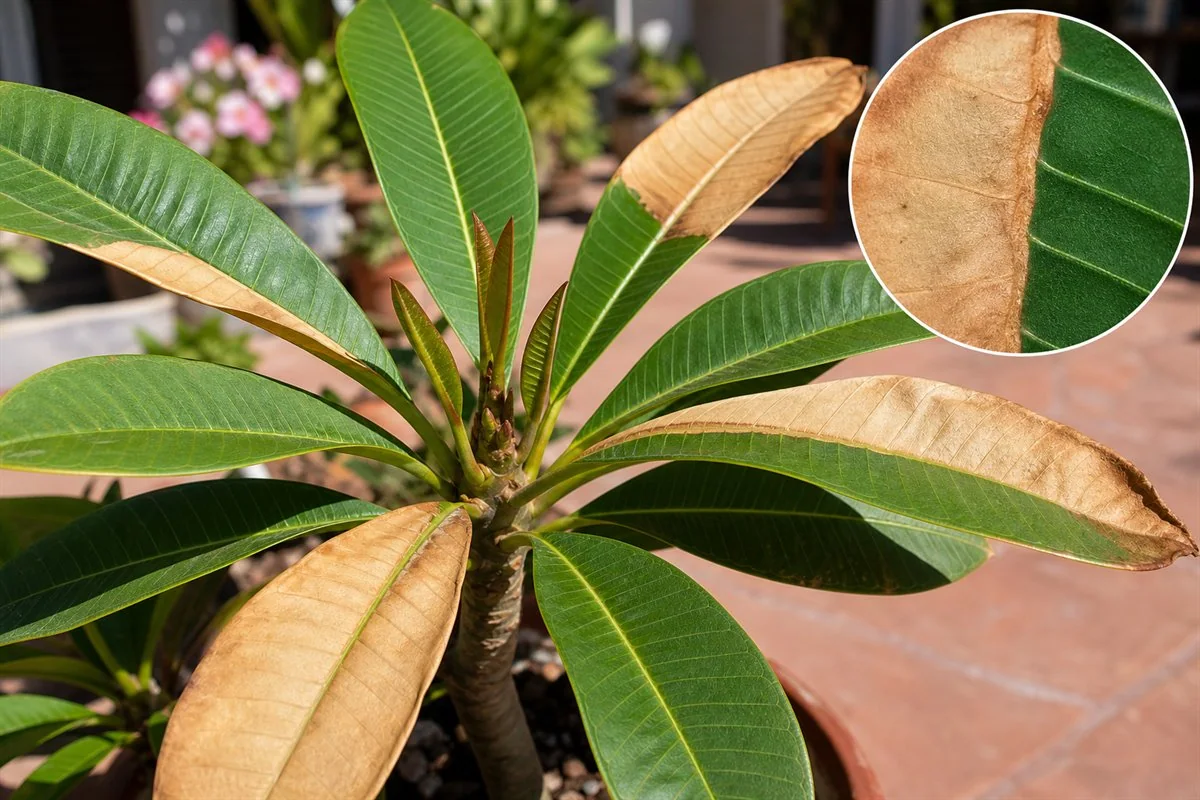 Condition reference
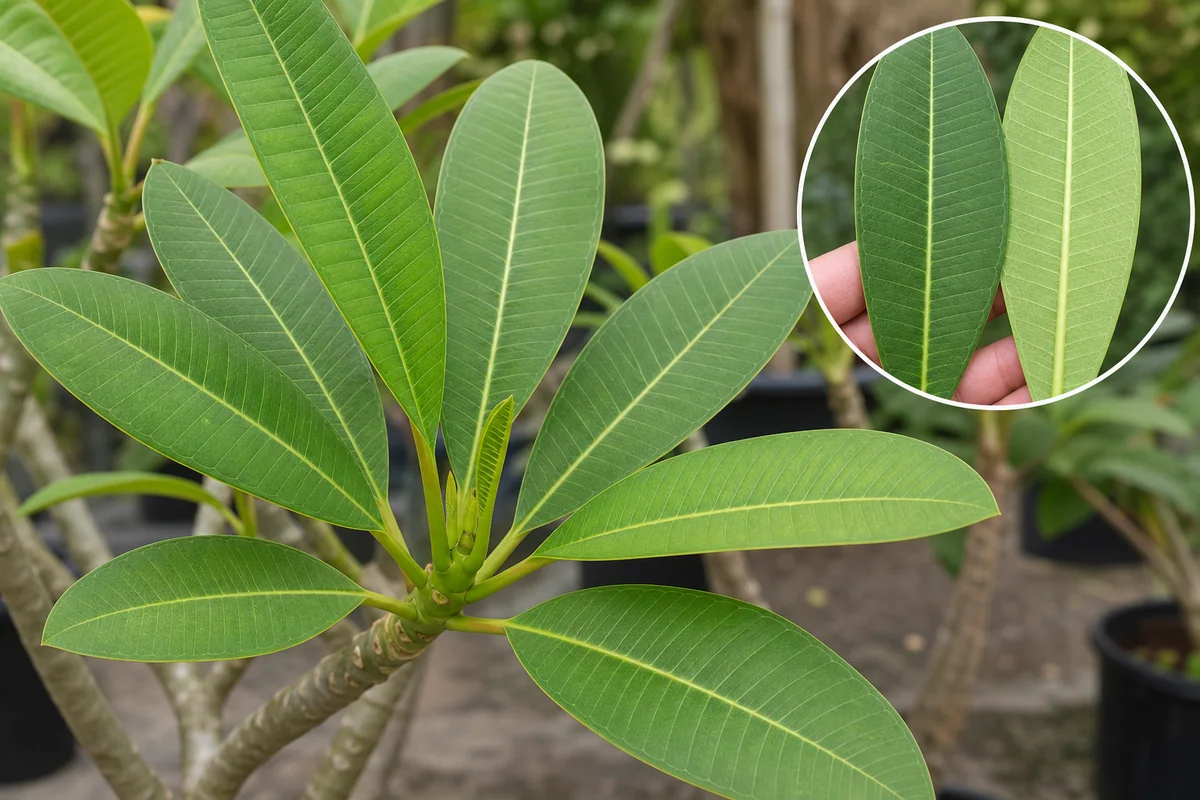 Healthy baseline
- LocationCheck which plant part, age of growth, and exposed or protected side is affected.
- TextureDecide whether the evidence is dry, powdery, sticky, raised, translucent, soft, or intact.
- ProgressionPhotograph the same area so you can tell whether the pattern is stable, improving, or spreading.
Use more than one clue. Confirm the photo with recent conditions, roots, watering history, and the rest of the plant before acting.
Shade vs. Sunburn Solutions for Plumeria
How to Balance Light Exposure and Protect Plants From Heat and UV Stress
Plumeria thrive in full sun, but too much direct exposure—especially after dormancy, repotting, or under intense summer heat—can lead to sunburn, tip stress, and bloom fade. On the other hand, excessive shade causes reduced blooming, stretched stems, and poor root development.
This guide helps you understand the differences between beneficial shading and harmful sunburn, and how to make the right adjustments to protect plumeria without sacrificing blooming performance.
Understanding Sunburn in Plumeria
| Symptom | Description |
|---|---|
| White or bleached leaf patches | UV or heat damage to upper leaf surfaces |
| Brown, crispy tips or margins | Heat stress or dehydration |
| Glossy or translucent areas | Cell collapse from sudden exposure |
| Blackened tips or stems | Often combined with rot from intense sunlight + water stress |
| Dropped flowers | High light + heat reduces petal longevity |
Sunburn typically appears after sudden light changes or during heatwaves over 95–100°F (35–38°C).
Causes of Sunburn
| Situation | Risk Level |
|---|---|
| Transitioning from indoor to outdoor light | ✅ High |
| Repotted plants exposed to full sun | ✅ High |
| Blooming trees in shallow pots | ✅ Moderate to high |
| Thin-leaved or pale cultivars | ✅ Higher sensitivity |
| Sudden heat spike or dry wind | ✅ Common trigger |
When Shade Is Helpful
| Use Case | Benefit |
|---|---|
| After dormancy | Protects tender new leaves from UV shock |
| Newly rooted cuttings | Prevents dehydration before roots develop |
| After transplant or pruning | Reduces stress and conserves moisture |
| Blooming in peak summer | Extends flower life and prevents petal burn |
| Seedlings under 1 year | Promotes slow, balanced growth |
Use 30–50% shade cloth, reflective panels, or tree-filtered light to offer relief without stopping photosynthesis.
When Shade Becomes a Problem
| Symptom | Cause |
|---|---|
| Long, stretched stems | Insufficient direct light |
| Leafy growth but no flowers | Lack of sunlight intensity |
| Pale or soft stems | Reduced calcium/magnesium uptake in shade |
| Wet soil and poor airflow | Higher risk of rust, root rot, and fungus gnats |
Ideal Lighting Balance:
- 6–10 hours of direct sun per day
- Morning sun + afternoon shade in hot zones
- Rotate containers regularly for even exposure
Smart Shade Solutions (Without Sacrificing Blooms)
| Strategy | Result |
|---|---|
| Use 30–40% shade cloth in late summer | Reduces burn without blocking bloom triggers |
| Add reflective mulch or panels | Brightens shaded zones without adding heat |
| Position plants near south or east-facing walls | Provides early sun + mid-day protection |
| Rotate container plants weekly | Prevents one-sided stress |
| Use white pots or wraps | Reflects heat and protects roots in direct sun |
Treating Sunburned Plumeria
| Action | Why It Helps |
|---|---|
| Move to partial shade (not full shade) | Allows recovery without halting photosynthesis |
| Remove only fully dead or crispy leaves | Let damaged tissue protect inner cells |
| Reduce watering slightly if roots are soft | Prevents rot during stress recovery |
| Apply light kelp foliar spray | Supports cell recovery and leaf rebound |
| Avoid fertilizer for 1–2 weeks | Allow roots and tips to stabilize |
Do not apply neem, oil-based sprays, or foliar fertilizer during heat—this can worsen burn.
Choosing the Right Level of Shade
| % Shade | Best Use |
|---|---|
| 20–30% | Blooming plants during peak summer |
| 40–50% | Rooting cuttings, post-transplant, or heatwave recovery |
| 60–70% | Seedlings under 6 months or propagation tunnels |
| 80–90% | Not suitable for mature plumeria |
Combining Shade and UV Protection
- Use UV-stabilized shade cloth or greenhouse film
- Install removable or adjustable panels for seasonal control
- For container benches, create tilted A-frames or low tunnels
- Use timed exposure: full sun from 8 AM–12 PM, shade thereafter
Conclusion
Plumeria need plenty of sun, but not at the expense of plant health. By recognizing signs of sunburn early and applying temporary, controlled shade, you can protect your trees during stressful periods while preserving bloom performance and strong growth. The key is moderation: shade should relieve—not replace—the sun.
Turn the explanation into an action plan
- Monitor
- Photograph the damage boundary and watch new leaves and tips for seven to fourteen days after exposure ends.
- Change one thing
- Make the smallest justified correction, record the date, and avoid stacking treatments before you can see which one helped.
- Escalate when needed
- Inspect stems and roots when tissue keeps softening, the trunk splits, or decline progresses after conditions stabilize.