
The Plumeria How-To Guide offers step-by-step instructions for essential tasks like rooting, pruning, fertilizing, and repotting—helping you grow strong, healthy plumeria with proven techniques.
How to Spot and Treat Plumeria Mosaic Virus
What to check next
This guide helps you connect growth habit, light, roots, water, nutrition, season, and cultivar traits before trying to correct the whole plant. Read the detailed explanation, then use this sequence to decide what to do.
- 1
- 2
Check the foundation
Inspect anchorage, container size, roots, drainage, and the amount and direction of light.
- 3
Compare season and cultivar
Confirm whether the habit is new, worsening, seasonal, or normal for the variety.
- 4
Correct the strongest limiter
Address the clearest root, light, structural, moisture, or nutrition limitation first.
- 5
Measure new growth
Use dated photos, internode length, branching, and the next leaf flush to judge progress.
How microclimate changes this answer
A sheltered wall, partial canopy, wind, container heat, and winter storage can shape the plant more than its regional Zone.
Compare this disease or rot pattern with healthy growth
Use these references to confirm that this article matches the visible pattern before changing care or applying a treatment.
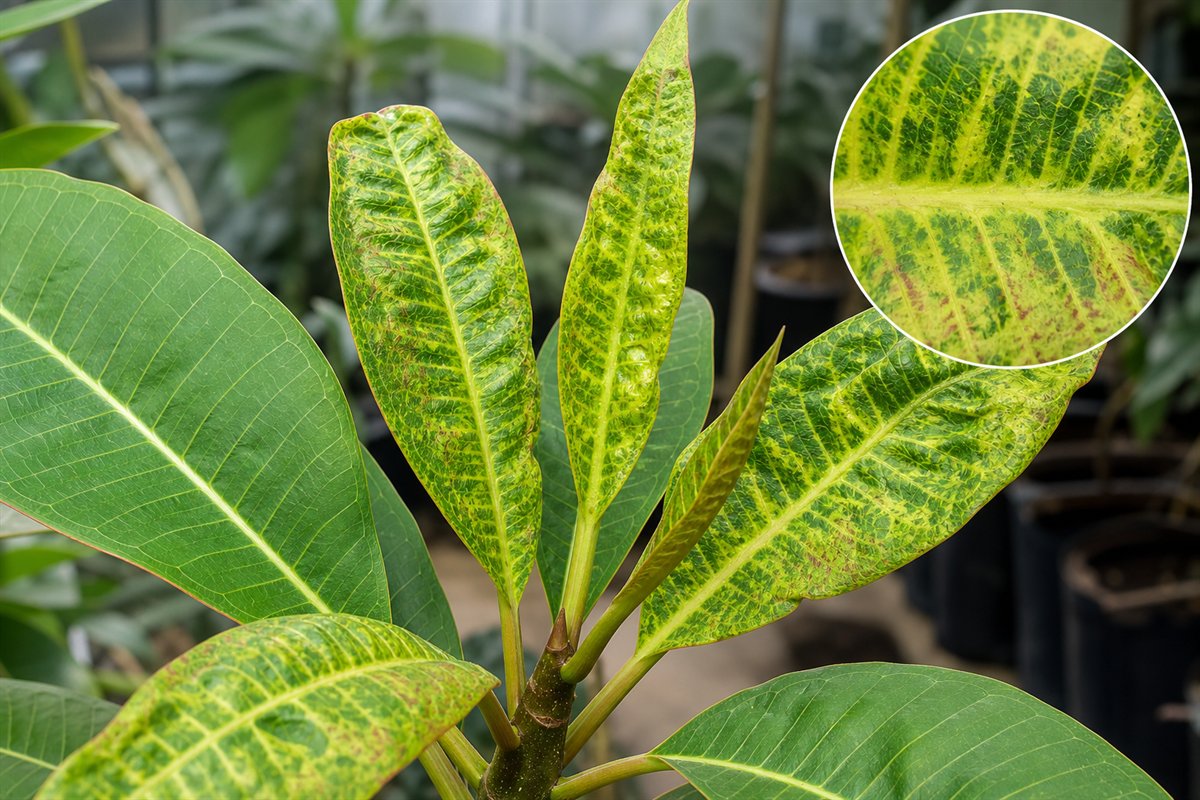 Condition reference
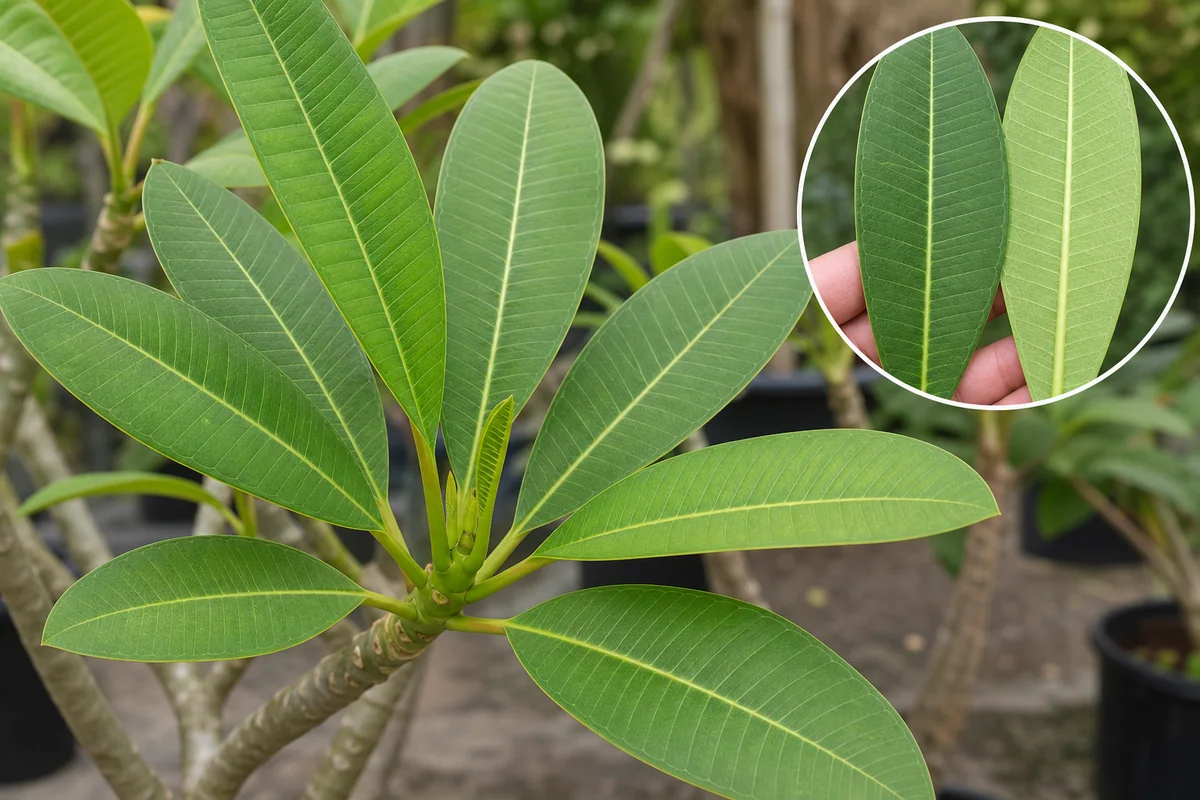 Healthy baseline
- LocationCheck which plant part, age of growth, and exposed or protected side is affected.
- TextureDecide whether the evidence is dry, powdery, sticky, raised, translucent, soft, or intact.
- ProgressionPhotograph the same area so you can tell whether the pattern is stable, improving, or spreading.
Use more than one clue. Confirm the photo with recent conditions, roots, watering history, and the rest of the plant before acting.
Identifying the Symptoms of the Plumeria Mosaic Virus and Methods to Manage and Prevent Its Spread
The Plumeria Mosaic Virus (PlMV) is a disease that can seriously affect the health of plumeria plants. Although there’s no cure for the virus once it infects a plant, understanding its symptoms and implementing management practices can help prevent its spread. Here’s a comprehensive guide:
Symptoms of Plumeria Mosaic Virus
Recognizing the symptoms of PlMV is the first step in managing the disease. Common signs include:
- Mottling of Leaves: Infected leaves show a mosaic-like pattern of light and dark green patches.
- Yellowing and Distortion: The leaves might turn yellow, become narrow, or exhibit curled or twisted growth.
- Stunted Growth: Plants with PlMV often grow slowly and may have stunted, malformed branches.
- Reduced Flowering: The virus can affect the flowering ability of the plant, leading to fewer blooms.
- Necrosis: In severe cases, the leaf tissue may die, leading to brown spots or areas of decay.
Methods to Manage Plumeria Mosaic Virus
Unfortunately, PlMV cannot be cured, but the spread can be managed by following these practices:
1. Inspection and Monitoring:
- Regular Check: Frequently inspect plumerias for symptoms.
- Isolate Infected Plants: Immediately remove and isolate infected plants to prevent the virus from spreading.
2. Implement Proper Hygiene:
- Disinfect Tools: Regularly clean and disinfect tools like pruners to avoid transferring the virus.
- Wash Hands: If handling an infected plant, wash your hands thoroughly before touching other plants.
3. Avoid Propagation from Infected Plants:
- Use Healthy Cuttings: Only propagate from healthy, virus-free plants.
4. Control Insect Vectors:
- Manage Aphids: Insects such as aphids can transmit the virus, so manage them using insecticides or natural predators.
5. Remove and Destroy Infected Plants:
- Careful Removal: If a plant is severely infected, it’s best to remove it from the garden entirely.
- Proper Disposal: Don’t compost infected plant material, as this may spread the virus.
Preventing Plumeria Mosaic Virus
- Buy from Reputable Sources: Always purchase plumerias from trustworthy suppliers.
- Quarantine New Plants: Isolate new plants for several weeks to ensure they’re free from the virus before introducing them to the garden.
- Encourage Overall Plant Health: Healthy plants are more resilient to diseases. Provide proper care, including appropriate watering, fertilization, and sunlight.
Conclusion
The Plumeria Mosaic Virus can be devastating, but early detection, proper management, and strict prevention measures can limit its impact. Being vigilant and proactive in your care approach is essential to maintaining a thriving plumeria garden free of this harmful virus.
Turn the explanation into an action plan
- Monitor
- Compare whole-plant photographs monthly during active growth and at each seasonal transition.
- Change one thing
- Make the smallest justified correction, record the date, and avoid stacking treatments before you can see which one helped.
- Escalate when needed
- Inspect roots and major stems promptly when decline is sudden, anchorage fails, or several branches soften or die back.