The Plumeria Climate and Environment Guide delves into how various environmental factors, such as temperature, humidity, sunlight, wind, and microclimates, influence plumeria growth. This comprehensive guide offers practical tips on how to create the ideal conditions for your plumeria, ensuring strong, healthy plants and vibrant blooms. By understanding how these factors affect your plumeria, you can make informed decisions about planting locations, seasonal adjustments, and protective measures against extreme weather conditions. Whether you’re growing plumeria in a tropical, subtropical, or temperate zone, this guide provides strategies to optimize your environment for year-round success and enhance the beauty of your plants.
Tailoring Plumeria Care to Your Garden’s Unique Nooks
Microclimate Magic: Tailoring Plumeria Care to Your Garden’s Unique Nooks
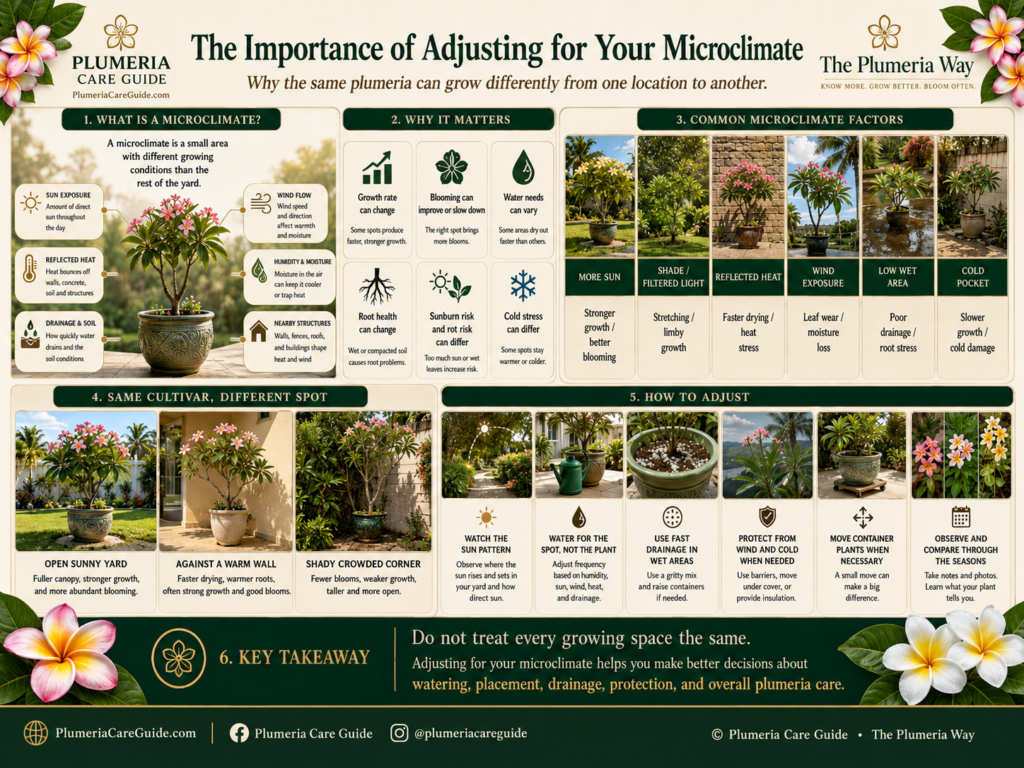
Have you ever noticed that one plumeria grows beautifully in one area of your yard while another struggles just a few feet away? One may bloom better near a warm wall, another may dry out faster on a patio, and another may grow slower in a shaded corner. These differences are often caused by microclimates—small pockets of growing conditions within your garden that can affect how your plumeria grows, blooms, and responds to care.
Understanding microclimates is one of the most important steps in becoming a better plumeria grower. Instead of treating every plant the same, you learn to observe each plant and adjust care based on what it is experiencing.
What Is a Microclimate?
A microclimate is a small area within your larger growing space that has slightly different conditions than the rest of your yard. It may be warmer, cooler, sunnier, shadier, wetter, drier, windier, or more protected.
For plumeria, these differences matter. Plumeria are tropical trees that respond strongly to sunlight, warmth, airflow, drainage, watering habits, root temperature, and seasonal changes. A small difference in location can influence growth rate, blooming, leaf health, root activity, sunburn risk, cold damage, and even how often the plant needs water.
A microclimate can be as simple as:
- A sunny patio that reflects extra heat
- A shaded corner near a fence
- A breezy side yard
- A low wet spot that drains slowly
- A warm wall that holds heat overnight
- A protected area under an overhang
- A container sitting on concrete versus one sitting on grass
These small differences can make a big difference over time.
How to Identify Microclimates in Your Garden
The first step is observation. Walk through your growing area at different times of day and notice how conditions change.
Watch where the morning sun hits first and where the afternoon sun is strongest. Notice which areas stay shaded longer. Look for spots that dry out quickly after watering and areas where pots stay wet longer. Pay attention to wind exposure, reflected heat from walls or pavement, and low areas where cold air or water may settle.
Ask yourself:
Does this spot get full sun, morning sun, afternoon sun, or filtered light?
Does the pot dry quickly or stay damp?
Is the plant protected from wind or exposed to it?
Does this area stay warmer during cool weather?
Does this area receive reflected heat from concrete, walls, or fences?
Is airflow good, or is the plant crowded?
Does water drain away, or does moisture collect?
Once you begin noticing these patterns, you can adjust your plumeria care more accurately.
Adjusting Plumeria Care by Microclimate
A plumeria in a hot, sunny, fast-drying area may need more frequent watering during active growth than one in a shaded, protected, or humid location. A plant near a wall may wake up earlier in spring because of retained heat, while one in a cool corner may stay dormant longer. A plumeria on concrete may experience more heat stress than one on mulch or soil. A plant in a windy location may lose moisture faster and may need protection from physical damage.
The key is not to follow a fixed schedule blindly. Instead, adjust care based on the plant, the pot, the soil, and the location.
Hot, Sunny Areas
Plumeria generally love sunlight, and strong light helps support growth and blooming. However, intense afternoon sun, reflected heat, or sudden exposure can cause sunburn, especially on young plants, newly rooted cuttings, recently pruned branches, or plants moved from shade into full sun.
In these areas, acclimate plants gradually, monitor leaves and stems for bleaching or scorching, and consider light shade during the hottest part of the day if needed.
Cooler or Shadier Areas
A cooler or shadier microclimate may reduce stress during extreme heat, but too much shade can slow growth and reduce blooming. Plumeria grown in lower light may stretch, become lanky, produce fewer bloom tips, and stay wetter longer after watering.
In these spots, reduce watering frequency, improve airflow, and consider moving the plant to brighter light if growth becomes weak or blooming declines.
Windy Areas
Wind can dry leaves and soil faster, tip over containers, damage tender growth, and increase moisture loss. In windy microclimates, heavier pots, staking, windbreaks, or strategic placement near protective structures can help. However, avoid blocking airflow completely, because stagnant air can increase disease pressure.
Wet or Slow-Draining Areas
Plumeria roots need oxygen. A wet microclimate, poorly draining soil, or containers that stay damp too long can increase the risk of root rot and stem rot. If a location stays wet after rain, use a faster-draining mix, raise containers off the ground, reduce watering, or move the plant to a better-drained area.
Warm Protected Areas
A warm, protected spot can be helpful in spring, fall, or cooler climates. Walls, patios, and structures can hold heat and protect against wind. These locations may help plumeria wake up earlier, root more actively, or recover faster. However, during summer, the same area may become too hot and dry, so watering and sun exposure may need adjustment.
Why Microclimates Are Important for Plumeria
Microclimates explain why one care routine does not work the same for every grower—or even for every plant in the same yard. A watering schedule that works for a plumeria in full sun may be too much for one in filtered light. A plant in a black pot on concrete may dry out faster than one in a light-colored pot on mulch. A plumeria near a warm wall may grow differently than the same cultivar in an open, windy location.
This is why advice should always be adjusted to the actual growing conditions. Good plumeria care is not only about what you do—it is about what the plant needs in the spot where it is growing.
Becoming a Better Observer
Microclimate mastery comes from watching your trees over time. Observe how each plumeria responds through the seasons. Take notes on which areas produce better blooms, which pots dry fastest, which trees wake up first, and which locations seem to cause stress.
Over time, these observations help you make better decisions about placement, watering, pruning, fertilizing, cold protection, and repotting.
Final Thoughts
Understanding microclimates helps you move beyond one-size-fits-all plumeria care. Every yard has warmer spots, cooler spots, brighter spots, wetter spots, and more protected spaces. When you learn how each area affects your plumeria, you can adjust care with more confidence.
The goal is simple: match the care to the plant and the place. When you understand your microclimates, you can grow healthier roots, stronger branches, better blooms, and more resilient plumeria trees.
For more plumeria care articles and growing guidance, visit PlumeriaCareGuide.com and PlumeriaWay.com.